Russian oil imports
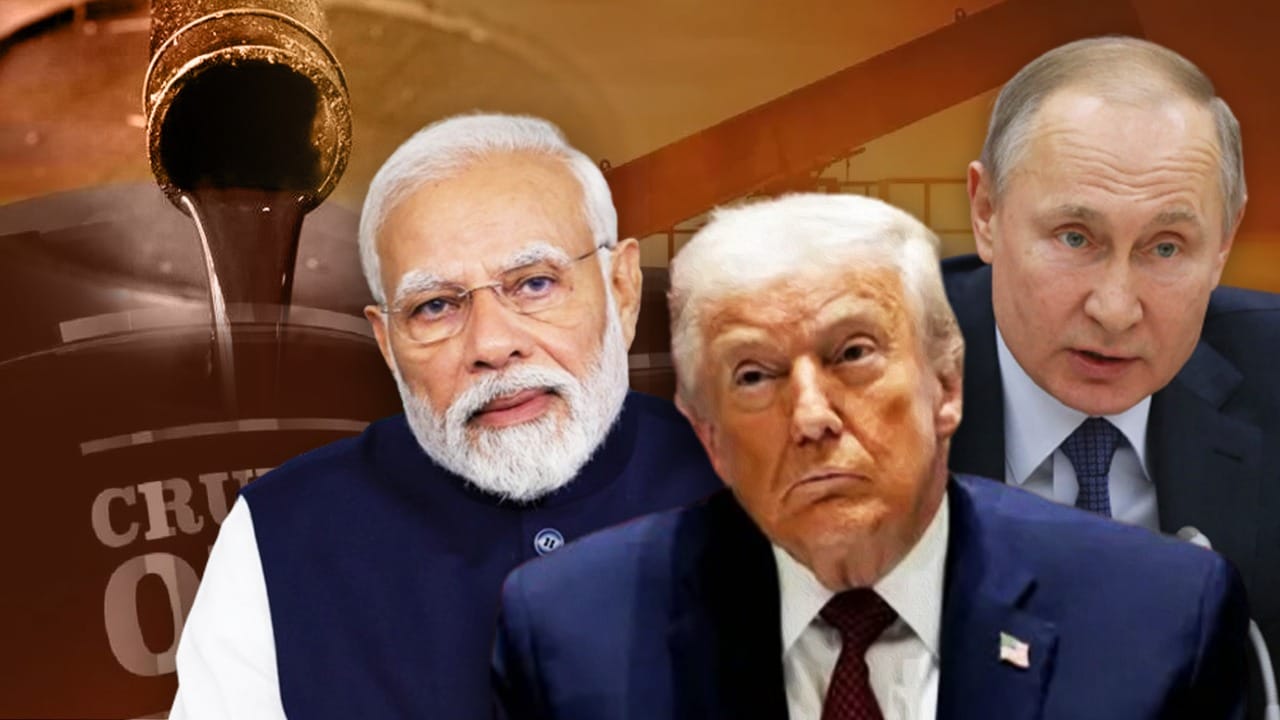
After coming to power, US President Donald Trump took many decisions one after the other whose impact was immediately seen on the economy around the world. In the same sequence, they imposed a 50 percent tariff on India and also threatened to impose more duties if they continued buying oil from Russia, but India made a new record of purchasing Russian oil in December 2025. Bought 1.85 million barrels of Russian oil per day. This is the highest figure in six months. When the entire world is bowing down to American pressure, how is India prioritizing its energy security?
The month of December 2025 is proving to be historic for India-Russia energy partnership. According to Kepler’s real-time ship tracking, India is now importing about 1.85 million barrels of crude oil per day from Russia. Which is an increase of 0.2 million barrels from 1.83 million barrels in November. But the real thing is that this is the third consecutive month when India’s Russian oil imports have increased. This figure was 1.48 million barrels in October, which has reached 1.83 million barrels in November and now 1.85 million barrels in December.
This is the largest import since June 2025, when India bought 2.10 million barrels of crude oil daily. The meaning of these figures is clear that India has now become the world’s largest importer of Russian oil through sea route. China is also buying Russian oil, but its imports in December are expected to be 1.36 million barrels per day, which is much less than India. Arguably, this is a victory for India’s energy strategy, where national interest has been placed above international pressure.
US sanctions and Trump’s tariff weapon
At the end of November 2025, the US had imposed stringent sanctions on Russia’s two largest oil companies, Rosneft and Lukoil. Washington’s objective was to stop Russia’s oil income and to distance countries like India from Russian oil. But India ignored these restrictions and continued its purchases.
Not only this, President Donald Trump also imposed an additional tariff of 25 percent on India, due to which India has to pay a total of 50 percent tax on exports to America. This is the highest tax imposed on any country in the world. Trump’s message was clear: either leave Russian oil, or pay a heavy price in the American market, but New Delhi did not change its stance. India’s calculation was simple that the huge discount on Russian oil was more beneficial than the loss of American tariffs and above all, the country’s energy security could not be compromised at any cost.
Smart strategy of Indian refineries
After US sanctions, Indian refineries made interesting changes in their strategy. Nayara Energy, in which Rosneft has a 49.13 percent stake, unloaded 658,000 barrels of oil per day at Vadinar Port in December. This is significantly higher than November’s 561,000 barrels and well above the 2025 average of 431,000 barrels. Interestingly, the Vadinar refinery has a capacity of only 405,000 barrels per day. What this means is clear – Naira Energy is storing excess oil, in the hope that either the sanctions will be lifted or it will find more buyers who will not care about these sanctions. There is a storage of about 20 million barrels in Vadinar, which is filling rapidly.
On the other hand, Reliance Industries took a step in the opposite direction. India’s largest private refinery imported just 293,000 barrels per day from Russia in December, half the 552,000 barrels per day in November. Reliance has made it clear that it will abide by US and European sanctions as it has large exports to Europe and does not want to take legal risks, but government refineries chose a different path. According to Kpler data, Indian government companies bought 904,000 barrels per day of oil from Russia in December. This is a clear indication that the government is not accepting any external pressure in its energy policy.
Also read- What is Dabba Trading? If you get caught in the net, you may suffer loss.
Kremlin’s confidence
Kremlin spokesperson Dmitry Peskov recently said that Russia has a huge network of shadow fleet, which supplies oil while avoiding Western eyes. These ships often switch off their tracking systems and transfer oil from one ship to another at sea. This technology has been so successful that Russia’s oil exports remain at pre-war levels.
According to a Reuters report, India and China are getting a discount of eight to twelve dollars per barrel on Russian oil. This discount is so big that even the impact of American tariffs is less. Indian refineries process this cheap oil to make expensive petroleum products and then sell them in the international market, thereby earning huge profits, but the question is, will this discount last for long? Some experts believe that as Western sanctions tighten, Russia will have to increase its exemptions further. But at the moment this deal is beneficial for both the countries – India is getting cheap oil and Russia is a big buyer.
Economic impact and benefits to the Indian consumer
The common Indian consumer is getting the benefit of purchasing cheap Russian oil, the prices of petrol diesel are stable. It is believed that if the prices of petrol and diesel had been as per the international market, today petrol could have been above Rs 120 per liter in Delhi. India’s economy is highly dependent on oil imports. 85 percent of the country’s total energy requirement is met by imported oil. If India remained dependent on expensive Middle Eastern or American oil, there would be huge pressure on the foreign exchange reserves. But due to the discount on Russian oil, India is saving about two billion dollars every month. This saving is not limited to oil only. Cheap oil means cheap electricity, cheap transportation, and lower production costs. This helps Indian industries to compete in the international market. Inflation also remains under control, which is a big relief for the common man.
But this strategy also has some risks. If America imposes more stringent sanctions, Indian companies may face problems in the international banking system. Trade with western countries may be affected. But at present the Government of India believes that it is necessary to take this risk, because energy security is a part of national security. A senior Finance Ministry official had recently said that India is not involved in any illegal activity. Buying oil from Russia is not a violation of international law. European countries are also buying Russian gas, so why should India be stopped? This argument strengthens India’s position.
Geopolitical balance and independent foreign policy of India
This strategy of India is not only economic but also geopolitical. New Delhi has made it clear that it will not be tied to any one camp in its foreign policy. India has built strong partnerships with the US, Japan and Australia in the Quad, but has also maintained decades-old defense and energy ties with Russia. Prime Minister Narendra Modi has said many times that this is a new era of non-alignment, where India keeps its national interest paramount. India did not vote on many resolutions against Russia in the United Nations on the Ukraine war, but also condemned the war and appealed for peace.
China is also buying Russian oil, but its situation is different. Beijing is already under US sanctions, so buying Russian oil is not a big political risk for it. But India, which is a strategic partner of America, is giving a strong message by giving priority to its energy independence. So this is the story of India’s energy independence. America’s threat, 50 per cent tariff and stringent sanctions on Russia – nothing could divert India from its national interest. The record import of 1.85 million barrels per day in December 2025 proves that India does not come under anyone’s pressure in its foreign policy.