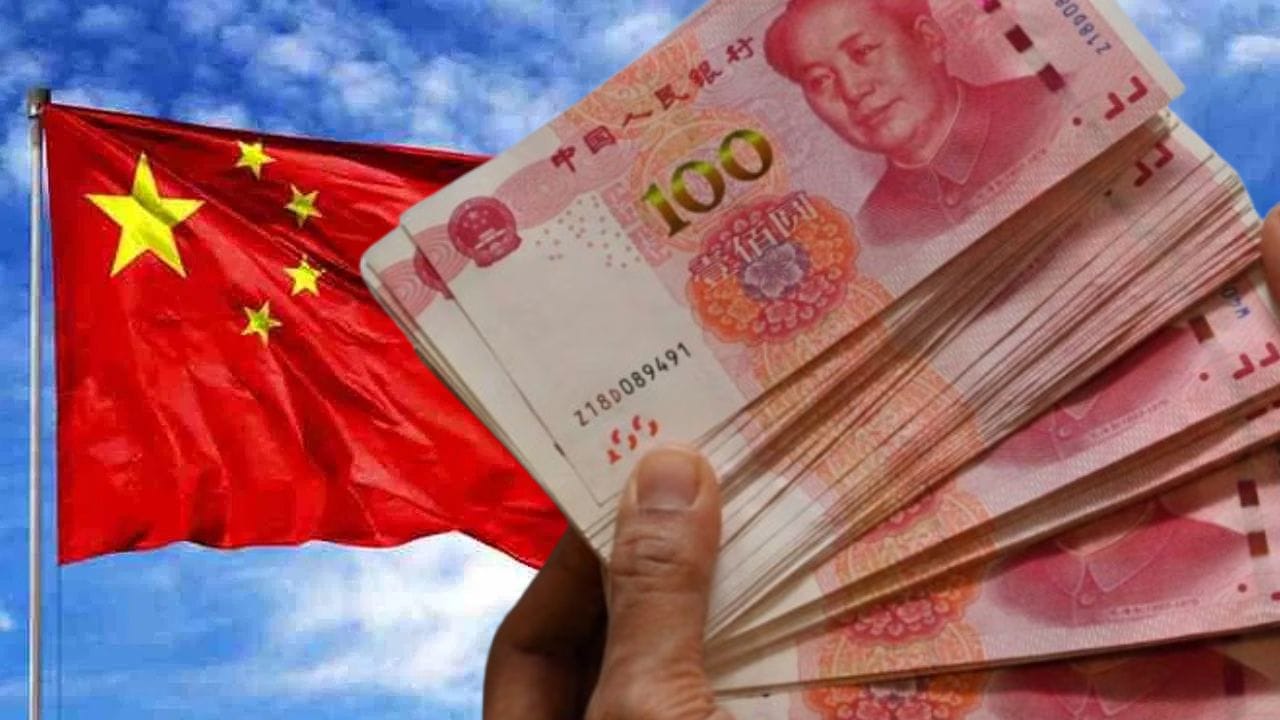
Growth of Chinese economy
There was a time when China appeared at the bottom of the list of the poorest countries in the world. The people there did not even have enough food to eat. Technology was backward, industries were at a standstill and the economy was completely under government control. That was the period when the situation of China was considered worse than not only India but also Bangladesh. But then a change came, which changed the fate of this country forever.
Difficulties and broken hopes of Mao’s era
After 1949, China was ruled by Mao Zedong. Under communist ideology, everything, from agriculture to factories, was run under the orders of the government. Mao’s experiment like ‘Great Leap Forward’ kept pushing the country backward instead of taking it forward. Due to wrong policies, millions of people died of hunger and the economy almost came to a standstill. People’s lives were reduced to just two meals a day. At the same time, trade with the world was almost over, foreign companies could not enter China.
Then Deng Xiaoping changed direction
After Mao’s death in 1976, in 1978, the command of China came into the hands of a visionary leader Deng Xiaoping. He was a communist but very practical in thinking. He said a famous line, ‘It doesn’t matter whether the cat is black or white, just catch the mice.’ This meant that now results, not ideology, would matter. Then Deng decided that China would have to be opened to the world. There cannot be progress through closed doors.
Reforms in agriculture – steps towards development
Deng’s first major step was agricultural reform. Farmers were given partial freedom over their produce. After paying the fixed share to the government, they could sell the remaining crop in the market. Due to this, farmers got direct benefit of their hard work and grain production increased rapidly and China could come out of the shadow of starvation for the first time.
Also read:
Powerful scheme of Post Office, this way you will get benefit of Rs 10.70 lakh; Here is the complete calculation
SEZ – Where the economic miracle began
Deng declared some areas in the southern parts of China as Special Economic Zones (SEZ). Small villages like Shenzhen were turned into laboratories, where foreign investment, private companies and market rules were implemented. Foreign companies got tax exemption, land was given cheaply and the government provided all kinds of facilities.
SEZ becomes the backbone of Chinese economy
China’s biggest strength was its large population and low wages. The goods which foreign companies used to make in America for $10 were made in China for $23. Companies came, factories were set up, and along with them came the world’s most modern technologies. China not only adopted these technologies but also improved them and made them better. Then by the 90s, China became a hub of textiles, shoes, toys, electronics and high-tech products.
When China became a member of WTO
When China became a member of WTO in 2001, the doors to international trade were completely opened. The world’s big brands brought their supply chains to China. The government made huge investments in roads, ports and electricity. Then fast decisions, cheap labor and strong infrastructure made China unbeatable at the global level.
Today’s China – from factory to innovation hub
Today China is the second largest economy in the world and alone contributes about 18% of global GDP. Shenzhen, once a village, has today become a technology hub challenging Silicon Valley. Companies like Huawei, Alibaba, Tencent are among the world’s biggest companies.