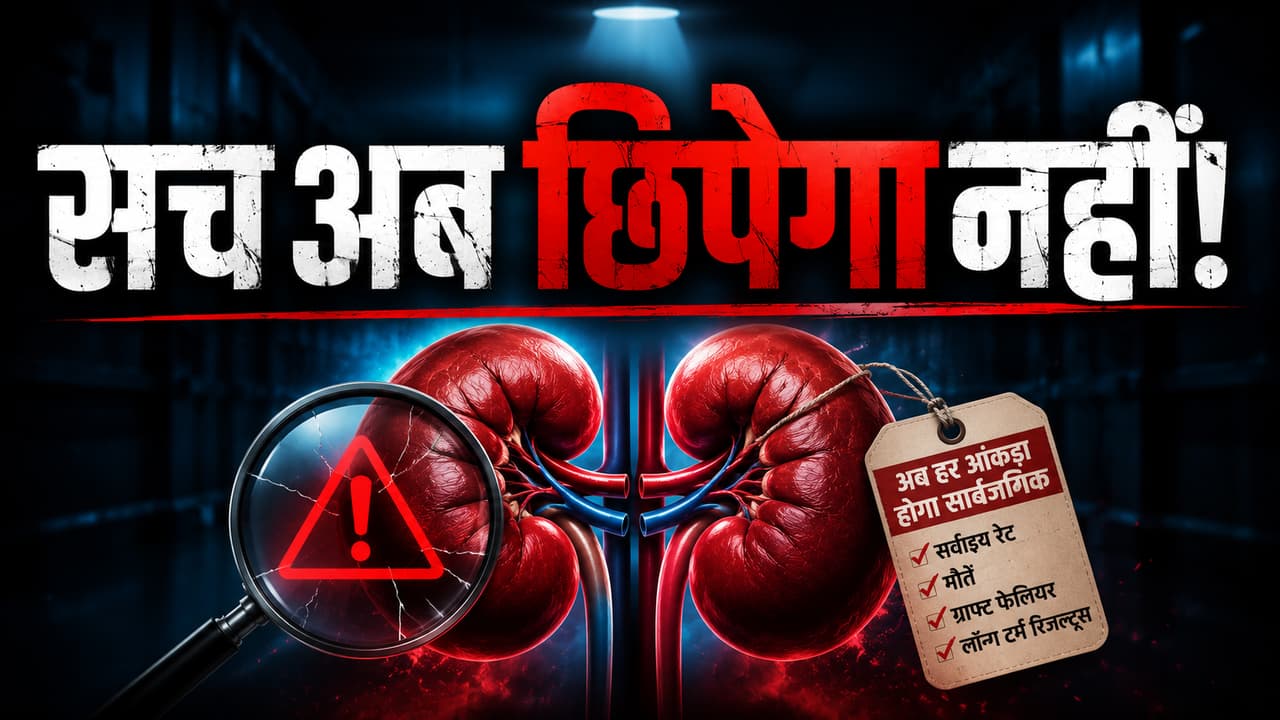
Under NOTTO’s new rules, kidney transplant hospitals will now have to make public survival rates, deaths, graft failure and follow-up data, so that patients can choose the hospital based on better information.
NOTTO Kidney Transplant Rules: The biggest and historic news of this time is coming out from the healthcare sector of India, which has created a stir in the corridors of big corporate hospitals and transplant centers of the country. The National Organ and Tissue Transplant Organization (NOTTO) has taken a revolutionary and unprecedented decision, which will expose to the public the secrets that were till now buried in closed rooms and files. NOTTO has made it mandatory for kidney transplant hospitals across India to publicly disclose data on survival rates, deaths and graft failure. Let us know the whole story behind the scenes of this big decision of diplomacy and medicine.
What were hospitals hiding till now? Deep suspense on the performance of renowned centres!
The harsh truth, until now, was that patients and their families had no solid way of knowing how a particular hospital was actually performing after surgery. Hospitals often used to charge huge fees by displaying ‘number of successful transplants’ boards on their websites and advertisements. But, the data of how many patients died and how many kidneys failed after a few months or years of surgery was rarely available. This new Hunter released by NOTTO Director Dr. Anil Kumar has ended this suspense. Now patients will decide not just on the ‘brand value’ or glamor of the hospital, but on the basis of its clinical track record.
Those 9 strict rules: Now the complete details of death and failure will have to be posted on the website.
As per NOTTO’s new guidelines, every transplant center will now have to prominently flash the following confidential data on its website under a standard reporting format:
- Actual survival rates of the patient (Survival Rates)
- Total number and percentage of deaths after transplant
- Graft failure rate (kidney failure)
- Actual condition of the patient at the time of discharge
- Rigorous follow-up data of 6 months, 1 year, 3 years and 5 years
- Details of patients who suddenly disappeared or were lost to contact during follow-up.
Crisis of incompatible transplant and donor: Will patients get a new life?
Amidst this historic change, the report also highlights the challenges of kidney transplant which often become a matter of life and death for patients. While ‘Living Donor Transplant’ involves shorter waiting times and longer life expectancy, ‘Deceased Donor’ cases involve a long and painful wait of years for the right kidney. There is also a higher risk of rejection in this. Moreover, blood group incompatibility has always been an impenetrable wall. But, now with the latest technologies like ‘ABO-incompatible’, successful transplants are being done even with different blood groups, and after the new rules, patients will be able to clearly know which hospital really specializes in this complex technique.
Direct eye on 824 hospitals: Veterans trapped in the maze of ‘registry’
To implement this new rule, NOTTO has directly linked 824 transplant centers across the country to the ‘National Organ and Tissue Transplant Registry’. All these centers will have to regularly enter their follow-up data into this government system. Experts believe that this transparency will start a healthy competition among hospitals to save the lives of patients and provide better care. However, experts also say that while looking at the figures, the complexity of the patients also needs to be kept in mind, because the figures of big centers which take very serious or high-risk cases may naturally be different from that of normal hospitals. With this new rule, patients will now have the real right to ‘informed consent’ before surgery, which will make India’s organ transplant system highly transparent and accountable at the global level.
Living donor or deceased donor…which is more beneficial?
According to experts, the waiting period in living donor kidney transplant is short, the surgery can be scheduled in advance and the transplanted kidney often starts functioning immediately. In such cases, better long-term survival rates and fewer complications are seen. Whereas in deceased donor transplant, patients may have to wait for many years. Apart from this, the risk of delayed organ function and rejection remains relatively high.
Hope increased despite different blood groups
Earlier, kidney transplant was considered very difficult if blood group did not match. But now, due to modern technologies like ABO-Incompatible Kidney Transplant, successful transplants are becoming possible even between a donor and a patient with different blood groups. This has increased the chances of more patients getting a kidney on time.
How will patients get direct benefits?
After the implementation of the new system, patients will be able to choose the hospital more wisely. There will be increased transparent communication between doctor and patient regarding treatment, better informed consent will be taken before surgery and the quality of transplant centers can be continuously monitored. Along with this, the pressure on hospitals to deliver better results will also increase, which is expected to improve patient care and follow-up services.