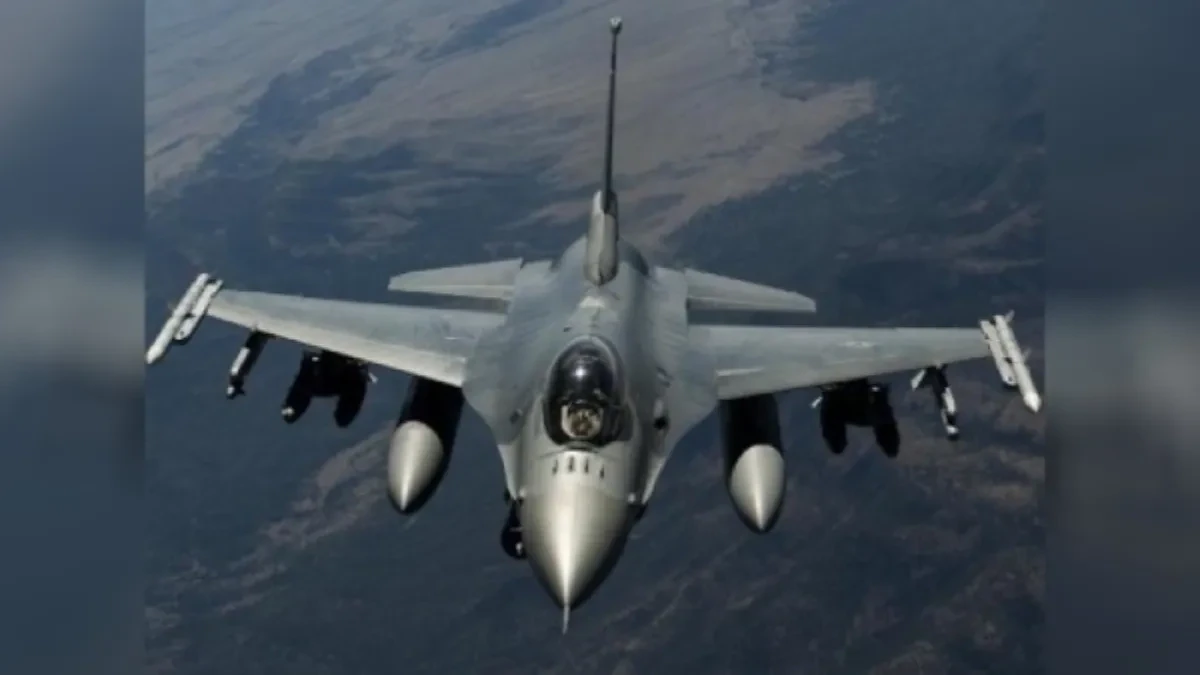
The United States has approved a $686 million upgrade package for Pakistan’s F-16 fighter jets, the first deal of this scale in about three decades.
The move comes at a tense moment, as India and Pakistan remain uneasy after Operation sindoor in May and New Delhi’s ties with Washington have run into fresh trouble over trade and defence issues.
Even with all the friction, the US has chosen to continue its long-running support for Pakistan’s American-made jets.
What the $686m Plan Includes
The approval, sent to the US Congress on 4 December, bundles $649m worth of support, repairs and upgrades with $37m of defence equipment. The idea is to keep Pakistan’s F-16s usable for many more years under a sustainment plan set up in 2022.
The package covers:
- New hardware and software for flight operations
- Avionics and navigation upgrades
- Spare parts and repair materials
- Secure communication systems
- 92 Link-16 systems for encrypted data-sharing
- Six Mk-82 inert bomb bodies for training
The Mk-82 shells are empty metal cases normally filled with sand or concrete for practice drops. With the right guidance kits, they can also be turned into the base for precision-guided weapons.
Why the US Approved It
Praveen Donthi of the International Crisis Group says this deal follows a pattern that has existed for years. Washington keeps the F-16 programme running because both sides see value in using the jets in counterterrorism operations.
To cushion India’s reaction, the US has already stated that the package “will not alter the basic military balance in the region.”
South Asia analyst Michael Kugelman adds that India’s concerns are not the only factor. In his view, the plan stands on its own, as part of America’s longer effort to support Pakistan’s existing fleet rather than change the region’s power balance.
Why India Is Unhappy
India has often objected to American support for Pakistan’s F-16s, saying the jets are used against Indian forces. The timing has made matters harder, because New Delhi’s own ties with Washington are under stress.
Tensions deepened further after Donald Trump raised tariffs on Indian imports in August, taking overall duties to 50 per cent. Trump linked the move to India’s continued purchase of Russian oil amid the Ukraine war, arguing that it created a “national emergency” for US interests. India, the world’s second-largest buyer of Russian crude after China, has reduced purchases only slightly under Western pressure.
In this climate, the F-16 approval has fed the feeling in New Delhi that Washington is not fully aligned with Indian security concerns.
Pakistan’s Mixed Air Fleet
Pakistan flies 70-80 F-16s, ranging from older Block 15 jets to newer Block 52+ models. The new American package helps keep them in working shape until at least 2040.
But the country now leans heavily on China for defence hardware. Since 2020, around 80% of Pakistan’s imported weapons have come from China, including J-10 fighters that also took part in the May clashes with India.
Pakistan’s air force now operates a blend of US and Chinese aircraft, which gives Islamabad room to access Western systems while staying close to Beijing.
The May Clash and the Role of F-16s
The upgrade approval arrives months after a short but sharp exchange that followed the 22 April attack in Pahalgam, where 26 civilians were killed. India conclusively found Pakistan’s role, sparking a breakdown in talks and the suspension of the Indus Waters Treaty processes.
On 7 May, India launched missile strikes on nine locations inside Pakistan and Pakistan Occupied Kashmir. Pakistan responded with drone and missile attacks on Indian military sites.
Pakistan hit back with drone and missile strikes on Indian military locations, and its Air Vice Marshal Aurangzeb Ahmed later said Islamabad deployed 42 advanced aircraft during the exchange, including F-16s, JF-17s and J-10s. The clash ended on May 10 after US President Donald Trump claimed he helped broker the ceasefire.
The F-16s constituted a crucial part of Pakistan’s response during Operation Sindoor, but India’s precision strikes broke Pakistan’s back. Experts say, this new purchase is also being done to replenish the losses incurred during Operation Sindoor, and that includes the irreparable damage to F16s as well.