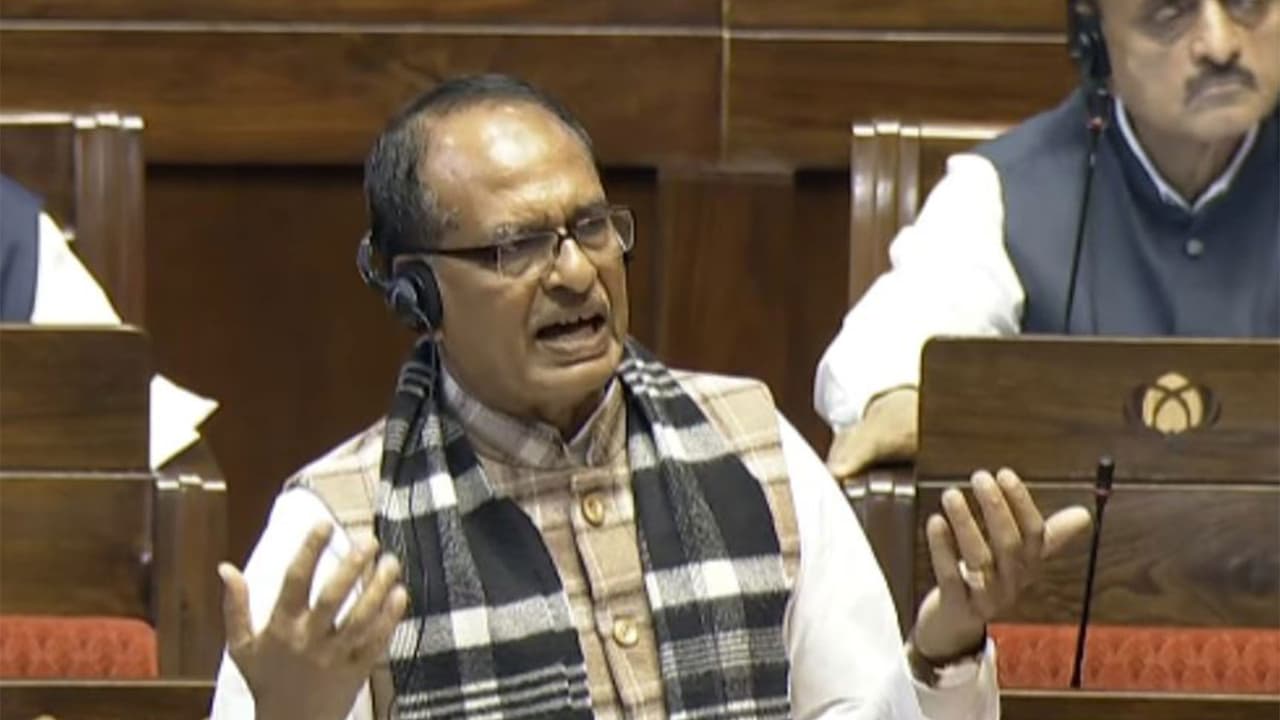
Union Agriculture Minister Shivraj Singh Chouhan announced the ‘Dalhan Mission’ to boost pulse production. The govt will procure Toor, Masur, and Urad and has hiked import duty on Masoor Dal and Channa to ensure fair prices for farmers.
Government Measures to Boost Production
Union Agriculture and Farmers Welfare Minister Shivraj Singh Chouhan on Friday informed the Rajya Sabha that the Union Government was taking several measures to increase the production of pulses. Chouhan said,” The government is taking several measures to increase the production of pulses. The government has formed the ‘Dalhan Mission’ for this purpose…. The government will buy Toor, Masur, and Urad pulses. Karnataka government’s request to the government to buy Toor has also been approved. We have taken many measures to ensure that farmers get a fair price for their produce. One of them is – increasing import duty to 10% on Masoor Dal and Channa…We will always protect the interests of our farmers.”
Earlier, the agriculture ministry approved the purchase of 967,000 tonnes of tur in Karnataka at the minimum support price for the kharif marketing season 2025-26.
NITI Aayog’s Roadmap for Self-Sufficiency
In September, Government think-tank Niti Aayog had recommended strategies and pathways to be adopted by government to make India self-sufficient, (Atmanirbhar) in pulses by 2030 and double the production of pulses by 2047. The report noted, India’s pulses production is set to witness steady growth in the coming years with output projected to rise to 34.45 million tonnes (MT) by 2030 and 51.57 MT by 2047, up from 26.06 MT in 2022.
Future Production Projections
The report said that the projections are based on both aggregate and crop-wise forecasts. The individual crop-level estimates place production at 32.1 MT by 2030 and 50.7 MT by 2047, which are closely aligned with the aggregate projections. The convergence of these approaches strengthens the validity of the forecasts, it added.
NITI Aayog in its report further stated “a steady increase in production, reaching an estimated 34.45 MT by 2030 and 51.57 MT by 2047 up from 26.06 MT in 2022”. (ANI)
Key Recommendations for Aatmanirbharta
The report gave several recommendations to achieve self-sufficiency in pulse sector. It includes, area retention and diversification through targeted crop-wise clustering, adoption of customised technologies for varied agro-ecological sub regions, emphasis on high quality seed distribution and treatment kits focussing on 111 high potential districts along with ‘one block one seed village’ cluster based cultivation.
The report also emphasised on proactive climate adoption measures and driving data-led transformation through comprehensive monitoring and decision support system are crucial for Aatmanirbharta.
(Except for the headline, this story has not been edited by Asianet Newsable English staff and is published from a syndicated feed.)