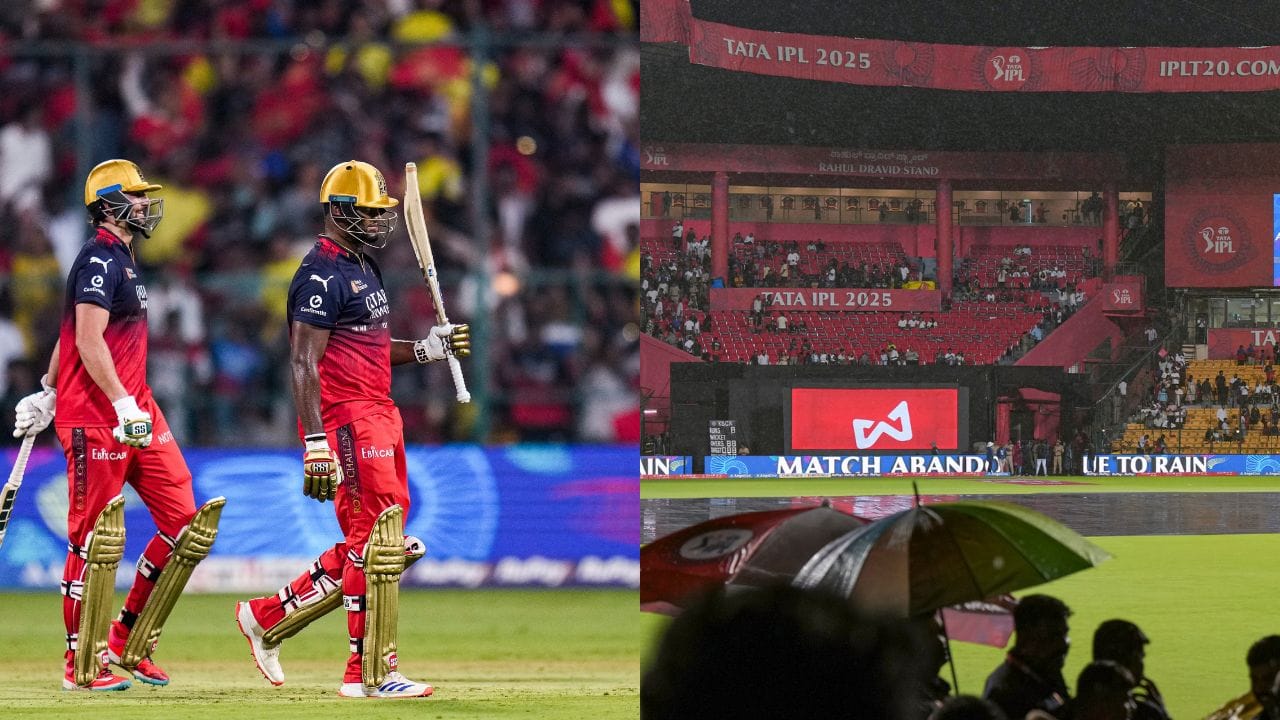
Matches will be held in Chinnaswamy Stadium
A cabinet meeting was held in Karnataka on Thursday. In this meeting, a decision has also been taken to host the IPL match at Chinnaswamy Stadium. The government has given conditional approval for organizing international and IPL matches in the stadium. However, it was also made clear that special attention will have to be paid to the rules and arrangements. There was a stampede outside this stadium during RCB’s victory parade in June, in which 11 people lost their lives. This is the reason why the government was hesitant in giving permission to hold the match here.
Belagavi (Karnataka), Dec 11 (PTI) The Karnataka Cabinet on Thursday cleared the way for the Karnataka State Cricket Association (KSCA) to host international and IPL matches at the M Chinnaswamy Stadium in Bengaluru, provided safety and security requirements are followed. Along with this, it was also decided that KSCA will have to implement the recommendations of Justice John Michael Cunha Commission.
It is clear from this decision of the government that in the coming days, international and IPL matches will once again be seen here. This stadium had become a topic of discussion since the accident. It was being said that the matches here would be shifted somewhere else, on which DK Shivakumar had also lodged an objection.
What did the state government say?
After meeting newly elected Karnataka State Cricket Association (KSCA) president Venkatesh Prasad and other officials, Deputy CM DK Shivakumar on Wednesday said the government has no intention of stopping matches at the Chinnaswamy Stadium. But we have to think about crowd control measures.
What is John Michael Cunha Commission?
11 people lost their lives due to the stampede in Bengaluru. Apart from this, many people were also injured. Justice John Michael Cunha Commission was formed to investigate this. The commission had concluded that the “design and structure” of the ground was “incorrect and unsafe” for crowd gathering. The panel had recommended measures like proper gates for the movement of people, specially created lines and circulation zones separate from public roads, emergency evacuation plans as per international safety rules and adequate parking.