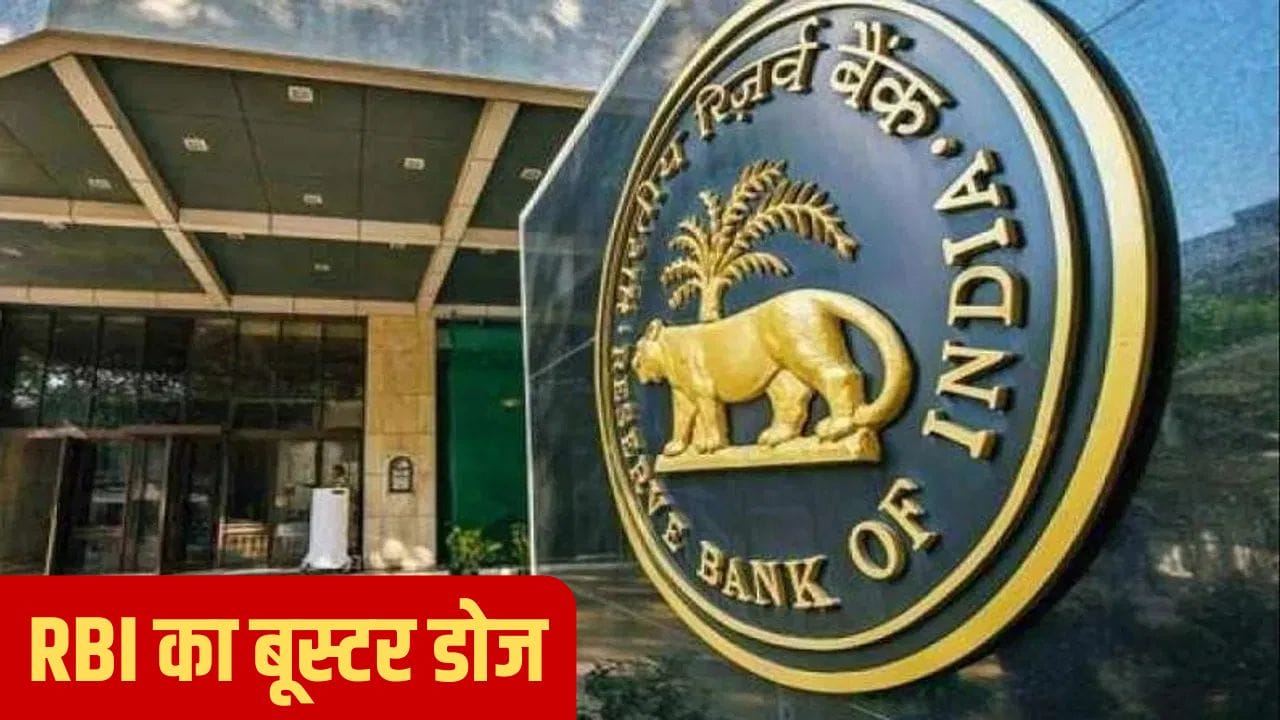
Reserve Bank of India
The Reserve Bank of India (RBI) on Thursday purchased government securities worth Rs 50,000 crore from the open market to increase liquidity in the banking system. RBI Governor Sanjay Malhotra had already indicated that the Central Bank will purchase securities worth a total of Rs 1 lakh crore in the month of December. With this step, more cash will be available with banks and their loan giving capacity will increase.
RBI currently plans to buy securities in two phases, out of which the purchase of government securities worth Rs 50,000 crore has been completed under the first phase, while the second phase will be done on December 18, in which the same amount of securities will be purchased. These securities have different tenures ranging from 4 years to 25 years. Among the government securities purchased by RBI, securities worth Rs 6,638 crore maturing in 2029 have been purchased at 6.75 percent, securities worth Rs 15,316 crore maturing in 2031 at 7.02 percent and securities worth Rs 21,189 crore maturing in 2032 have been purchased at the rate of 7.26 percent.
These are the rates of securities
Additionally, securities worth Rs 1,033 crore maturing in 2034 were traded at 6.79 per cent, securities worth Rs 3,942 crore maturing in 2036 at 7.54 per cent, securities worth Rs 657 crore maturing in 2039 at 6.92 per cent and securities worth Rs 1,225 crore maturing in 2050 at 6.67 per cent. Have been purchased. This step of RBI has been taken with the aim of providing adequate cash in the banking system and promoting credit growth.
Also read- EPFO: How much money can I withdraw from PF for my marriage? this is the rule
RBI decisions
The Reserve Bank of India not only pays attention to the stability of the banking sector, but also takes continuous steps to move the economy forward smoothly. Under this, RBI has reduced the repo rate by 0.25% for the fourth time this year, due to which it has come down to 5.25%. Overall, the repo rate has been reduced by 1.25% since the beginning of the year. Repo rate is the rate at which banks borrow from RBI. Due to reduction in this, banks get funds at lower cost, the benefit of which they give to the customers in the form of affordable EMIs like home loans and auto loans. This decision has been taken with the aim of accelerating economic activities, because at present the GDP growth is better than expected and the inflation rate also remains below the RBI target of 4.0%.