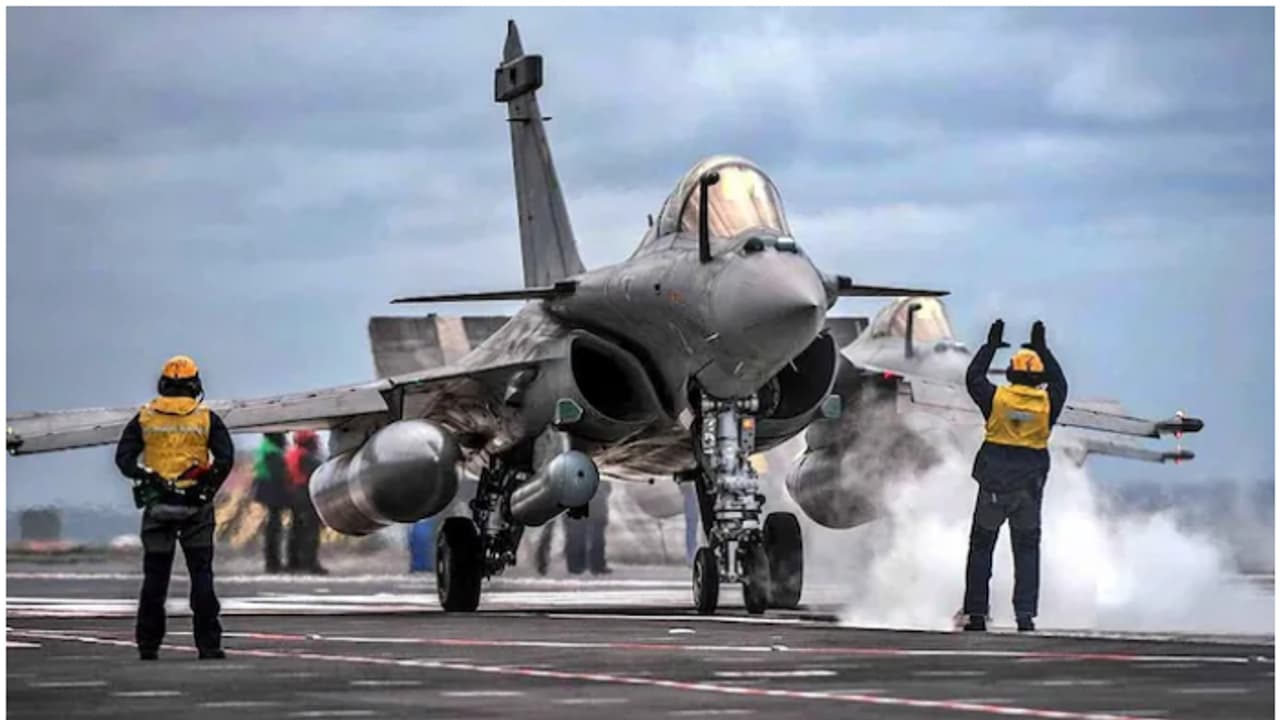
Indian Defense Research and Development Organization (DRDO) has successfully tested ‘Morphing Wing’ technology for fighter aircraft. This technology allows planes to change the shape of their wings momentarily in mid-flight.
New Delhi: India has done what only a few countries in the world have been able to do. Now, India’s fighter planes will be able to change their shape in flight. Indian Defense Research and Development Organization (DRDO) has successfully tested high-tech fighter jet morphing wing technology. By using this technology the enemy will not be able to understand our moves. A major breakthrough in morphing wing technology is that aircraft can change the shape of their wings momentarily during operation. This is a capability that has been previously tested by global companies such as NASA, Airbus and DARPA. Now, India’s own aviation ecosystem is implementing this cutting-edge technology into flight-ready hardware.
DRDO’s successful test
DRDO in collaboration with CSIR-National Aerospace Laboratories (NAL) has successfully demonstrated real-time geometric adjustment in the air. According to a senior DRDO scientist involved in the project, the wing of an aircraft is always a compromise. Morphing allows us to recreate it with better aerodynamic efficiency for different phases of flight. This development is not just about new materials. Morphing wings bring a fundamental change in how Indian jets can achieve stealth, maneuverability and fuel efficiency.
The wing will change in a moment
A unique feature of the morphing wing is that the aircraft’s wings can change their shape in the sky in just thousandths of a second. The wings adapt to needs, providing maximum lift during take-off, less drag during cruising and better maneuverability in combat. This technology also helps fighter jets save fuel and avoid radar.
What’s included in Morphing Wings?
- An iron-based shape memory alloy is applied inside the wings.
- In this, the SMA is heated and it contracts to bend the wing.
- To return the blade to its original position the current has to be turned off.
- There would be no gaps in the wing to reduce radar signature, and very few metal joints.
- To reduce power consumption, each section draws energy only when needed.