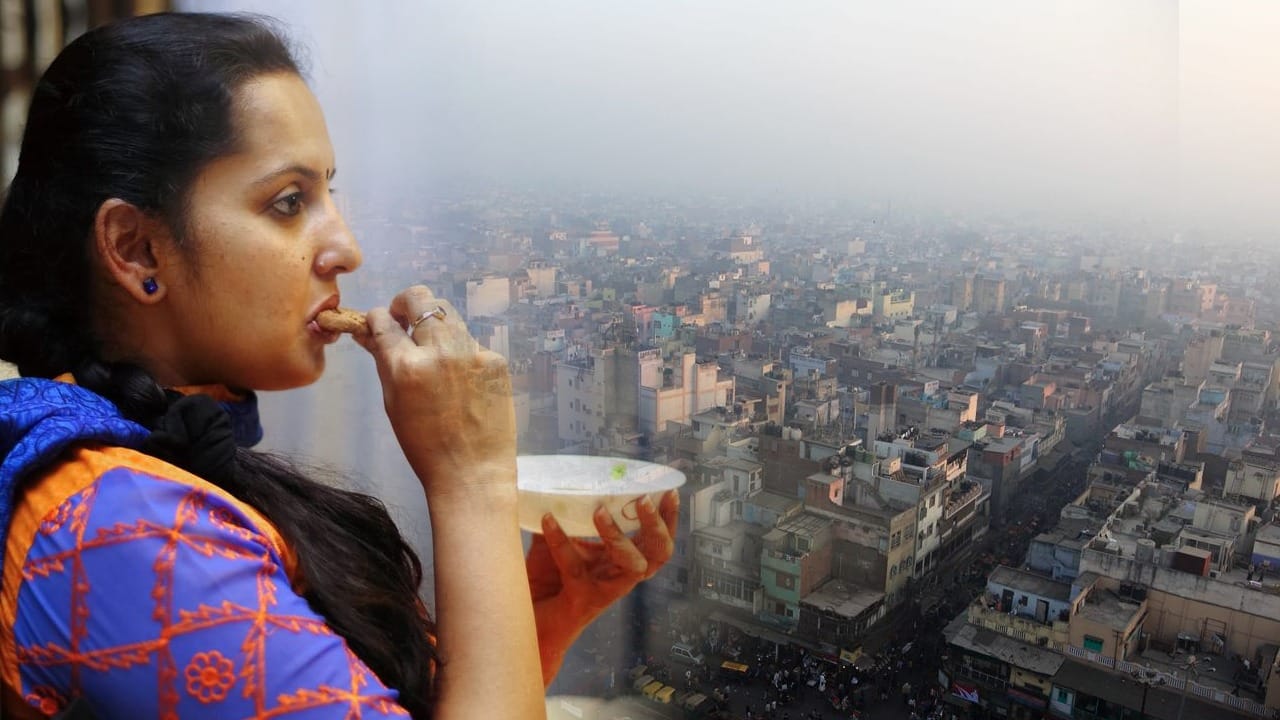
Effect of pollution on foodImage Credit source: Getty Images
For some time now, the level of air pollution has been continuously increasing in many parts of the country. Increasing pollution has started affecting the daily lives of people. Deteriorating air quality not only increases respiratory problems, but its effect is also visible on our eating and drinking habits. Harmful elements present in pollution affect the natural processes of the body, which can increase many problems related to eating habits. Let us know about this.
pollution During busy days, people often do not find food as tasty as before, due to which both the pleasure and interest in eating reduces. Along with this, appetite also starts decreasing and one does not feel like eating food even when the stomach is empty, due to which one feels lack of energy. Complaints of nausea or nausea also increase in many people during this period, especially in the morning or after returning from outside. Overall, air pollution affects our eating experience and puts more burden on the body.
How is pollution affecting eating habits?
Dr. Usast Dhir, Director and Head of the Department of Liver Transplant and Hepato-Biliary Surgery at Sir Ganga Ram Hospital, Delhi It is said that the rapidly increasing air pollution not only affects our breathing and lungs, but gradually also starts changing our eating habits. PM2.5, smoke and chemicals present in pollution enter the body and affect the nose, throat and digestive system. When the nose’s sense of smell is weak, the aroma of food is less felt, and that is why the taste of food also seems bland.
Additionally, polluted air increases inflammation in the stomach and intestines. Due to this, the digestion process slows down, due to which the person starts feeling less hungry or does not feel like eating food. Staying like this for a long time can lead to reduction in both energy and nutrition.
The harmful particles accumulated in the body due to pollution send signals of vomiting or heaviness to the brain, due to which the problem of nausea or nausea increases. Pollution affects the natural processes of the body and causes many food related discomforts.
What is the relationship between pollution and gut microbiome?
Pollution has a direct impact on our gut microbiome i.e. the good bacteria present in the stomach. These bacteria handle digestion, immunity and the entire gut-brain system. When we inhale the smoke, fine particles and harmful elements present in the polluted air, they slowly reach the intestines. Due to this, the number of good bacteria starts decreasing and bad bacteria increase. This imbalance is called gut dysbiosis.
In this condition, digestion is weak, appetite is reduced and one feels heaviness or discomfort in the stomach. Due to the direct connection between the gut and the brain, this imbalance can lead to increased mood, energy, and even symptoms like nausea. Therefore pollution deeply affects gut health.
How to protect?
Always wear an N95 mask when going out.
Maintain regular cleaning and ventilation to keep the air in the house clean.
Keep your gut healthy by eating curd, fruits and fiber rich food.
Drink plenty of water throughout the day so that toxins are removed from the body.
Strengthen immunity with things like turmeric, ginger and vitamin C.