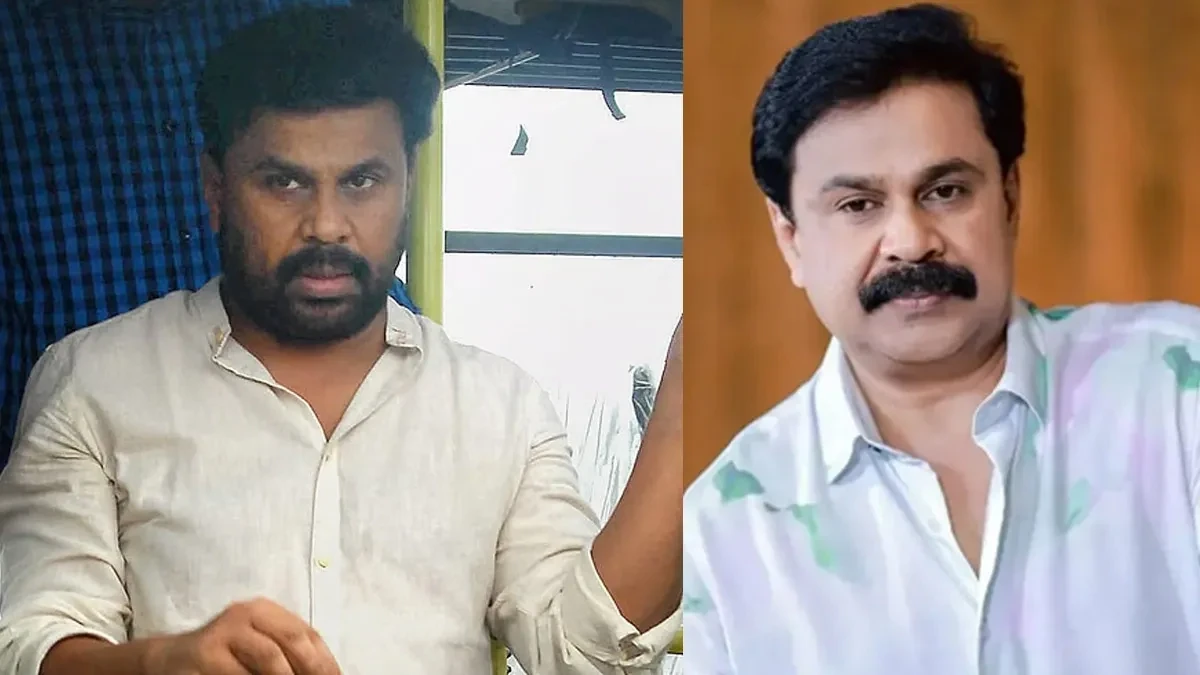
Actress Assault Case: More than eight years after one of the most shocking crimes in Kerala’s recent history, the Kerala actor assault case is finally approaching its legal conclusion.
The Ernakulam Principal Sessions Court is scheduled to pronounce its verdict on December 8, 2025, bringing an end to a trial that is widely described as one of the longest-running high-profile trials, which has profoundly impacted the Malayalam film industry and public discourse on women’s safety and rights.
The crime dates back to February 17, 2017, when a popular Malayalam actress was abducted while travelling from Thrissur to Kochi. According to the prosecution, a gang of men intercepted her car and unlawfully confined her, and she was sexually assaulted inside the moving vehicle. The assault was allegedly videographed by the perpetrators.
Dileep Named as Key Accused in Conspiracy
Malayalam superstar Dileep (P. Gopalakrishnan) was later arrested and named as the eighth accused, with the prosecution alleging that he had masterminded the crime as part of a larger conspiracy. He was taken into custody in July 2017 and spent nearly 90 days in prison before being granted bail by the High Court in October that year.
The prosecution case states that the first accused, N.S. Sunil, also known as ‘Pulsar’ Suni, carried out the assault after conspiring with Dileep and other co-accused. The visuals of the crime were allegedly recorded on a mobile phone as part of the plan.
A Trial Marked by Delays and Legal Complexities
According to a report by Mathrubhumi English (26 November 2025) the trial formally began on March 8, 2018, but the proceedings were repeatedly delayed due to multiple factors. The COVID-19 pandemic alone stalled the case for almost two years. Further delays occurred after filmmaker Balachandrakumar made revelations in December 2021, claiming he had witnessed the accused viewing the visuals of the assault at his residence, which led to further investigation and a supplementary chargesheet.
The woman survivor repeatedly approached higher courts seeking changes in the judge over alleged bias, while the case faced several twists, including witness hostility and claims of digital evidence tampering, further extending the trial. The Supreme Court had earlier directed that the trial be completed within six months, but procedural hurdles and fresh investigations extended the process.
Scale of the Trial
The case has been widely described as one of the longest-running high-profile cases in recent memory. According to a report by The Hindu (November 25, 2025), the court had considered around 1,700 documents and 261 witnesses.
According to a report by Mathrubhumi English, the trial included 438 days of witness examination, 142 material objects produced, 28 individuals turned approvers, 221 defense documents submitted, and 833 prosecution documents presented.
The trial was held in camera to protect the survivor’s identity. The final witness examined was the investigating officer, Crime Branch DySP Baiju K. Paulose, in September last year. Final arguments concluded in April 2025.
Social and Industry-Wide Impact
Beyond the courtroom, the case left a lasting impact on the Malayalam film industry. It partially led to the formation of the Women in Cinema Collective (WCC), a group that advocates for the rights and safety of women in the Malayalam film industry. The case also played a role in the government appointing the Hema Committee to study the systemic issues faced by women working in Malayalam cinema.
The survivor’s firm stand throughout the prolonged legal process drew nationwide attention and reshaped conversations around gender, power, and accountability in the film industry.
Key Highlights in the Case
February 17, 2017: Actress abducted and assaulted
February 19, 2017: The Kerala Police arrested three of the seven accused, while the prime accused, Pulsar Suni, remained absconding.
February 22, 2017: A lawyer submitted the mobile phone and memory card containing the assault visuals to the Angamaly magistrate, as reported by The Economic Times Online (January 14, 2022).
February 23, 2017: Pulsar Suni and another accused, Vijesh, arrested
April 18, 2017: Police filed the first chargesheet naming Pulsar Suni and six others as accused.
June 23, 2017: A new twist emerged when Suni’s fellow inmate Jinson told police that Pulsar Suni had shared details of the crime with him.
June 24, 2017: A letter allegedly written by Pulsar Suni to actor Dileep surfaced, intensifying the controversy.
June 24, 2017: Dileep and his close friend Nadirsha claimed they received an extortion call from a person identifying as Pulsar Suni’s prison mate, demanding ₹1.5 crore to keep Dileep’s name out of the case.
June 28, 2017: Dileep and Nadirsha undergo extensive police questioning.
July 10, 2017: Dileep arrested. The crime was allegedly motivated by revenge, linked to the survivor informing Manju Warrier about Dileep’s relationship with Kavya Madhavan, whom he married in 2016 after divorcing Warrier.
July 11, 2017: Dileep expelled from AMMA amid public outrage.
October 3, 2017: Dileep granted bail
November 22, 2017: A 650-page subsidiary chargesheet was filed at Angamaly Court, naming 12 accused, including Dileep as the eighth, and citing his former wife Manju Warrier as a key witness.
December 5, 2017: The court accepts the chargesheet, listing over 50 film industry members as witnesses.
February 7, 2018: Dileep’s plea to access assault visuals is rejected.
March 8, 2018: Trial begins
December 25, 2021: Balachandrakumar’s revelations
January 4, 2022: Further investigation permitted
September 17, 2024: Pulsar Suni granted bail
December 11, 2024: Final arguments begin.
April 9, 2025: Defense completes arguments
Verdict Awaited
As Kerala waits for the verdict on December 8, the case stands as a rare instance where a crime involving powerful industry figures was pursued through years of intense legal scrutiny. For the survivor, the long wait for justice is nearing a decisive moment. For the public, the judgment is expected to have lasting implications for accountability, institutional reform, and the future of workplace safety in the film industry.