PM Narendra Modi and Russia’s Vladimir Putin meet in New Delhi for a high-stakes summit amid strained India-US ties, focusing on defence, oil, trade imbalance and a private dinner that underscores their 25-year personal bond.
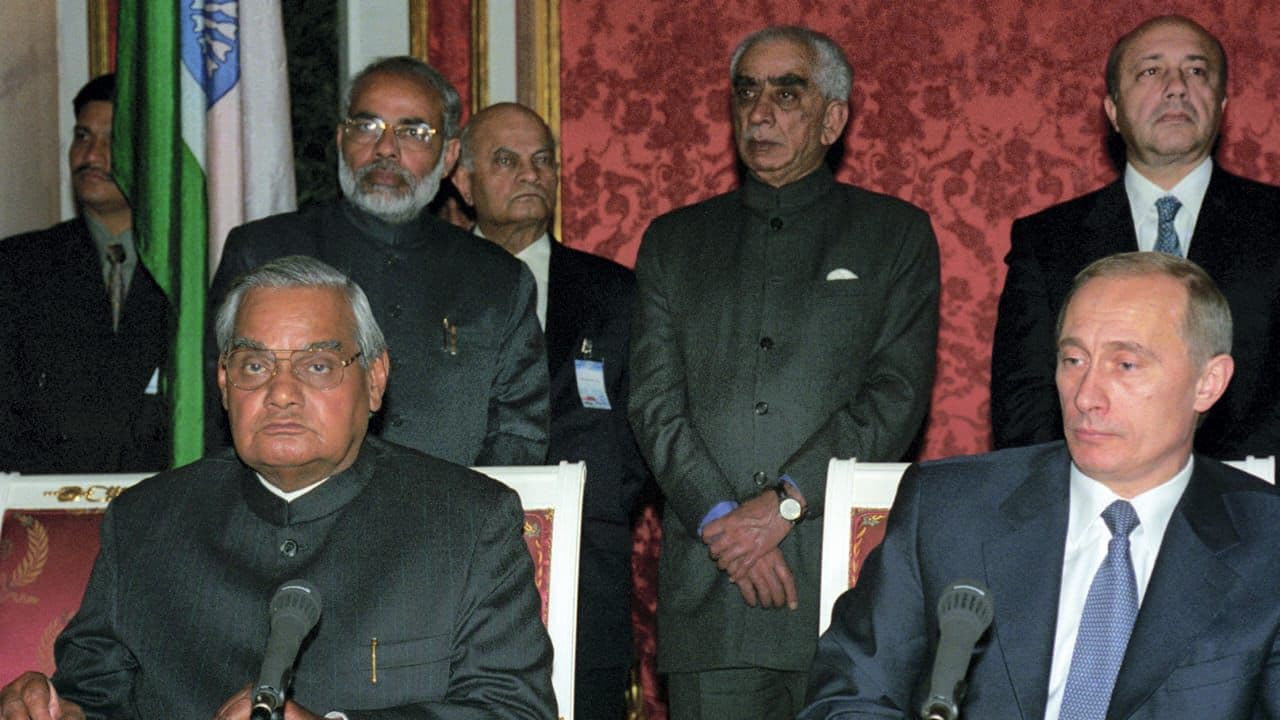
Two decades before he became the most powerful man in India, Narendra Modi was a first-time chief minister from Gujarat walking the streets of Moscow. It was 2001. Modi had accompanied then Prime Minister Atal Bihari Vajpayee on a bilateral visit—his first exposure to the grandeur of India-Russia statecraft.
Photos from that trip, now resurfacing ahead of Vladimir Putin’s arrival, show a younger Modi watching the Russian capital with the curiosity of a man who understood early that global politics shapes local destinies.
That backdrop makes the upcoming summit in New Delhi not just another diplomatic engagement—it is a moment loaded with continuity, memory and mutual investment built over 25 years.
Scroll to load tweet…
A Private Dinner Before the Politics Begin
Russian President Vladimir Putin is expected to land in New Delhi around 6:35 pm on Thursday, beginning a tightly packed 27-hour visit.
Hours after he arrives, PM Modi will host him for a private dinner—a reciprocal gesture to the similar hospitality Putin extended during Modi’s Moscow visit in July last year. These quiet, informal interactions between the two leaders have often laid the groundwork for bigger strategic decisions.
The following morning, Putin will be received at Rashtrapati Bhavan and will then proceed to Rajghat to pay homage to Mahatma Gandhi.
Summit in the Shadow of a Downturn in India–US Relations
The timing of Putin’s visit has amplified its importance. India-US ties—seen as central to New Delhi’s global posture—are navigating what officials describe as their most difficult phase in 20 years.
Washington recently slapped a whopping 50% tariff on Indian goods and added a further 25% levy linked to New Delhi’s procurement of Russian crude oil. The sanctions have begun to bite, prompting concern in New Delhi.
This evolving pressure makes the India-Russia summit a geopolitical signal: that despite Western scrutiny, the partnership remains “time-tested” and indispensable for strategic autonomy.
Defence Talks: S-400, Su-57 Jets and ‘Operation Sindoor’
Defence ministers from both sides meet on Thursday, ahead of the leaders’ talks. High on the agenda is India’s plan to procure more S-400 air defence systems—platforms that proved “very effective during Operation Sindoor”, according to top military officials.
India had signed a USD 5 billion deal for five S-400 units in 2018, brushing aside US warnings of CAATSA sanctions.
Kremlin spokesperson Dmitry Peskov hinted at deeper possibilities—notably the discussion around Su-57 fifth-generation fighter jets, at a time when India is weighing multiple contenders including the Rafale, F-21, F/A-18 and Eurofighter Typhoon.
Oil, Sanctions and a Trade Deficit New Delhi Can No Longer Ignore
India’s annual procurement of goods and services from Russia stands at USD 65 billion, while exports to Moscow hover around USD 5 billion—a ballooning trade deficit that New Delhi wants addressed urgently.
With sweeping US sanctions on two major Russian oil producers, India’s crude imports have dipped in recent weeks. Peskov admitted that the drop may continue “for a brief period” due to Western pressure. But he also emphasised that Moscow is taking steps to stabilise supplies.
Behind closed doors, New Delhi is expected to push Putin for a clear roadmap to rebalance the trade architecture—especially in pharma, agriculture, food products, consumer goods and fertilisers. Russia currently supplies India three to four million tonnes of fertiliser annually, a critical component in India’s agricultural economy.
Ukraine War: India Stays the Middle Path
Amid renewed American attempts to end the Ukraine war, the conflict will inevitably appear on the summit agenda. India’s position remains unchanged: dialogue, diplomacy and no endorsement of military blocs.
Putin is expected to brief Modi on “the latest US efforts to bring an end to the conflict,” while India will reiterate its emphasis on a negotiated settlement.
A Bouquet of Agreements on the Table
After the Modi–Putin talks on Friday, both sides are expected to sign a series of agreements that will shape cooperation for years.
Key among them:
- A pact easing movement of Indian workers to Russia
- A logistical support agreement under expanded defence cooperation
- Trade facilitation measures
- Discussions on the free trade agreement with the Eurasian Economic Union
Energy security will also loom large. With India exploring small modular reactors and Russia offering additional discounts on crude, the summit may deliver new pathways in nuclear and hydrocarbons.
Public Diplomacy & Soft Power: Putin’s New India Channel
In a symbolic gesture expanding Russia’s narrative presence in India, Putin will launch a new India channel of the Russian state broadcaster after the summit. Later that evening, he will attend a state banquet hosted by President Droupadi Murmu, before departing at around 9 pm on Friday.
A Partnership Built on Past Trust, Now Tested by Present Turbulence
India and Russia have held 22 annual summit meetings, alternating between New Delhi and Moscow. The last time Putin visited India was in 2021. Modi travelled to Moscow in July 2024.
Across changing governments and global crises—from the Cold War to Ukraine—the relationship has endured. But this summit stands apart.
The world is now realigning at a dizzying pace. India’s strategic choices carry more weight than ever before. And the Modi–Putin partnership—rooted in personal rapport, historical alignment and shared interests—remains one of New Delhi’s most consequential diplomatic equations.
As the two leaders sit across the table again, the question remains: Can this old friendship help India navigate the newest challenges of a rapidly shifting world order?