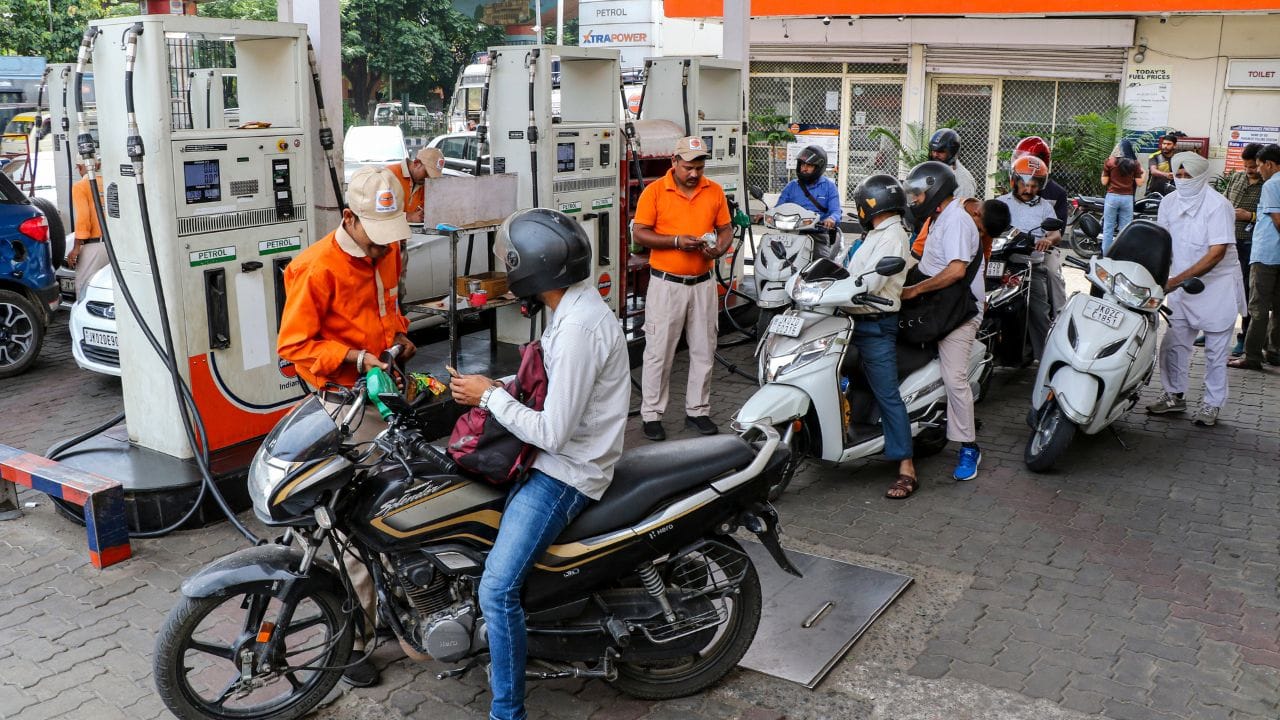
In recent times, the prices of crude oil have decreased significantly. Even after that the common people are not expected to benefit from this. According to industry sources, despite the huge fall in crude oil prices, government oil marketing companies (OMCs) are unlikely to reduce the retail prices of fuel anytime soon. The refiners want to compensate for the huge losses incurred during the conflict in West Asia and are also keeping an eye on the implementation of the peace agreement.
An analyst, speaking on condition of anonymity, said in the MC report that government oil companies are unlikely to change prices immediately. They will wait and see the outcome of the peace agreement. The loss (under-recovery) they incurred was very high – earlier it was Rs 1,000 crore per day, which later came down to Rs 500-600 crore per day. Since their losses are huge, the government can give some time to OMCs to recover the losses.
Companies suffered a loss of Rs 1000 crore in May
In May, OMCs were incurring daily losses of up to Rs 1,000 crore on the sale of petrol, diesel and LPG. Later, after the government increased the prices of petrol and diesel by about Rs 7.5 per litre, this loss came down to Rs 500-600 crore per day. The total under-recovery on petrol, diesel and liquefied petroleum gas (LPG) during March-May 2026 is estimated to be around Rs 1 lakh crore.
Sehul Bhatt, a crude oil expert at CRISIL Intelligence, said that if the price of the Indian crude basket remains below $ 90 per barrel, there is not likely to be any significant increase in under-recovery from the current level. He also said that the energy market may remain volatile due to uncertainties regarding the implementation of the peace agreement.
LPG prices also rise
Due to this conflict, international LPG prices have also increased rapidly. According to CRISIL Intelligence, the Saudi Aramco contract price, considered the benchmark for LPG imports into India, increased by 46% during February-June 2026. The market had factored the risk of supply disruptions and higher freight costs into prices. In the case of Delhi, the under-recovery on domestic cylinders increased to Rs 651 in May 2026. While commercial LPG prices changed rapidly depending on market conditions, the impact on domestic customers was limited. A part of the increase in procurement cost was borne by the oil marketing companies themselves, taking the total under-recovery on LPG to around Rs 22,000 crore during March-May 2026. This information has been obtained from CRISIL data.
Still short in supply
Experts say that the war in West Asia was very serious, which had eliminated the supply of 10-11 million barrels of oil from the global market every day. The analyst said that countries will now accumulate crude oil stocks to reduce the risk of further war or geopolitical shocks. The analyst said, “There has been a shortage of 6 mbd (million barrels per day) of oil. According to the International Energy Agency, member countries had released 4 mbd of oil from their strategic reserves into the supply market. Countries will now accumulate their inventories to create buffer stocks and deal with the situation of resurgence of fighting or any geopolitical tension and will compensate for the loss of 6 mbd.
Will prices increase?
Experts also say that crude oil prices may increase further because oil inventory is decreasing at the global level. In such circumstances, OMCs (Oil Marketing Companies) are unlikely to reduce retail fuel prices any time soon. According to S&P Global Energy, international crude oil prices are expected to reach $80-90 per barrel in the second half of 2026, as global oil inventories continue to decline following supply disruptions due to the West Asia conflict. Although the reopening of the Strait of Hormuz is expected to improve energy flows and increase market confidence, market participants still believe that it will take time for the market to normalize and replenish inventories.
Margins of companies decreased
ICRA Vice President and Co-Head of Corporate Ratings Prashant Vashishtha had also said that it will take at least two quarters or up to a year for supplies and crude oil prices to return to pre-war levels. Retail petrol and diesel prices in India have remained largely stable since the beginning of April 2022, leading to lower marketing margins and increased pressure on OMCs’ balance sheets. Data from the Petroleum Planning and Analysis Cell showed that amid higher global prices, the average price of oil imported by refiners was $106.23 in May and $114.48 in April.
