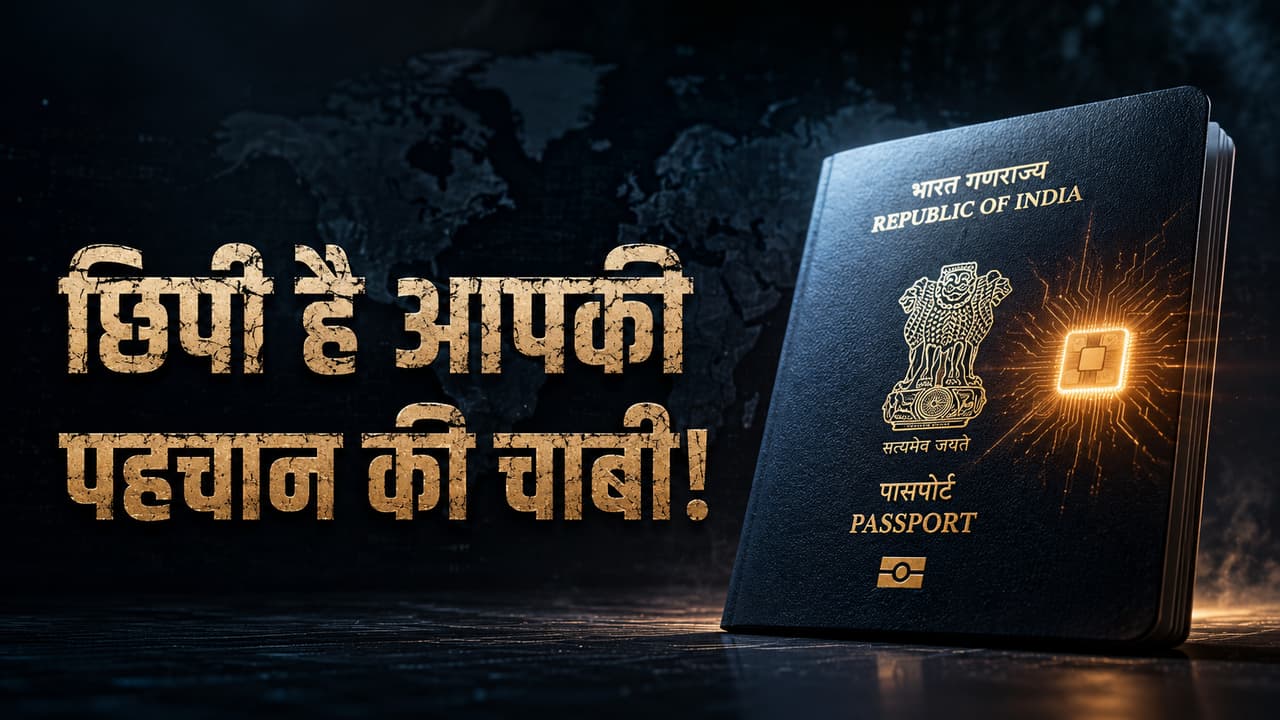
India’s chip e-passport is not just a new travel document but a new shield for identity security. The technology behind RFID chips, biometric data and digital verification claims to make international travel safer and faster than ever.
India e-Passport: If you are planning to travel abroad in the coming days or are thinking of renewing your passport, the new blue booklet in your hands will not be the same as before. The Central Government has implemented the biggest and most modern upgrade in the history of Indian travel documents. India has officially started issuing ‘chip-enabled e-passports’. At first glance it will look like a normal passport, but a small international symbol printed on its front cover testifies that there is such a digital maze of security hidden within it, which will be impossible for even the world’s most vicious fraudsters to penetrate.
What is the dangerous combination of this ‘electronic chip’ and PKI?
The biggest suspense of this new e-passport is not what you can see with the naked eye, but what is cleverly hidden within its pages. A state-of-the-art Radio Frequency Identification (RFID) chip has been installed inside the passport. In this small chip, your fingerprint and facial recognition (biometric data) along with basic information like your name, date of birth, photo and passport number are safely stored. ‘Public Key Infrastructure’ (PKI) technology has been used to encrypt this data. This means that if any unauthorized person tries to tamper with this passport, change the photo or make a clone of it, the international security system will immediately catch him at the airport.
Endless waiting in long lines at immigration counters will end
Apart from tackling passport fraud and fake travel documents, this new upgrade is going to prove to be an extremely practical boon for Indian travellers. Biometric e-Gates and automated immigration readers have now been installed at many modern airports around the world. As soon as Indian travelers pass through these gates with this new e-passport, the machines will complete the authentication in seconds by matching the digital data stored in the chip with your real identity. You will not need to stand for hours in long queues in front of immigration officers. This move is directly preparing Indian travelers for a global future where border controls have become completely contactless and digital.
How to get this ‘hi-tech’ passport?
Hearing this major technological change, the suspense began to deepen in the minds of the general public as to whether the entire process of making a passport will now change? The government has completely clarified its position on this. You don’t need to go through any new or complicated procedures. Whether you are applying for the first time or re-issuing, you will need to visit the ‘Passport Seva Portal’, book an appointment and provide biometrics as before. If the passport office in your area has upgraded to the new system, you will get this chip-enabled version without any additional hassle.
Will your old valid documents become junk?
The biggest relief is for those who already have a valid passport. There is no need for them to panic or visit offices to exchange their old passport. Your existing ordinary passports will remain fully valid till the expiry date (validity date) printed on them. The government has not forcibly canceled any old passport. This is a silent upgrade behind the scenes, which is going to strengthen the global credibility of the Indian passport manifold.
There is a ‘smart chip’ hidden inside the passport, which will keep an eye on every fraud.
At first glance the new e-passport looks like a normal passport, but the RFID electronic chip inside its cover makes it special. In this chip, the passport holder’s name, date of birth, passport number, photo and other important information is safely stored in encrypted form. When the immigration officer scans it, the digital data in the chip and the information printed on the passport are instantly matched. If someone has tried to tamper or clone the passport, the system can easily identify it.
New shield of biometric security, identity theft will become difficult
Not only general information but also biometric data like facial recognition and necessary security details are stored securely in the e-passport. The security of this entire system is done by Public Key Infrastructure (PKI) technology, which can immediately detect any unauthorized change or attempt of data theft. This is the reason why it is considered much more secure than the traditional passport.