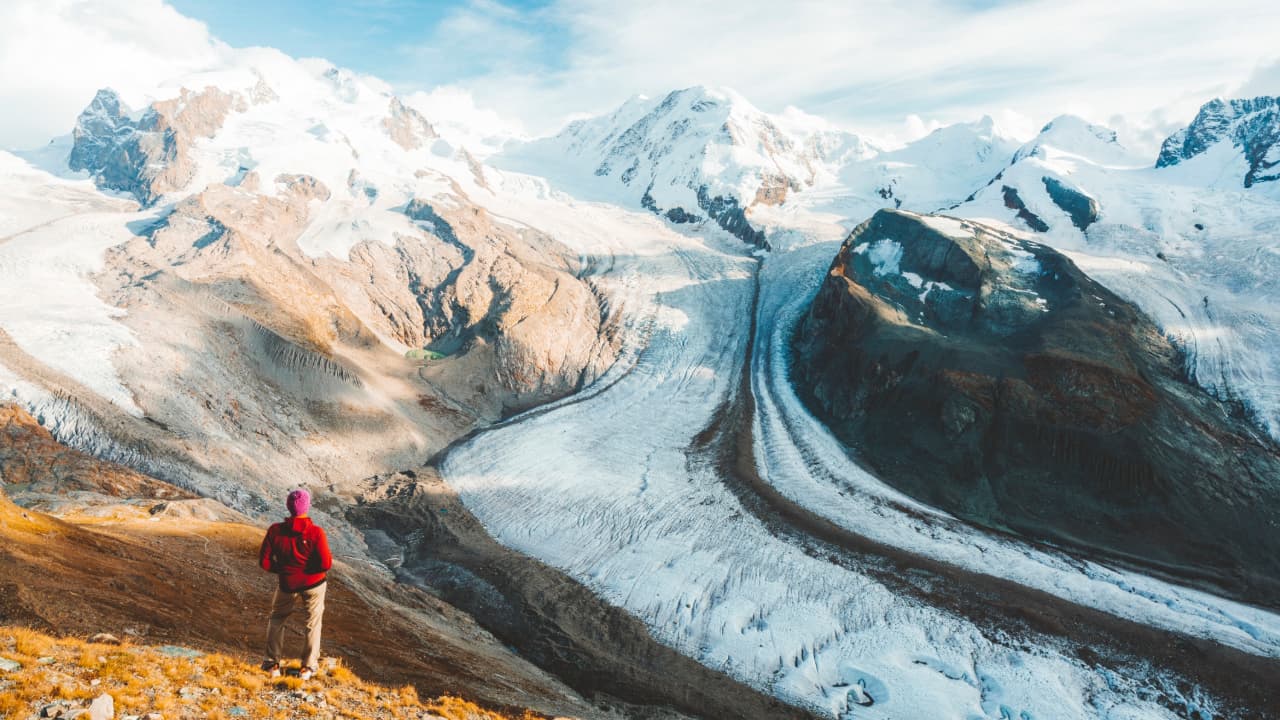
A new study warns of rapid climate change in the mountains. Learn how increasing heat and decreasing snowfall is creating water crisis for billions of people. Learn more now.
Scientists have warned that climate change in mountainous areas is happening more rapidly than previously estimated. This poses a major threat to people who depend on the mountains for water, food and protection from natural disasters. This warning is based on a large international review that Nature Reviews Earth and Environment Is printed in. It explains how climate change is affecting high altitude areas.
Researchers have named this trend “altitude-dependent climate change.” This means that as you go up the mountain. The speed and intensity of environmental change often increases. This review emphasizes the rapid changes in temperature, rainfall patterns and snowfall in many of the world’s major mountain ranges.
What was revealed in the global review
This study was conducted under the leadership of Dr. Nick Pepin, Associate Professor at the University of Portsmouth. He worked closely with experts investigating mountain ranges around the world, such as the Andes, the Alps, the Rocky Mountains, and the Tibetan Plateau. By analyzing climate datasets, satellite records and field studies, the research team discovered worrying trends from 1980 to 2020.
Their results show that mountainous areas are warming at a faster rate than the surrounding plains by about 0.21°C per century. Although these temperature changes may seem minor, even small changes at high altitudes can have a big impact, especially when snow and glaciers are also melting rapidly.
The review also points out that unpredictability in rainfall patterns is increasing in many hilly areas. Snowfall is rapidly decreasing, and most winter precipitation now falls as rain rather than snow. This change reduces the water stored in snowpack and glaciers and increases the risk of flash floods.
What effect will this have on the world?
More than one billion people are directly dependent on mountain water sources. The Himalayas alone feed rivers that reach China and India, the world’s two most populous countries. As snow and glaciers melt faster, these water systems are becoming less reliable. Due to this climate change, trees, plants and animals are also moving upwards in search of cooler environments. However, mountains have a natural limit, and once species reach the peak, they have nowhere else to go. This could lead to the extinction of unique wildlife and long-term damage to the mountain ecosystems that support global biodiversity.
Recent disasters show the seriousness of this threat. In Pakistan, one of the worst monsoon seasons in recent times brought heavy rains and flash floods, resulting in more than 1,000 deaths. As mountain climates continue to change, such incidents may become more common.
Progress so far and current challenges
The research team first highlighted the rapid warming of mountainous regions in an important 2015 study. Since then, scientists have made progress in understanding its causes, such as melting ice, changes in air humidity, and aerosol pollution. However, the core issue remains, climate change continues to accelerate.
A major challenge is the lack of weather stations in high altitude areas. Dr Emily Potter of the University of Sheffield says computer models are getting better, but more accurate monitoring is urgently needed. She emphasizes that technology alone cannot solve the issue. Stronger global climate commitments and better support for mountain regions are needed. Climate change in mountain areas is accelerating faster than expected, and action is needed now to protect both mountain communities and the billions of people who depend on them.