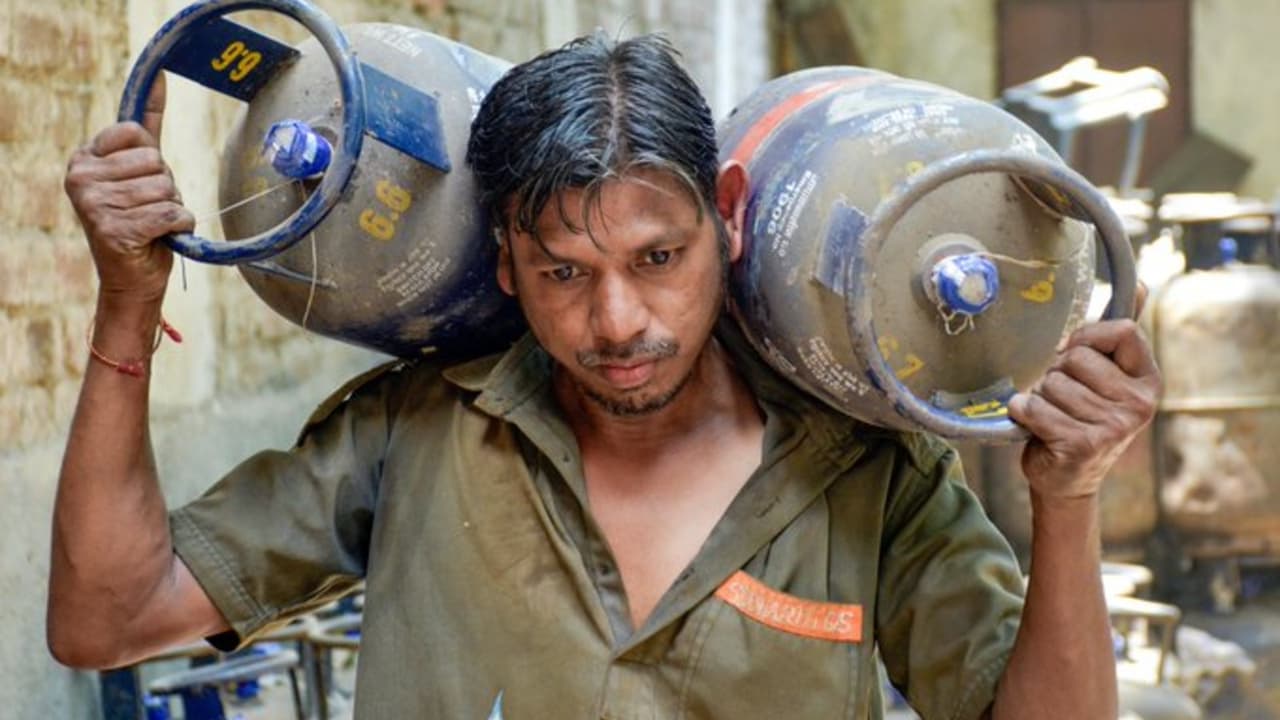
Commercial LPG Supply: As tensions subsided in West Asia, the Center removed restrictions on commercial LPG. Bulk supply partially restored, while focus remains on domestic LPG and PNG policy.
New Delhi: There is finally relief news for commercial and industrial LPG consumers who have been facing pressure for months due to increasing geopolitical tension in West Asia. After assessing the improvement in the situation, the Central Government has removed all sector-based restrictions imposed on commercial packed LPG. Along with this, the supply of bulk LPG has also been partially restored. This decision has brought relief to hotels, restaurants, catering, factories and large industrial establishments, which were facing operational challenges for some time due to limited gas supply.
Why did the restrictions have to be removed?
The government says that the global supply situation has improved compared to before. For this reason, it has now been decided to restore the supply of commercial LPG to the pre-crisis level. However, the government has also clarified that the availability of LPG for domestic consumers will still remain the top priority and there will be no impact on its supply.
Bulk LPG users also got relief, but not completely
The supply of commercial packed LPG has been fully normalized, but bulk LPG users will currently be supplied only up to 50 percent of their pre-crisis consumption. The government says that this decision has been taken after reviewing the current availability of domestic production and imports. If global conditions improve further, this limit may also be increased in the future.
How did the government save domestic gas supply during the crisis?
As tensions escalated in West Asia and global energy supplies began to be affected, the central government used special powers under the Essential Commodities Act to reserve C3 and C4 hydrocarbon streams solely for LPG production. These raw materials are also used in petrochemical industries, but at that time the government diverted them from other industries towards LPG production to secure the domestic gas supply. The effect of this strategy was that despite the international crisis, the availability of domestic LPG remained almost normal across the country.
Now industries will again get the necessary raw materials
After the situation has improved, the government has now decided to make a large part of the C3 and C4 streams available again to the petrochemical and other industrial sectors. However, the Petroleum Ministry has also ensured that domestic LPG production will remain at least 40 thousand metric tonnes per day so that the domestic supply is not affected under any circumstances.
Strict rules are still in place to stop hoarding
The government has clarified that despite the supply being normal, the monitoring system will continue. To prevent hoarding of LPG, a gap of 25 days will be applicable between refill bookings. Also, oil marketing companies have been directed to maintain detailed data of commercial and industrial customers and continuously monitor supplies through a common database.
Government’s focus will be on PNG
The government has made it clear that there has been no change in its long-term energy policy. In areas where Piped Natural Gas (PNG) is available, commercial and industrial consumers will be gradually shifted from LPG to PNG. Its objective is to reduce dependence on imported LPG and strengthen the energy security of the country.
What will change for businesses?
This decision will provide the most relief to those hotels, restaurants, catering units, small industries and factories whose daily activities depend on LPG. Businesses whose costs and operations were being affected due to limited supply for a long time are now expected to get better supplies than before. However, the government still does not seem completely sure. Only partial resumption of bulk LPG is an indication that the Center wants to adopt a cautious strategy for the time being in view of the risks persisting in the global energy market. If international conditions remain stable, the possibility of further relief to the industrial sector in the coming months cannot be ruled out.
Long-term strategy and the ‘PNG’ trap: Is the end of the LPG era nigh?
This entire crisis has taught India a new lesson. The Petroleum Secretary has written a very important letter to the Chief Secretaries of all the States and Union Territories, making it clear that there will not be even an iota of change in the country’s long-term policy of promoting clean fuels. Commercial customers who come under the Piped Natural Gas (PNG) network will have to gradually shift to PNG. The real strategy of the government is to completely eliminate its dependence on foreign imported LPG and maintain domestic production at a level of at least 40,000 metric tons per day. This step of the government shows that it is confident about domestic LPG production, but the gradual restoration of bulk supply makes it clear that the real battle for the country’s energy security is not over yet.