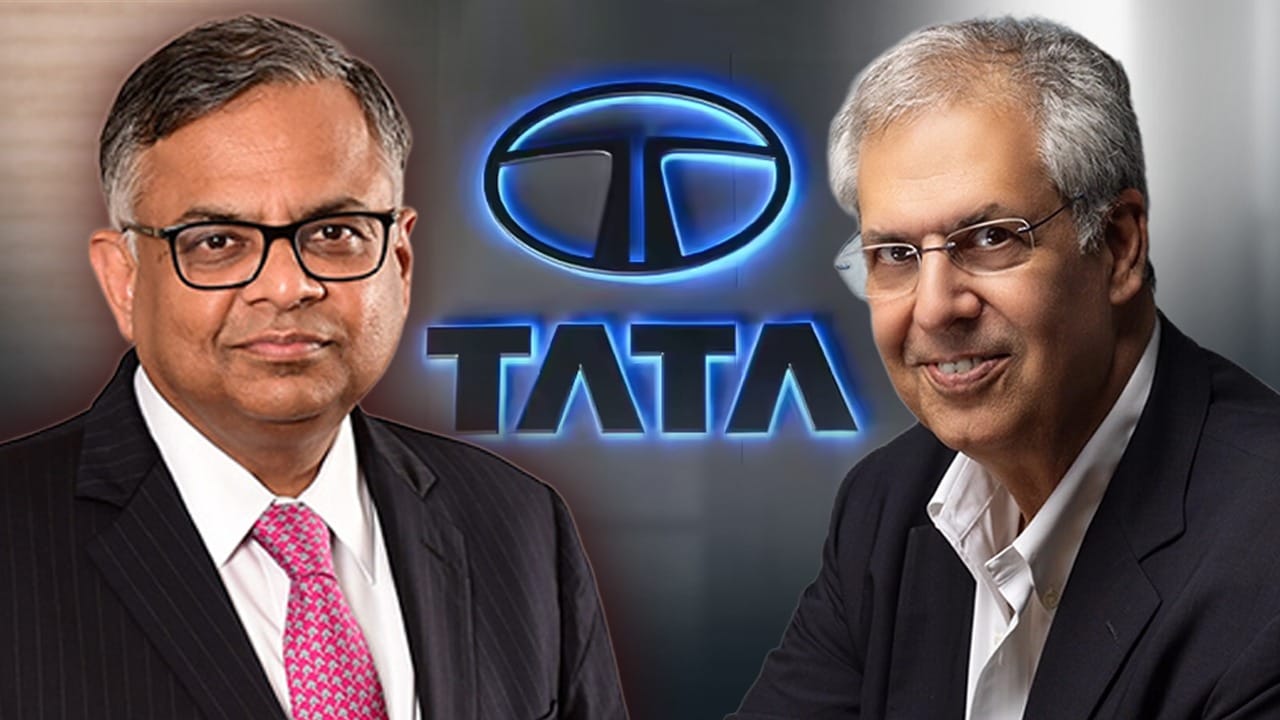
Tata Sons’ board meeting is going to be held on Tuesday. This meeting is taking place at a time when the Tata Group is facing its biggest internal turmoil since the Cyrus Mistry era. This time this tension is within the Tata Trusts themselves.
The cracks within the Tata Group are not limited to people alone. At the heart of the tussle is the question of how much power the Tata Trusts should have over Tata Sons, and will the group’s old, consensus-driven arrangement now break down?
This meeting becomes all the more important because it is taking place after months of deferred discussions, infighting among trustees, board-level differences, and the sudden exit of Mehli Mistry, one of Ratan Tata’s closest confidants, from the trusts.
How did the power structure change after Ratan Tata’s departure?
The current era within the Tata Group began after the departure of Ratan Tata. Soon after, Ratan’s half-brother Noel Tata took over as chairman of Tata Trusts. These trusts together own about 66 percent shares of Tata Sons, while construction and infrastructure major SP Group holds 18.4 percent shares of the company. In the absence of Ratan Tata, many important decisions which were earlier taken by consensus, were now taken through formal discussions among the trustees. Around the same time, Tata Trusts implemented a system under which the performance of nominee directors above 75 years of age would be reviewed annually. This laid the foundation for the first major differences within the system of trusts.
Controversy regarding representation in the board of Tata Sons
This tension was clearly visible during a meeting of Tata Trusts. In this meeting, there was to be a discussion on whether Vijay Singh should be kept as a nominee director on the board of Tata Sons or not.
Trustees Mehli Mistry, Darius Khambata, Pramit Jhaveri and Jahangir Jahangir opposed Singh’s retention. Instead, he supported Mehli Mistry for a seat on the board of Tata Sons.
During the discussion, some trustees raised concerns about transparency and exchange of information between Tata Sons and Tata Trusts. According to the ET report, questions were raised over whether the nominee director was giving complete information to the trustees about important board-level matters.
Noel Tata and Venu Srinivasan opposed the removal of nominee directors midway through their tenure. He argued that appointments should be made only under a fixed institutional process. This meeting ended without any consensus.
Those statements of Mehli Mistry which revealed the rift
According to minutes of the September meeting, Mehli Mistry told trustees he was “disappointed” that Noel Tata did not support his candidacy, despite his support during previous leadership discussions. The incident exposed the growing rifts within the Tata Trusts following the death of Ratan Tata. According to media reports, some trustees believed that Tata Trusts needed a stronger voice within Tata Sons, as the group faced major strategic issues, including governance questions and the future of Tata Sons’ unlisted status.
This conflict deepened a month later, when the issue of renewal of Mehli Mistry’s tenure as trustee came up. Noel Tata, Venu Srinivasan and Vijay Singh were unlikely to support his tenure extension, which would simply mean that his tenure at Tata Trusts would come to an end.
This development was significant because the appointment of trustees in Tata Trusts has historically been done unanimously. This case related to Mehli Mistry has become the clearest indication so far that the internal coordination within the structure of the trusts has changed.
Concerns related to governance increased
Over the next few months, discussions within the Tata Trusts moved beyond the issue of representation on the board. The role of nominee directors, negotiations between Tata Sons and the Tata Trusts, governance structures, and whether Tata Sons should remain an unlisted private company were debated.
The listing issue became important because after Tata Sons was classified as an ‘upper-layer NBFC’, regulatory discussions had resumed on the possibility of launching the first IPO. Meanwhile, Tata Group was also investing heavily in Air India, semiconductors, electronics manufacturing and digital business.
Decision on Chandrasekaran’s third term postponed
After this, all attention turned to Tata Sons itself. In the board meeting of Tata Sons held in February 2026, N. A decision was expected to give Chandrasekaran a third term as chairman. But, after discussions on losses in the new business, debt levels and distribution of capital, the matter was postponed.
According to ET report, Noel Tata expressed concern about the losses being incurred by Air India and the investments being made in new business. Chandrasekaran himself suggested postponing this discussion, so that better coordination could be achieved between Tata Sons and Tata Trusts. Following this decision, speculations grew about further differences within the structure of the Tata Group.
After this the decisions were postponed several times
Over the next few months, many important meetings and discussions related to governance of Tata Trusts were postponed. Due to continuing differences, there were reports of delays in discussions related to trustee matters, board nominations and governance. An important meeting of Tata Trusts to be held in the beginning of May 2026 was also postponed. Issues related to governance, legal challenges and appointment of trustees were expected to be discussed in this meeting. According to the report, this meeting was postponed due to ongoing differences and legal disputes on governance related matters within the trusts.
What are the expectations from today’s board meeting?
According to PTI report, Chandrasekaran’s third term is not expected to be discussed again in this meeting to be held on Tuesday. Instead, larger strategic issues related to the group’s investments may be discussed. This meeting is taking place at a time when it has been reported that the unlisted business of Tata Group has suffered a loss of Rs 10,905 crore in the financial year 2025, and this figure may increase further. Everyone’s eyes are fixed on these discussions because after Ratan Tata, there has been tension within the Tata Group on governance related issues for about 18 months, and this meeting is taking place after that tension.
