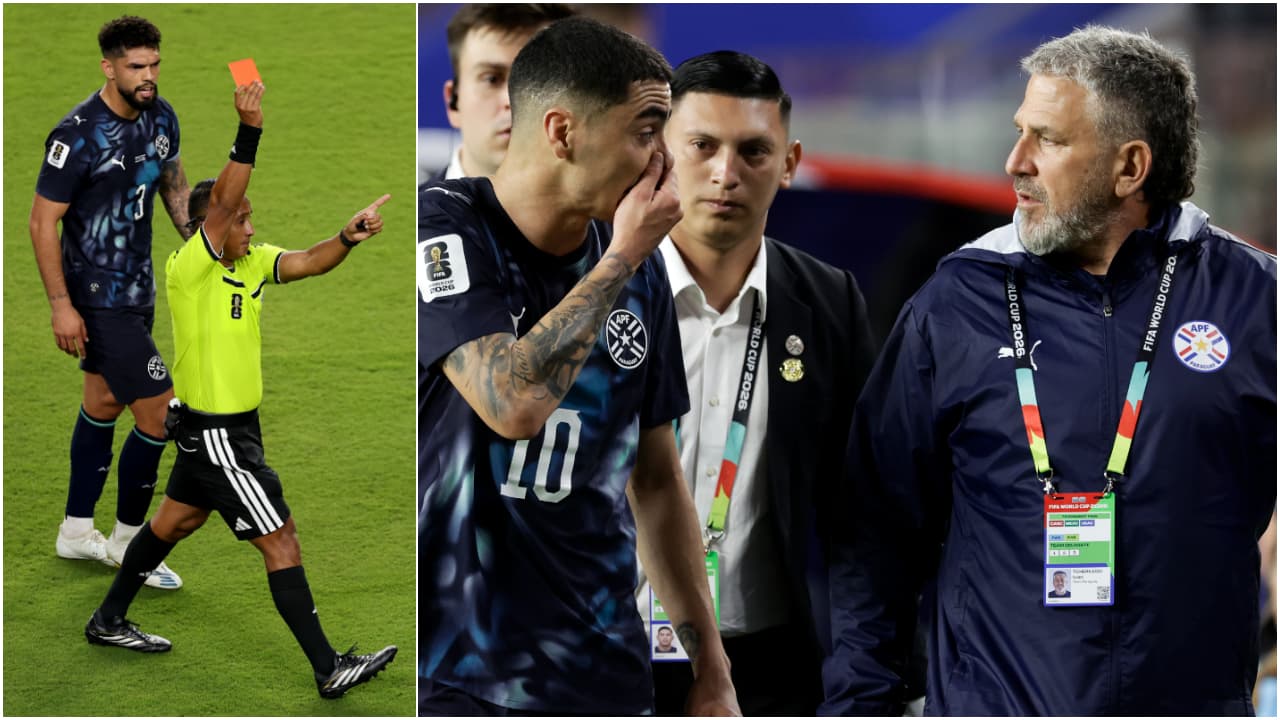
In the FIFA World Cup, if teams are tied on points, ‘fair play’ points become the deciding factor for knockout qualification. Let’s break down how yellow and red cards can make or break a team’s journey and what FIFA’s knockout rules really are.
When you’re watching a football match, you often see the referee flash a yellow or red card after a foul. But here’s the thing – those cards aren’t just for that one game. They can actually decide whether your favourite team makes it to the knockout stage.
Yes, FIFA’s rules can be quite complicated. When teams in the group stage end up with the same number of points, the points from these cards are counted to decide who goes to the next round.
Here are the FIFA rules
According to FIFA’s new format, there will be a total of 12 groups with 48 teams competing. Out of these, only 32 teams will qualify for the first knockout round. The top two teams from each group, making it 24 teams, will directly advance.
The real fight is for the remaining 8 spots. The top 8 teams with the best performance among those who finished third in their groups will get this chance.
Cards mean negative points
If the third-placed teams are tied on points, the first tie-breaker is the goal difference. If that’s also a tie, the team that scored more goals moves ahead. If the winner is still not decided, that’s when fair play points are calculated. This is where the cards received by players and team officials become the villains.
• A single yellow card gets you -1 point.
• An indirect red card (getting a second yellow and leaving the field) costs -3 points.
• A direct red card leads to a deduction of -4 points.
• If a player gets both a yellow card and a direct red card in the same match, a whopping -5 points are cut.
Even after all these calculations, if there’s still a tie, FIFA will use its last official rankings to decide the qualifying team.
From third place to the final
If you look at history, there are many teams that finished third in their group stage and then went on to shake up the entire tournament. In the 1990 FIFA World Cup, Argentina finished third in Group B, behind Cameroon and Romania. But they qualified as a best third-place team, beat Brazil in the pre-quarters, Yugoslavia in the quarters, and Italy in the semis to reach the final, where they lost to Germany.
Similarly, in 1994, Italy also finished third in their group and stormed into the final, only to lose to Brazil. In that same World Cup, Sweden and Bulgaria also came from third place to create history by playing in the semi-finals.
Ronaldo’s team did it too
And who can forget the 2016 Euro Cup? Cristiano Ronaldo’s Portugal finished third in their group, behind Hungary and Iceland. But they picked up momentum and went on to win the cup that year, creating history. That’s why in the world of football, you can never underestimate the teams that finish third in the group stage. They can become game-changers at any moment.