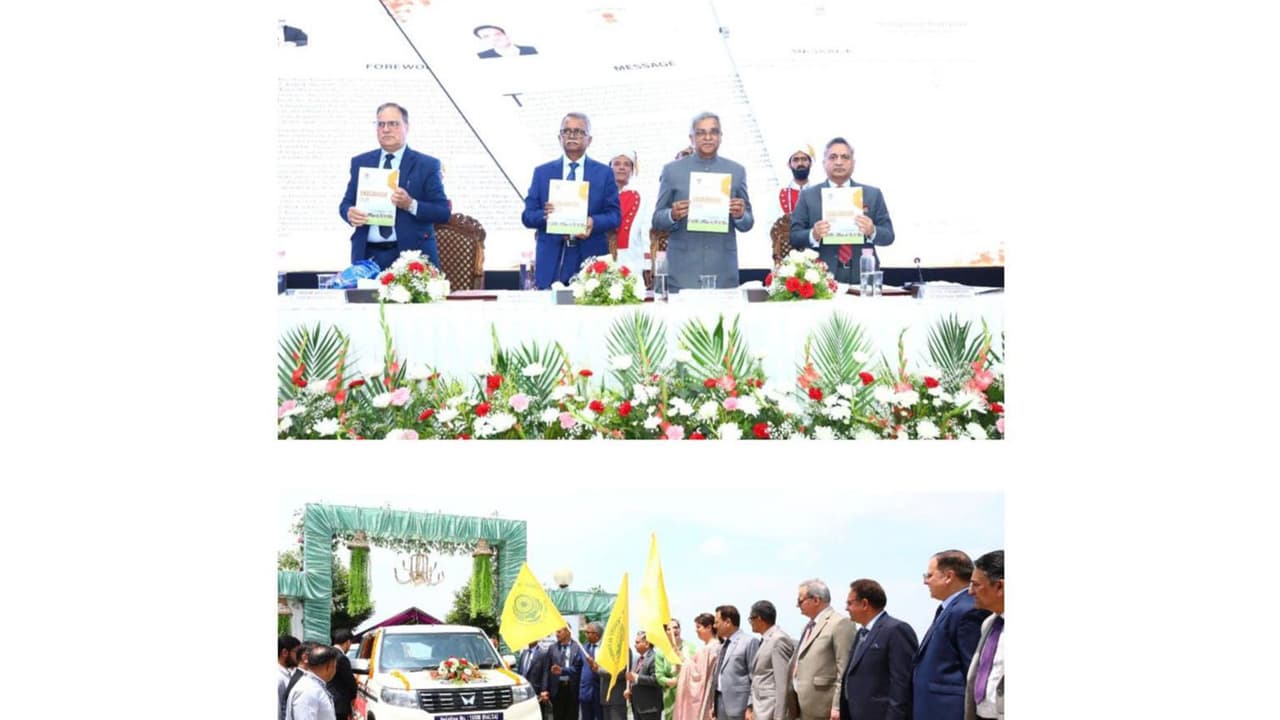
Supreme Court judge Vikram Nath attended a NALSA-backed programme in Srinagar on women’s empowerment. He emphasized the need to ensure women can meaningfully exercise their rights and called for strengthening institutional support and legal literacy.
Supreme Court judge, Justice Vikram Nath, also Executive Chairman of NALSA, attended a mega awareness programme on “Empowering Women and Strengthening Institutional Legal Support” at Srinagar, which was organised by Jammu & Kashmir State Legal Services Authority (J&K SLSA). The programme organised under the aegis of the National Legal Services Authority (NALSA) was also attended by Justice SVN Bhatti of the Supreme Court, among other judges of the High Court.
Meaningful Exercise of Rights Crucial
Justice Nath emphasised that the challenge before society is not a deficit of rights but ensuring that women are able to meaningfully exercise the rights guaranteed to them. Stressing that law can mandate equality but cannot mandate respect, he highlighted the need to address deeply embedded social attitudes, strengthen institutional accountability, expand legal literacy, and ensure that access to justice reaches women where they live and work.
Programme Highlights and Initiatives
The programme also comprised two technical sessions. The first session, on the theme “Women’s Rights, Legal Empowerment and Access to Justice: Role of Legal Services Institutions”, was chaired by Justice Nath and Justice Bhatti. The second session, on the theme “Institutional Support, Victim Assistance and Convergence Mechanisms for Women in Distress”, was chaired by Justice Sindhu Sharma and Justice Moksha Khajuria Kazmi of the High Court.
On the occasion, Multi-Utility Vehicles were flagged off for deployment across the District Legal Services Authorities in the Kashmir province to strengthen outreach and enhance access to legal services in remote and underserved areas. J&K SLSA also released its Annual Newsletter Compendium of Legal Services Activities, ENDEAVOUR-2025.
The programme witnessed enthusiastic participation from judicial officers, advocates, government officials, professors, doctors, and a large number of citizens, reflecting a collective commitment towards advancing women’s empowerment and strengthening access to justice through responsive and inclusive legal services institutions.
(Except for the headline, this story has not been edited by Asianet Newsable English staff and is published from a syndicated feed.)