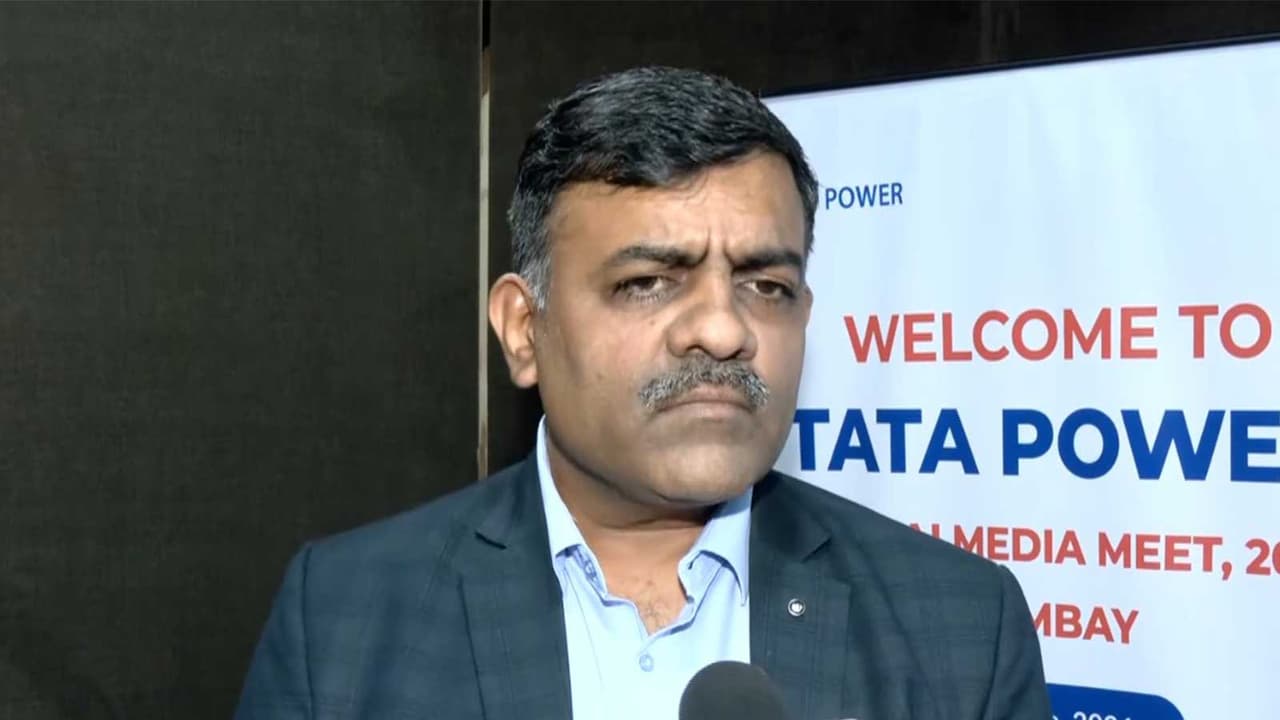
Tata Power will invest Rs 15,000 crore by 2029 to upgrade Mumbai’s power grid. The plan involves a new 400 kV ring network, increased renewable energy capacity, and doubling Battery Energy Storage Systems (BESS) to meet soaring demand.
To fortify Mumbai’s electrical infrastructure against soaring power demands, Dr Nilesh Kane, Chief of Transmission and Mumbai Distribution at Tata Power, announced a massive Rs 15,000-crore distribution network upgrade budget by 2029. Under this extensive modernisation plan, Tata Power is substantially upgrading its transmission capabilities, with a heavy focus on grid flexibility.
Focus on Green Power and Grid Flexibility
“Our dependency on coal is reducing over a period of time by strengthening renewable power availability from the market,” Dr Kane told ANI during an exclusive interview on the sidelines of the Tata Power press conference in Mumbai on Friday, highlighting that the company will double its Battery Energy Storage Systems (BESS) footprint from 100 MW to 200 MW by FY27 to ensure round-the-clock green power.
Building a Robust Transmission Network
Furthermore, the utility is set to construct a critical 400 kV bulk power ring network across Mumbai, strategically linking key nodes including Vikhroli, Dharavi, Mahalaxmi, Sewri, and Trombay. This robust ring network will be structurally supported by the commissioning of 18 new sub-stations by 2031.
Boosting Clean Energy Supply
“The focus will be on Mumbai to strengthen the network–the transmission network as well as the distribution network,” Dr Kane emphasised, noting that the upgrades will prove to be a “milestone in Mumbai to give the best of power reliability.” To cleanly power this expanding grid, Tata Power has secured a 250 MW approval for Hydropower Renewable energy (DRE) alongside a 150 MW solar plant approval, pacing toward an ambitious 70% clean energy target by 2031.
Addressing Surging Power Demand
This capital expenditure comes at a vital time as Tata Power-Distribution expects its own network’s peak demand to scale to 2,000 MW by FY31. Currently, Tata Power acts as a foundational energy provider for the financial capital, maintaining a daily output efficiency of 1,877 MW, which satisfies 25 per cent of Mumbai’s total electricity demand. However, Mumbai’s overall daily peak demand touched 4,642 MW this year and is projected to surge by 40 per cent to hit 6,500 MW by 2031, driven heavily by data centres.
Customer-Centric Smart Meter Rollout
As part of its customer-centric rollout, Dr Kane revealed that the definitive timeline to complete their smart meter deployment is moving swiftly, aiming to install 8 lakh smart meters by next year. “Every new customer is getting a smart meter,” he added, ensuring the region remains reliably and sustainably powered.
(Except for the headline, this story has not been edited by Asianet Newsable English staff and is published from a syndicated feed.)