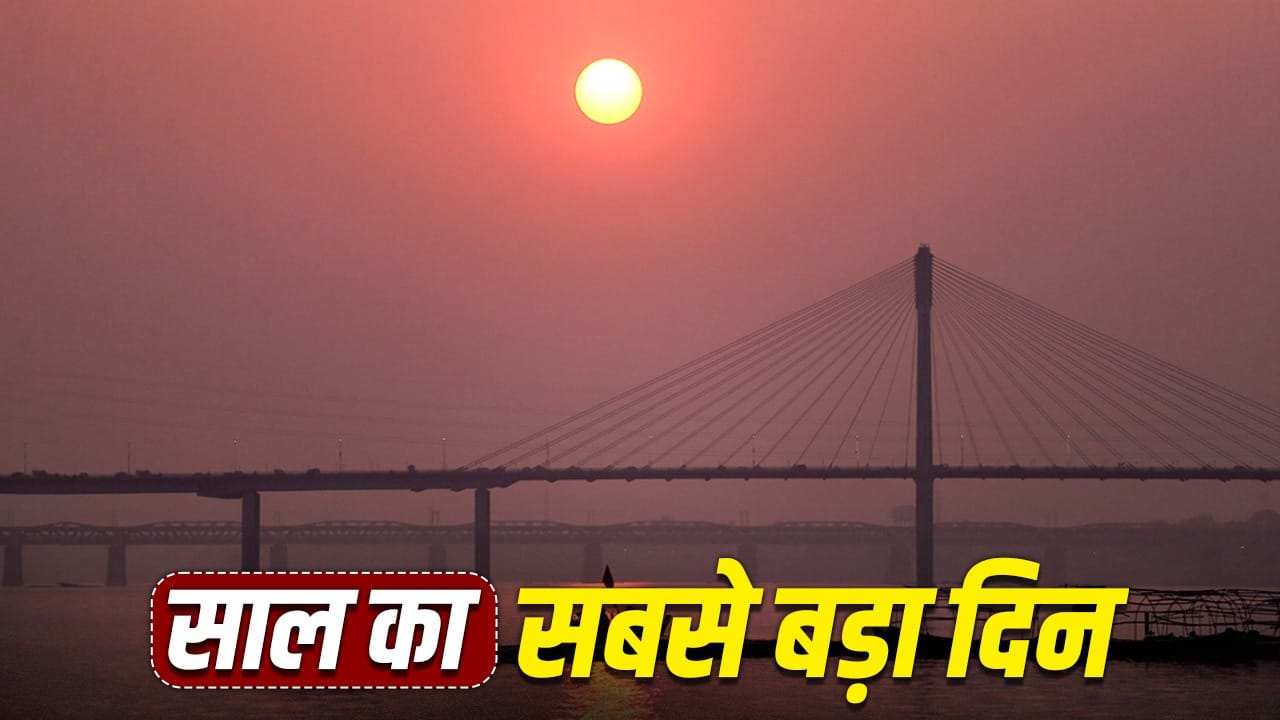
Spiritual significance of 21st JuneImage Credit source: PTI
Longest Day Of The Year: Every year 21st June is considered special in many ways. It is not only important because it is International Yoga Day, but this day also has special significance from astronomical and religious point of view. June 21 is the longest day and shortest night of the year in the Northern Hemisphere. On this day, the amazing astronomical coincidence of summer solstice occurs. This time is also considered very important in Indian tradition and scriptures, because after this it is believed that the night of the gods begins.
Why is the biggest day of the year on 21st June?
Around June 21, the position of the Earth is such that the northern hemisphere is most inclined towards the Sun. On this day the sun’s rays fall almost directly on the Tropic of Cancer. Due to which the Sun remains visible in the sky for a longer period and the duration of the day becomes longest. In most of the countries of the Northern Hemisphere including India, there is sunlight for about 13 to 14 hours on this day. This is why June 21 is called the biggest day of the year.
What is summer solstice?
In astronomy, this event of June 21 is called summer solstice. Sankranti means the transition of the Sun from one position to another. Summer solstice is the time when the Sun reaches its maximum position in the northern direction. After this the Sun starts moving towards the south. This is the reason that after June 21, the days gradually become shorter and the nights become longer.
Why does the night of the gods begin?
The special importance of Uttarayan and Dakshinayan of the Sun has been mentioned in religious scriptures and astrology. The journey of the Sun towards the north for about six months from Makar Sankranti is called Uttarayan. It is considered the day of the gods. When the Sun moves towards the south, that period is called Dakshinayan. According to religious beliefs, Dakshinayan symbolizes the night of the gods. Therefore, the time starting after June 21 is considered the beginning of the Night of the Gods.
Why is this time important from spiritual point of view?
In Hindu tradition, Sun is considered the source of life, energy and consciousness. The time of summer solstice is considered special for introspection, meditation and spiritual progress. Many seekers see this day as an important opportunity for energy transformation. This is the reason why Yoga Day is also celebrated on 21st June all over the world.
Also read: Lion Gate or Horse Gate? Know from which door Lord Jagannath comes out on the day of Rath Yatra
Disclaimer: The information given in this news is based on religious beliefs and general information. TV9 Bharatvarsha does not confirm this.