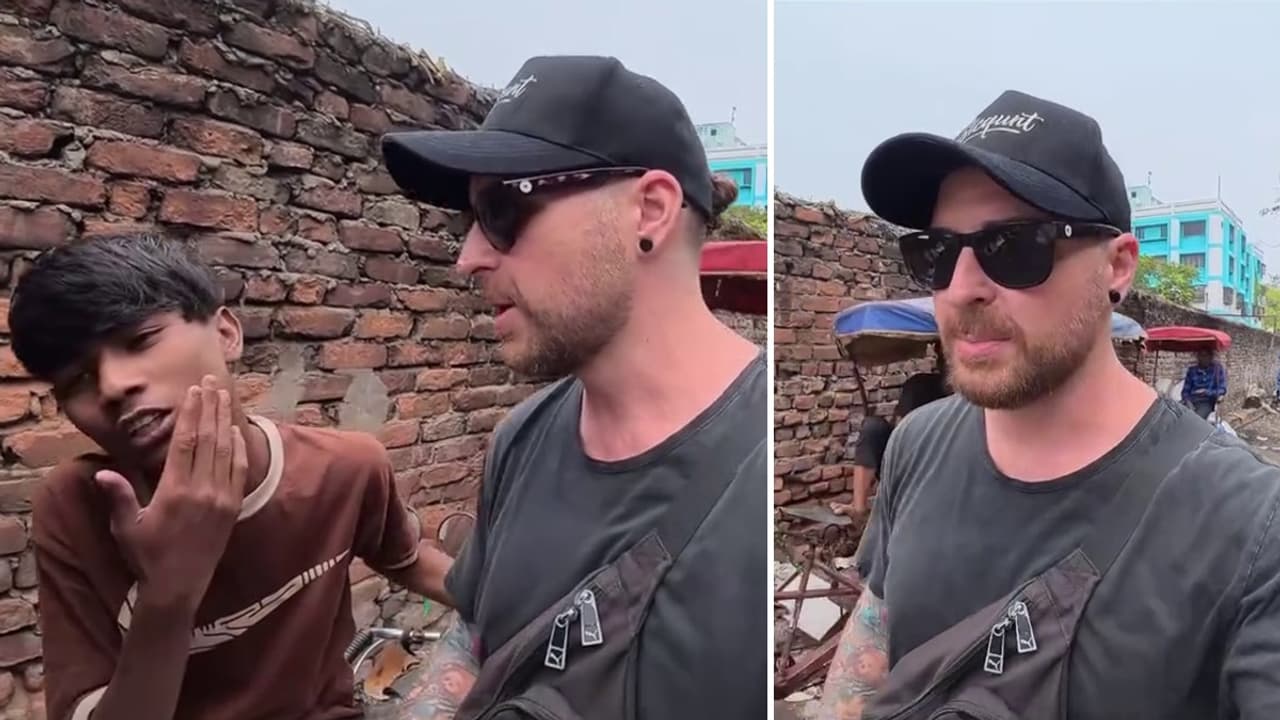
An Australian tourist visiting India shared a video of an uncomfortable street interaction where a local man repeatedly asked for a kiss. The tourist, who appeared distressed, refused and walked away, later stating he felt “molested.” The video, believed to be from Kolkata, has gone viral, sparking widespread outrage and debate on social media.
An Australian man visiting India faced an uncomfortable street interaction that has now gone viral on social media, triggering outrage. A person named Marco Roams shared the footage on Instagram. In the video, a young man seated in a rickshaw approaches an Australian tourist who is seen strolling down a street.
The man repeatedly asks the tourist for a kiss on the cheek, saying, “Kiss me here, kiss me.” The tourist appears visibly uncomfortable during the interaction and tries to respond calmly. He says, “Kiss you? No sorry, I’m straight.” Even after the refusal, the young man continues to insist and is also seen holding the tourist’s hand as he tries to walk away.
The tourist then moves away from the situation. After walking off, he can be heard saying, “Wow! getting bloody molested by people younger than me.” “Why do Indian guys always want you to kiss them?” is written as a text overlay on the video.
The event is thought to have happened in Kolkata based on geographical tags and hashtags. Since then, the video has received thousands of comments and reactions on social media.
Watch Viral Video
Social Media Reacts
Some people slammed the conduct and voiced concern about the traveller. One person commented, “I think you landed in the wrong India.” Another said, “@kolkatapolice, please teach these boys a good lesson.”
Others said that the episode should not be used to generalise about India as a whole. A user remarked, “Instead of going to good places in India you guys intentionally go to these kinds of sketchy areas just for content views then upload reels with weird captions…”
Several users also apologised to the traveller, stating that the attitude displayed was unacceptable and did not reflect the majority of people in the nation.