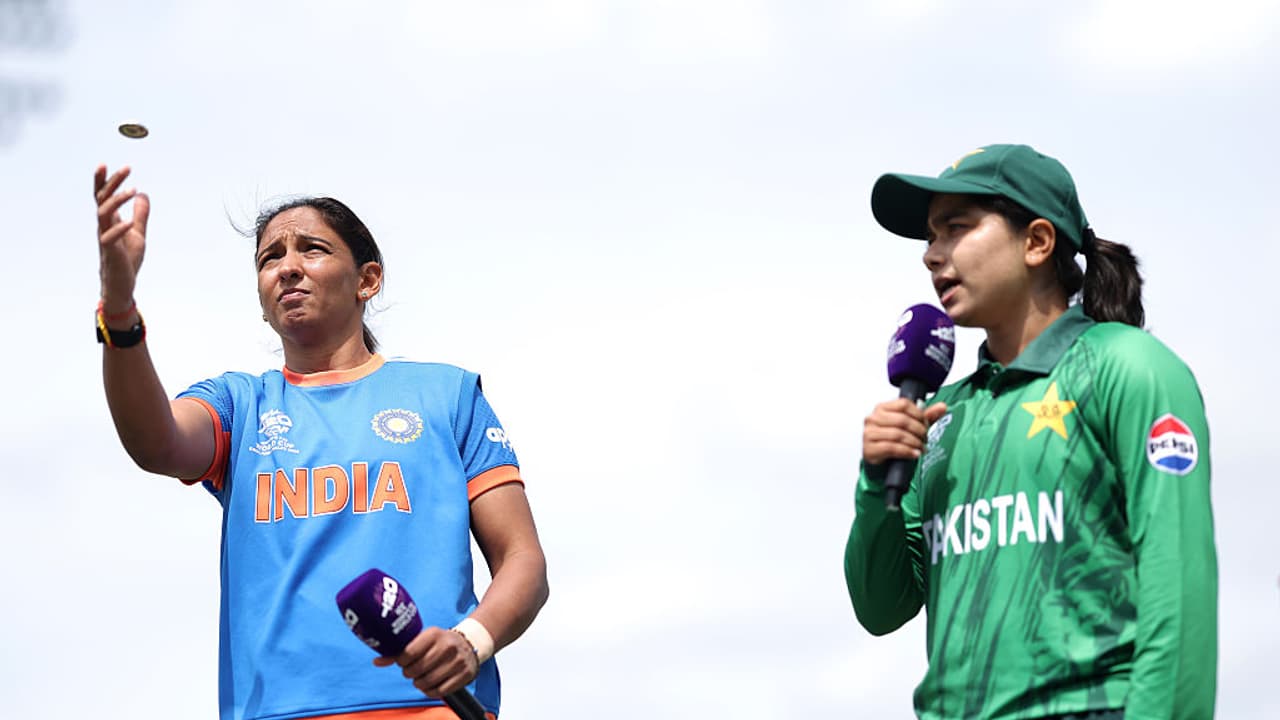
During the Women’s T20 World Cup 2026, Harmanpreet Kaur did not shake hands with Pakistan captain Fatima Sana at the toss. It follows India’s “no handshake” policy after the Pahalgam terror attack, seen as a mark of respect for victims and solidarity with the Indian Army across recent matches.
Team India skipper Harmanpreet Kaur didn’t shake hands with Pakistan captain Fatima Sana at the toss ahead of the much-anticipated Women’s T20 World Cup 2026 clash at Edgbaston in Birmingham on Sunday, June 14.
India and Pakistan are facing off for the ninth time at the Women’s T20 World Cup. In the previous eight encounters, the Women in Blue won on six occasions, while their arch-rivals have secured two victories, making every match between the two sides a fiercely contested chapter in their storied rivalry. In the overall Women’s T20Is, India leads 13-3 in a head-to-head record against Pakistan.
Team India and Pakistan are locking horns for the first time since the Women’s ODI World Cup clash in Sri Lanka last year, where the Harmanpreet Kaur-led Women in Blue defeated Fatima Sana’s side by 88 runs.
Also Read: India clear favourites vs Pakistan in T20 WC, says Abhishek Nayar
Harmanpreet Kaur Avoids Handshake with Fatima Sana
Ahead of the Women’s T20 World Cup 2026 clash against Pakistan, India skipper Harmanpreet Kaur was asked by a reporter at the press conference whether her team would engage in the customary handshake ritual with their Pakistani counterparts. The veteran chose not to directly address the ‘no handshake policy’, and stated that the team’s focus remained solely on the sport.
During the toss at Edgbaston in Birmingham on Sunday, June 14, India captain Harmanpreet Kaur and Pakistan captain Fatima Sana were standing together for the coin flip. After the coin landed in Harmanpreet’s favour, she opted to bat first. The main focus was not on the toss, but on the continued absence of the customary handshake.
After winning the toss, Harmanpreet immediately turned to the broadcaster, Mel Jones, without extending her hand for the customary handshake with Pakistan captain Fatima Sana. Even after speaking with the presenter, the Indian skipper opted to walk away toward her team, further emphasising the absence of the gesture.
Scroll to load tweet…
The ‘no handshake’ policy began with the Men’s Asia Cup last year, and the trend has since been consistently maintained across multiple ICC and continental tournaments, including the Men’s U19 World Cup, the Men’s Rising Stars Asia Cup, the Women’s ODI World Cup, and the Men’s T20 World Cup 2026.
Since India and Pakistan’s encounters have been restricted to ICC and ACC tournaments, the ‘no handshake’ policy serves as a highly visible reflection of the current geopolitical climate.
Why Harmanpreet Kaur Didn’t Shake Hands with Fatima Sana?
Team India’s ‘no handshake’ policy is not just an isolated occurrence but a consistent practice adopted by Indian cricket teams, both men and women. Following the horrendous Pahalgam terror attack, where 26 Indians were killed by the militants, the BCCI and Team India took a strong stance by adopting this protocol as a mark of respect for the victims and in solidarity with the Indian Army following the subsequent retaliatory actions, known as Operation Sindoor.
When India captain Suryakumar Yadav led the team at the 2025 Asia Cup, he initiated a ‘no handshake’ policy that has since become a standard, disciplined protocol for Indian cricket teams whenever they face Pakistan in international tournaments. In all three Asia Cup matches against Pakistan, including the final, the Men in Blue neither interacted nor shook hands with the Men in Green.
Suryakumar Yadav’s Men in Blue’s ‘no handshake’ policy has been carried on across all subsequent encounters, including the 2026 T20 World Cup, establishing it as a firmly ingrained cultural and diplomatic protocol for Indian squads.
With India and Pakistan’s relationship further strained following the Pahalgam terror attack and subsequent cross-border retaliations, the decision by Indian captains to bypass the customary handshake has become a visible, standardized protocol. The policy is more of a respect for the victims of the attack rather than a comment on the sport itself, serving as a disciplined and unified national signal during international encounters.
Also Read: Women’s T20 WC: Ferdous’ fifty guides Bangladesh to win over Dutch