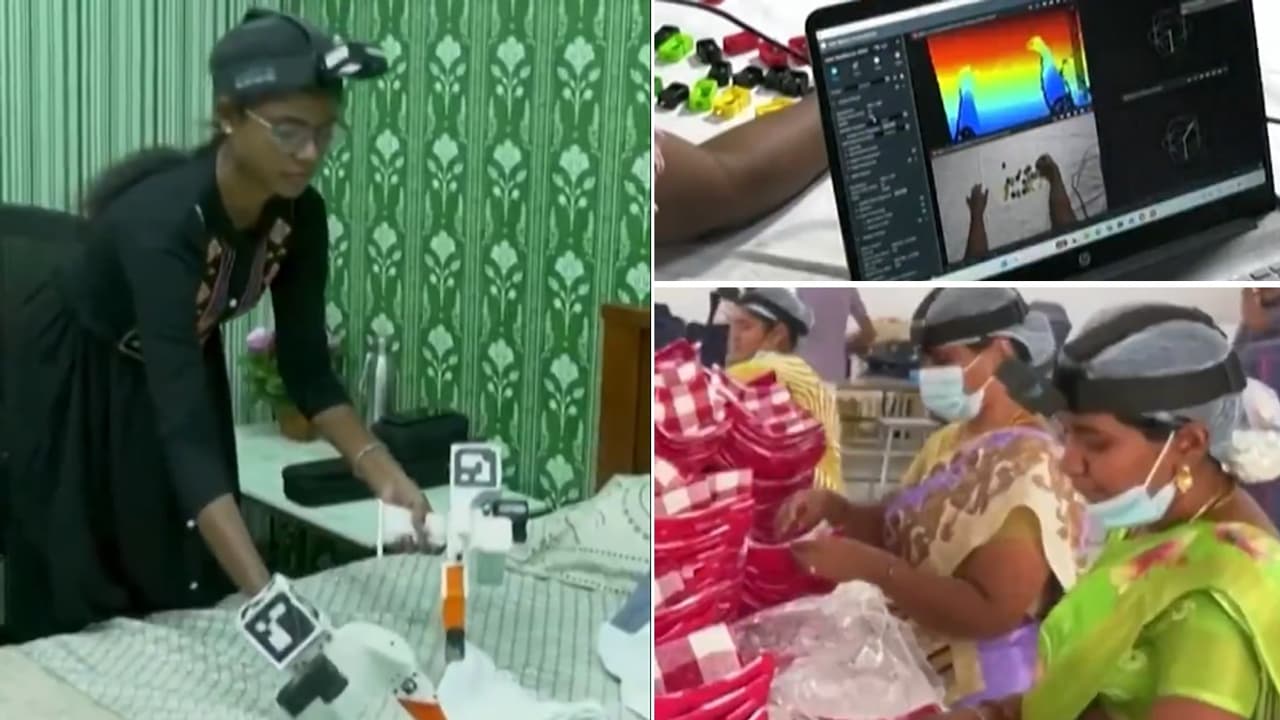
A 25-year-old housewife from Chennai is earning money by recording her daily household chores, such as making coffee and folding laundry. These first-person videos are sold to AI companies to train humanoid robots on how to perform tasks in a home environment.
As artificial intelligence firms look for real-world data to train the next generation of humanoid robots, some people are discovering an unexpected source of income. One such individual is a 25-year-old housewife from Chennai who is paid to document her everyday domestic activities. Nagireddy Sriramyachandra puts a smartphone on her head and videos everyday duties like brewing coffee, chopping fruit, and folding clothing. The film is then distributed to AI companies, who use it to teach robots how humans interact with items and do normal tasks within their homes.
Developers want to improve humanoid robots’ comprehension of movement, coordination, and decision-making in natural settings by studying these first-person recordings.
A post on X claims that Sriramyachandra makes about Rs 250 per hour filming over 90 short films every day. “Who else will pay you Rs 250 an hour just for doing housework?” she said, referring to the peculiar side employment.
Watch Viral Video
Scroll to load tweet…
How Did Social Media React?
The post quickly sparked debate online, with users divided over the idea of contributing data that could potentially accelerate the development of AI-powered machines.
There were conflicting responses on the internet, with some users voicing worries about the long-term effects of supplying data for AI training.
One commentator proposed that people should expect far more pay for giving important training data because such contributions might potentially jeopardise job chances for future generations.
The practice was condemned by another user, who compared it to how software professionals contributed to the development of AI technologies that are currently automating aspects of their own line of work. The commentator questioned the necessity of humanoid robots and expressed worries about how they might affect the environment.