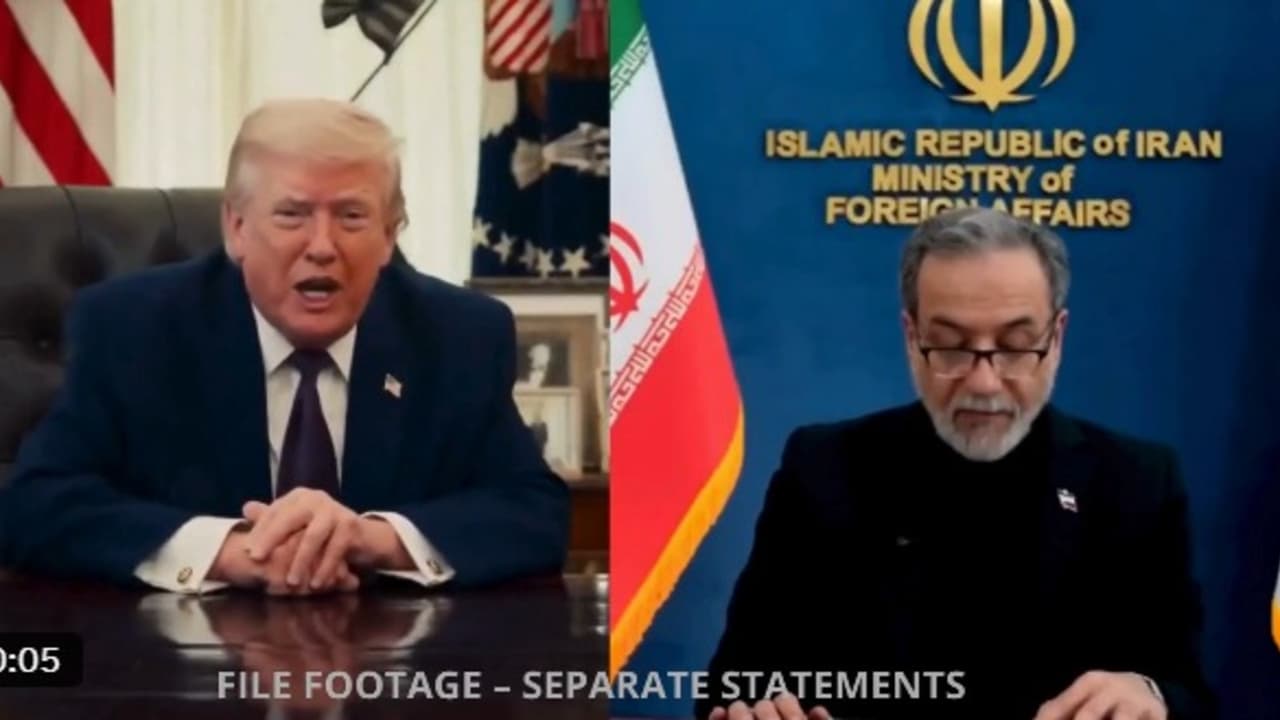
Big mystery in the Middle East: Will the US-Iran peace deal be signed on Sunday or will it completely collapse? Will the Strait of Hormuz open immediately or will the global oil crisis worsen? Will Iran compromise on its nuclear program or will the conflict escalate? Will disputes over $24 billion in assets, sanctions relief and compensation block the deal?
US Iran Peace Deal: Is the world on the brink of an end to the devastating world war that has been raging for the past four months, or is this just the calm before another terrifying storm? US President Donald Trump on Saturday made a sensational claim on the social media platform ‘Truth Social’ and announced that a historic peace agreement is going to be signed with Iran on Sunday (June 14). Under this agreement, ‘No Nuclear Wall’ will be erected on Tehran’s nuclear program and the Strait of Hormuz, considered the lifeline of the global economy, will be immediately opened to international ships.
But just a few hours after this announcement, Tehran rubbished these claims. Iranian Foreign Ministry spokesman Esmail Baghai clarified that no agreement would be signed on Sunday. There are still 5 ‘red lines’ (obstacles) between the two superpowers, which can turn this peace agreement into ruins at any time.
What sanctions relief does Iran want in the talks?
As part of the deal, Iran demands the immediate release of billions of dollars of frozen assets and the lifting of all sanctions. Tehran says any agreement should begin with concrete action from the US, especially regarding their blocked funds. Without these trusts, Iran is unlikely to agree to the proposed terms.
How does Iran view the proposed US peace deal?
Iran has expressed doubts over the US peace deal, calling it a ‘misunderstanding’ of the US proposal. Iranian officials insist that any deal must include a clear understanding of sanctions relief and reject abstract promises. This shows the ongoing distrust between the two countries.
What are Iran’s main demands regarding its nuclear program?
Iran is trying to preserve its right to enrich uranium for civilian purposes, while resisting US demands to completely halt its nuclear program. Tehran says any discussion on its nuclear capabilities should be part of long-term negotiations rather than immediate terms for a peace deal.
Scroll to load tweet…
1. Nuclear surrender or just sanctions? Great suspense on inspection
The main agenda of the Trump administration is that Iran should forever give up the idea of making nuclear weapons. Washington wants to implement a very strict and new ‘inspection system’. But the biggest controversy is over whether Iran will destroy its entire nuclear infrastructure or limit only uranium enrichment?
Why did Barack Obama’s nuclear deal come into discussion?
This challenge for Trump is also political. He has always described former President Barack Obama’s 2015 nuclear deal (JCPOA) as the weakest deal. Now any new agreement will be compared to the same. Although US officials have indicated that they are not bothered by the idea of a civilian power plant in Iran, Iran continues to insist on strict verification.
2. Mystery of ‘Nuclear Dust’: What will happen to the uranium hidden under the ground?
The biggest headache for the world at the moment is Iran’s huge reserves of enriched uranium, most of which is stored deep underground. America demands that Iran will have to surrender this dangerous material completely.
According to senior administration officials, the interim arrangement involves “downblending” the uranium and then transporting it out of the country. President Trump himself wrote that the United States would eventually acquire and destroy Iran’s remaining “nuclear dust”. But moving such a large and sensitive stockpile out of Iran remains a diplomatic and technical enigma.
3. Freeze assets of $24 billion vs damages of $270 billion
The gap between the two countries on the economic front is very deep. In exchange for this agreement, Iran wants immediate access to its frozen assets worth approximately $24 billion and complete freedom from sanctions.
Trump’s tough stance: “Unlike Obama’s billions of dollars in cash payments to Iran, there will be no money changing hands this time.”
Although Vice President JD Vance has lured economic benefits, Iran’s anger is not limited to sanctions alone. Iran is demanding compensation of $ 270 billion in the form of direct and indirect damages for the loss of its Supreme Leader Ayatollah Khamenei and destroyed infrastructure in the joint attacks by America and Israel on February 28, which Washington is not ready to give.
4. Strait of Hormuz: Who will take possession and who will remove the mines?
The game of claims continues regarding the strategically most important Hormuz waterway. Trump says that this path will open immediately as soon as the agreement is reached. According to Iranian news agency ‘Mehr’, talks are underway on an arrangement to open it within 30 days, under which Tehran will remove mines from there and Washington will end its naval blockade.
But, the real problem lies in control. Iran’s state media ‘IRNA’ made it clear that the draft terms do not include any promise to give up Iranian management of the strait or to restore the situation before the US-Israeli military attacks. That means, the war for supremacy on this waterway is not over yet.
5. Lebanon’s bloody conflict and the fate of Iran’s proxy groups
The fifth and most sensitive red line of this peace agreement is the Iran-backed armed groups (Hezbollah and Hamas) operating in the Middle East. More than 3,400 people have been killed so far in the fierce war that has erupted in Lebanon since March. Iran even halted talks earlier this month in protest against Israeli attacks in Lebanon. The US claims that Iran has agreed not to fund these terrorist groups, but Iran has not publicly confirmed this. Israel wants to reserve the right to independent military action despite any agreement, which is not acceptable to Iran at all. Until these five burning questions are answered, Trump’s ‘Sunday Deal’ could be both the beginning of a historic peace and the prelude to a devastating betrayal.