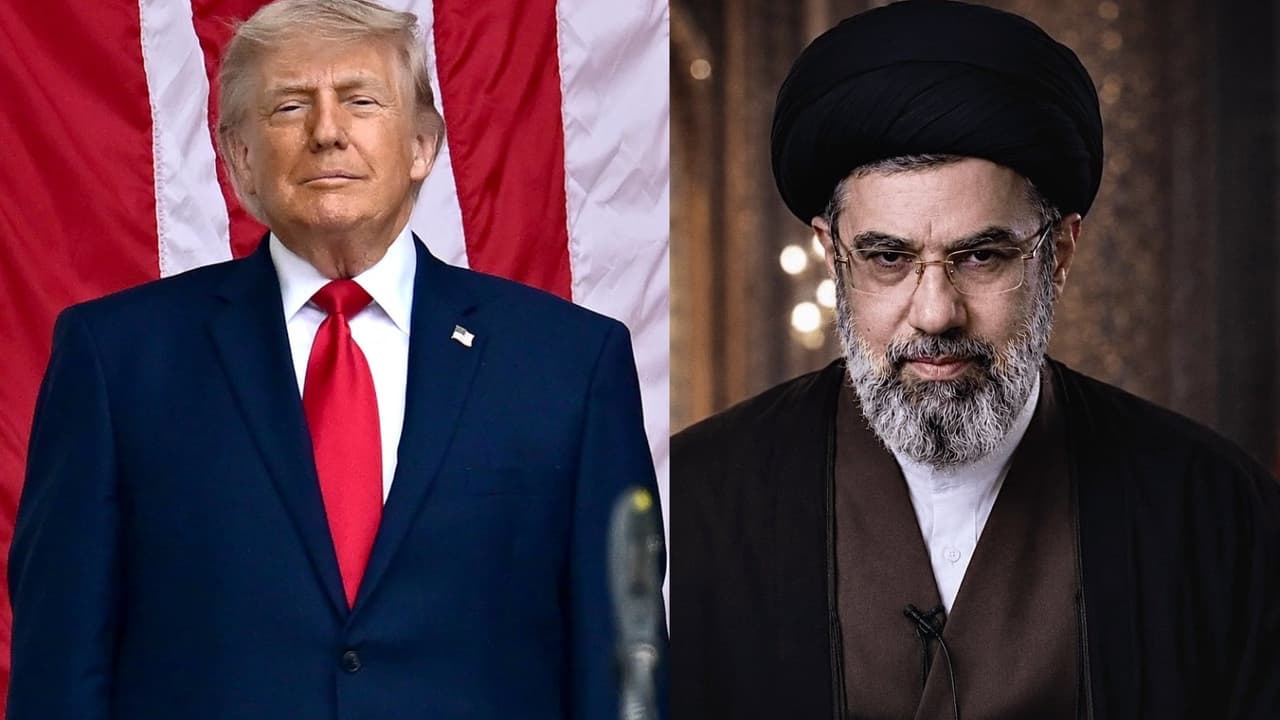
Will the US-Iran peace agreement really be signed today, Sunday, June 14, 2026, or is it just a political claim? Will the Strait of Hormuz really open immediately or is it a diplomatic illusion? Why did Iran reject the timeline – are internal tensions still ongoing? Will this agreement eliminate the threat of nuclear war or create a new crisis?
Washington/Tehran. Amidst the devastating global energy crisis that has been going on for months and the war in the Middle East, the world’s breath stopped on Saturday when US President Donald Trump made a very shocking announcement. Trump announced on his social media platform ‘Truth Social’ that a historic peace agreement will be signed between the US and Iran on Sunday, June 14. With this agreement, the Strait of Hormuz, considered the lifeline of global trade, will immediately be opened for international shipping.
But just a few hours after this sensational claim, a news from Tehran added a deep layer of suspense to this grand agreement. Iranian officials directly rejected Trump’s deadline, saying that no agreement is likely to be signed on Sunday and no final timeline has been set yet.
The ‘wall’ of not having nuclear weapons and a sharp attack on Obama
Donald Trump has presented this proposed peace agreement as a major diplomatic victory. He claimed that this new agreement will completely ensure that Iran can never acquire nuclear weapons by any means. Trump has called it the “Wall of No Nuclear Weapons”.
Scroll to load tweet…
As part of his old strategy, Trump also launched a sharp attack on the Obama administration’s 2015 Iran nuclear deal. He claimed that unlike the billions of dollars of cash payments made by Obama to Tehran, no economic transactions were taking place this time. However, according to media reports, Trump’s claim is beyond facts; That payment in 2015 was actually a legal settlement of a military contract dating back to the 1979 revolution. Trump also warned that if the peace process fails, the US will not shy away from using its “last resort” of advanced military capabilities to destroy Iran’s underground nuclear infrastructure.
Pakistan’s mediation and Islamabad’s sudden enthusiasm
Neighboring country Pakistan has played a very important and central role in stopping this entire mega-conflict and bringing the two arch rivals to one table. This was the first time since the Islamic Revolution of 1979 that top officials of the US and Iran sat down for direct face-to-face talks on Pakistani soil.
After Trump’s announcement, Pakistan Prime Minister Shehbaz Sharif expressed his excitement on the social media platform Shahbaz Sharif thanked both the countries for the talks, but after Iran’s immediate refusal, now clouds of suspense are looming over the future of Islamabad’s mediation.
After all, what is there in the draft of this secret agreement?
According to American media outlet ‘Axios’, this Memorandum of Understanding (MoU) prepared between America and Iran is not just a general ceasefire, but a document that will change the face of the entire Middle East. The main terms of this secret draft are as follows:
- Economic Relief: America will ease the stringent economic sanctions imposed on Iran and it will be allowed to export limited quantities of oil. Additionally, Iran’s access to its frozen funds will be restored, subject to conditions.
- Nuclear Commitment: Iran will officially pledge not to develop nuclear weapons and will begin talks on limiting its uranium enrichment and managing its stockpile of enriched uranium.
- 60 day countdown: Both countries will observe a strict ceasefire of 60 days, which can be extended by mutual consent for permanent peace.
- Path of Hormuz: Most importantly, Iran will ensure free movement and resumption of normal shipping activities through international maritime routes by lifting the sanctions on the Strait of Hormuz.
How did the smoldering fire take the form of a great war?
This entire global crisis started this year on February 28, 2026, when America and Israel together launched a massive joint military operation against Iran. Iran’s Supreme Leader Ayatollah Khamenei was killed in this unexpected attack, after which the smell of gunpowder spread throughout the Middle East and started a bloody war.
Why did Iran completely block the Strait of Hormuz?
Iran retaliated by completely blocking the Strait of Hormuz, which halted crude oil supplies around the world and created a severe global energy crisis. After five weeks of fierce conflict, a shaky ceasefire was reached with the help of Pakistan, but tensions remained at an all-time high due to the US blockade and Iran’s stubbornness. Now the eyes of the whole world are fixed on Sunday morning. Will Trump’s claim prove true and the Hormuz crisis be resolved once and for all, or will Tehran’s denial rekindle the fire of this war? The suspense is thick and the clock is constantly ticking.