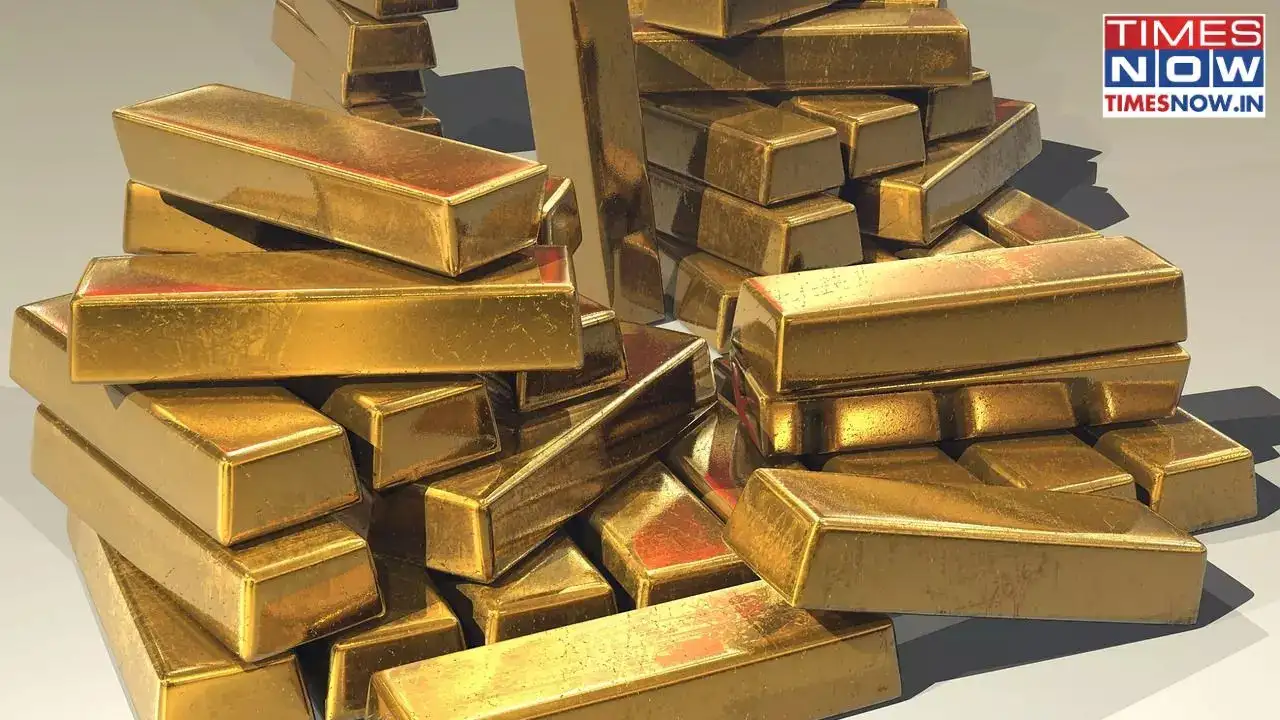
Gold has long been the asset investors rush toward when uncertainty grips global markets. Yet in a surprising twist, the precious metal is struggling even as geopolitical risks intensify and tensions in West Asia continue to dominate headlines.
International gold prices have retreated more than 25 per cent from their peak of $5,586 reached earlier this year. If losses deepen through the remainder of the year, gold could be on track for its weakest annual performance since 2013, when prices plunged 28 per cent.
The downturn comes at a time when conventional market wisdom would suggest the opposite outcome. Peace negotiations involving the United States, Israel and Iran have remained stalled for more than 100 days, while equity markets have faced pressure. India’s benchmark indices, the Nifty and Sensex, have each fallen over 9 per cent during the same period. Meanwhile, crude oil prices hovering near $90 per barrel have added another layer of uncertainty for investors worldwide.
Why Rising Oil Prices Are Hurting Gold
A major factor influencing gold’s recent weakness is the sharp rise in crude oil prices. Elevated energy costs often fuel inflation because oil plays a critical role in transportation, manufacturing and logistics. Although inflation typically benefits gold by strengthening its appeal as a hedge against rising prices, investors are increasingly focused on the possibility of prolonged higher interest rates. When borrowing costs remain elevated, income-generating assets such as bonds become more attractive relative to , which offers no yield.
Morgan Stanley described the oil market as being “in a race against time,” warning that some of the factors limiting the rise in prices could weaken if the Strait of Hormuz remains closed through June.
Another reason behind the correction is profit-taking. Gold enjoyed a remarkable rally through 2025, gaining roughly 66 per cent and reaching record levels. Following such a strong run, many investors have chosen to lock in profits as volatility increased.
What Experts Suggest?
Despite near-term uncertainty, many market experts remain optimistic about gold’s longer-term outlook. Tata Mutual Fund expects prices to trade within a broad range over the coming months as investors weigh higher-for-longer US interest rates, a strong dollar and elevated bond yields. The fund house expects short-term volatility of around ±5 per cent, with developments related to the US-Iran conflict likely to remain a key driver of price movements.
For Indian investors, a weakening rupee may help cushion some of the downside by supporting domestic gold prices even if international prices remain under pressure.
Looking beyond the immediate volatility, Tata Mutual Fund continues to view gold positively, arguing that any significant correction should be seen as an accumulation opportunity rather than a reason to abandon the asset class.
Vishnu Kant Upadhyay – AVP, Research – Master Capital Services Limited, noted, “Gold’s relentless slide isn’t only about crude oil and rate fears – valuation discomfort is also playing a part. After last year’s vertical run-up, some correction was almost inevitable, and the current fall looks like an overdue reset from stretched valuations. However, rising crude oil prices remain the dominant trigger, reigniting inflation worries, pushing back hopes of Fed rate cuts, and even sparking talk of a hike, all negative for a non-yielding asset like gold. A further slip towards $3,900/oz cannot be ruled out.”
He added, “Big fund houses are likely to use this correction as an accumulation opportunity, buying into the weakness. More importantly, any meaningful de-escalation on the US-Iran front could bring relief on the crude oil side, a cooling in oil prices would ease inflation pressure and could turn sentiment positive for gold again.”
While US President Donald Trump has suggested that a potential agreement with Iran could be reached as early as this week, markets remain cautious after multiple unsuccessful attempts at securing a breakthrough. If a deal eventually emerges, it could ease concerns over oil supplies, reduce inflation fears and improve sentiment across financial markets. Until then, gold investors may need to navigate continued volatility in what has become one of the metal’s most turbulent periods in recent years.