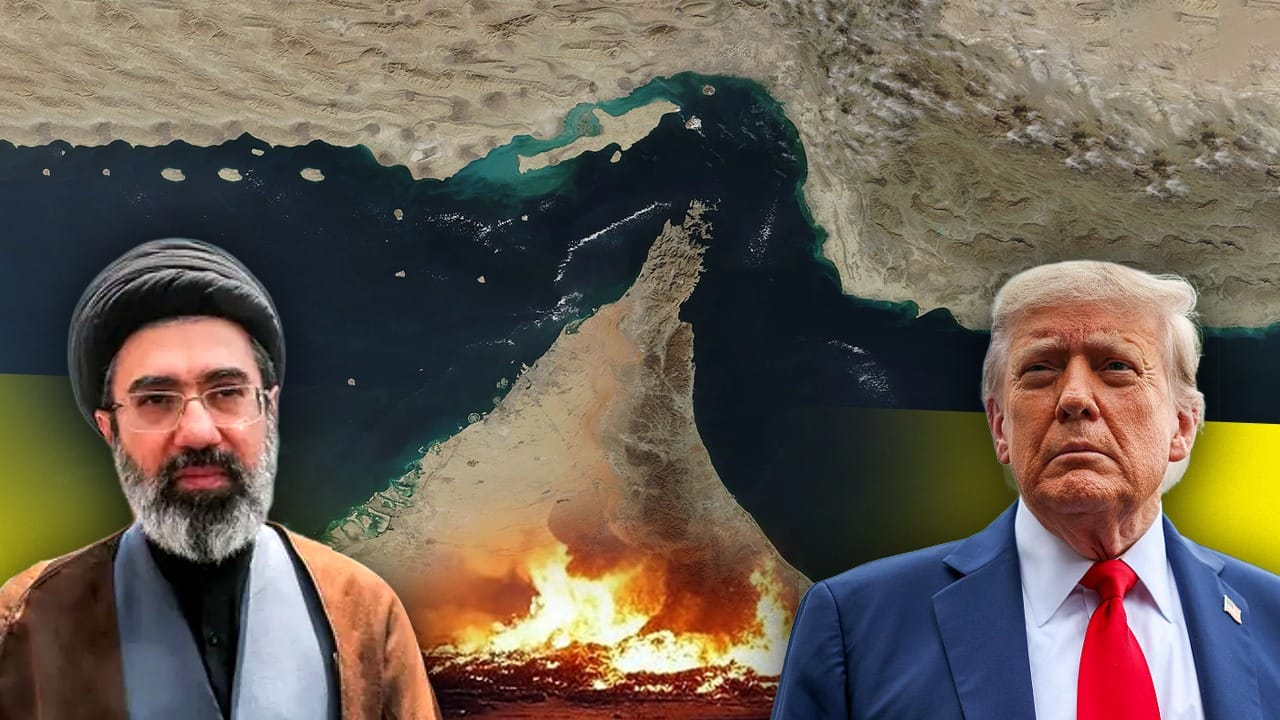
Strait of Hormuz
The Strait of Hormuz is the world’s most sensitive maritime chokepoint. The movement of ships on this route has almost come to a standstill since the conflict that broke out between the US, Israel and Iran on 28 February 2026, which completely shook the global energy markets. However, news is coming now that the Strait of Hormuz may open. If this sea route becomes completely open, then let us understand which country will benefit more from it.
About 80% of the total crude oil and 83% to 90% of the LNG passing through Hormuz is exported to Asian countries. These countries can benefit the most from the opening of waterways. India is also included in these because India is also dependent on imports for its energy needs.
- India- India imports about 90% of its crude oil needs. During the Hormuz crisis, the country’s oil import bill increased by 53% in April 2026 compared to March. To reduce the pressure of rising oil prices, the central government had to cut excise duty on petrol and diesel, which also affected government revenue. In such a situation, if normal traffic is restored in the Strait of Hormuz, India’s import bill can be reduced and inflation and fiscal pressure can be relieved.
- Japan- Japan is highly dependent on the Middle East for its oil needs and more than 90% of its oil imports pass through the Strait of Hormuz. Therefore, any kind of obstruction in this waterway is considered a big risk for Japan’s energy security. With the restoration of normal traffic in Hormuz, Japan will start getting smooth supply of oil from Gulf countries, which can reduce energy cost and supply related concerns.
- South Korea and China- South Korea is highly dependent on imported fossil fuels for its energy needs and the majority of its crude oil comes from the Middle East, passing through the Strait of Hormuz. China has large strategic oil reserves, but its refineries are also heavily dependent on oil coming from the Gulf region. In such a situation, restoration of normal traffic in Hormuz will help both the countries in getting regular and relatively cheap oil supply, which can reduce energy costs and supply related risks.
Financial recovery of Gulf oil producing countries
Due to the blockade and damage to infrastructure, Gulf countries had to drastically cut their oil production by a total of more than 9.28 million barrels per day. The opening of the waterway will compensate for the budgetary deficit of these countries.
- Iraq- 90% of Iraq’s budget is based on oil revenue. Due to the crisis, Iraq’s monthly oil exports dropped from 93 million barrels to just 10 million barrels, causing a severe financial crisis there. As soon as Hormuz opens, Iraq will be able to cover its budget deficit.
- Qatar and United Arab Emirates- 93% of Qatar’s total LNG exports and 96% of UAE’s are dependent on this route. Due to the loss, UAE had taken the historic decision to withdraw from OPEC. The opening of Hormuz will restore the safe movement of Qatar’s LNG vessels and compensate for the UAE’s revenue loss of more than $1.5 billion.
- Kuwait- Kuwait had to reduce its production from 2.58 million barrels per day to just 560,000 barrels because it did not have alternative bypass routes. Opening of Hormuz will be like restoration of its economic backbone for Kuwait.
- Saudi Arabia- Saudi Arabia had continued to partially export 4.9 million barrels per day from the Red Sea port using its East-West Pipeline, but the opening of Hormuz would allow it to regain its full normal export capacity of more than 7 million barrels per day.
Relief to global consumers and shipping industry
During the Hormuz crisis, there was a huge increase of 4 to 6 times in marine insurance rates. Apart from this, ships had to pay a toll of $1 per barrel (about $2 million per tanker) to Iran’s IRGC for safe passage. With the opening of the waterway, shipping companies will be freed from this huge additional cost. According to the US Energy Information Administration (EIA), the normalization of the waterway will reduce global oil prices and could bring average Brent crude prices down to $79 per barrel by 2027, from a high of $126 per barrel at the time of the crisis. If we look at the current data, the prices of crude oil and Brent have declined. On Trade Economics, crude oil has fallen by more than 3 percent to around $ 85 per barrel and Brent to around $ 87 per barrel.
Also read- How much did Iran earn daily by selling oil through Hormuz? Know why this strait is Tehran’s economic lifeline