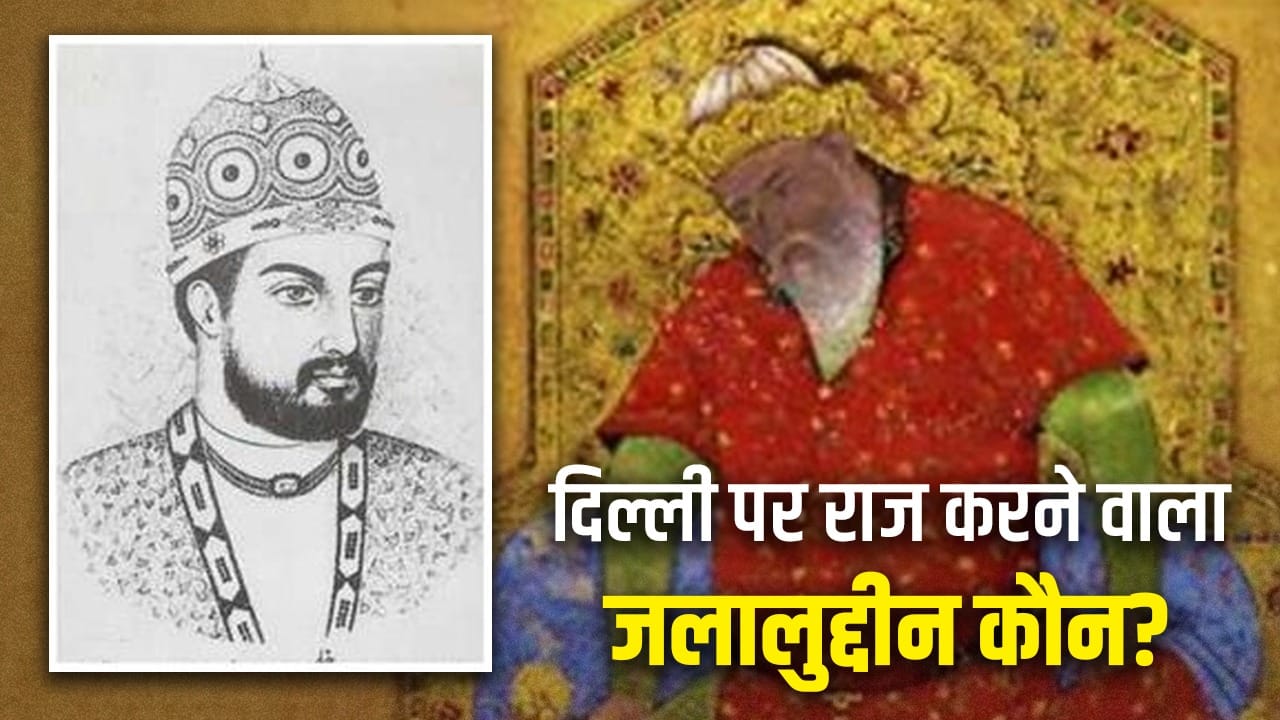
Alauddin Khilji and Jalaluddin Firoz Khilji (symbolic picture)
Jalaluddin Firoz Khilji was the founder of the Khilji dynasty of Delhi Sultanate. On this day, 736 years ago, i.e. on 13 June 1290, he wrote a new chapter in history by taking over the power of Delhi. He was the founder of the Khilji dynasty. He has been recorded in history as a generous ruler. It is recorded in many places that he forgave even his enemies. Taking advantage of this, his nephew Alauddin Khilji got him murdered and himself ascended the throne.
Let us know who was Jalaluddin Firozshah who ruled Delhi? From which country did the family come, which created history by coming to power from June 13?
a generous sultan of delhi
In the pages of history, Jalaluddin Firoz Khilji is considered one of the most generous and oldest sultans of the Delhi Sultanate. He started the Khilji Revolution by eliminating the last ruler of the slave dynasty. He ascended the throne of Delhi at the age of about 70.
Where did the Khilji family come from?
Jalaluddin’s family was originally Turkish. However, this family lived for a long time in an area called Khalj located on the banks of Helmand River in Afghanistan. He was called Khilji after the name of this region. Before coming to India, he had adopted Afghan ways. Because of this, the Turkish rich of Delhi did not initially consider them as Turks and opposed them.
Historic day when he ascended the throne
According to historians, the coronation of Jalaluddin Firoz Khilji took place on 13 June 1290. He declared his power in the palace of Kilokhari near Delhi. This date is important because it ended forever the dominance of the slave dynasty in the Delhi Sultanate. Jalaluddin’s reign lasted only six years, but he developed a new style of governance.
Policy of generosity instead of sword
Jalaluddin gave priority to generosity instead of violence during that period. He used to say that he is an old Muslim and shedding the blood of Muslims is not in his nature. He relaxed the strict rules of Balban’s time. He also adopted a soft attitude towards the rebels, which was a rare thing in the history of that time.
Made Kilokhari its capital
Jalaluddin did not initially go to Old Delhi due to his security and opposition from the Turkish nobles. He made Kilokhari his capital and decorated it beautifully. He started running the administration from there. After about a year, when the anger of the people and the rich of Delhi subsided, he entered the main city of Delhi.
What is the condition of Kilokhari area today?
In history books, Kilokhari was considered to be the new city of that time or the area near Kushk-e-Lal. Today, Kilokhari is a major area of South Delhi. It is located very near the famous Maharani Bagh and Ashram Chowk. At that time Yamuna river used to flow near Kilokhari, which was better in terms of both safety and beauty. The construction of this fort was started by Sultan Kaikubad of the Ghulam dynasty, but Jalaluddin got it completed and got his coronation done here. Jalaluddin built a grand palace and gardens here. Today Kilokhari is a densely populated village and urban area, where the old historical signs have almost disappeared, but in the pages of the history of Delhi, its name is recorded as the place of beginning of Jalaluddin’s rule.
Which people were called new Muslims?
Mongols attacked India during the time of Jalaluddin. In the year 1292, Mongol army came under the leadership of Abdullah. Jalaluddin defeated them. Later an agreement was reached, under which thousands of Mongols accepted Islam. They settled near Delhi and were called New Muslims. The place where they settled is still known as Mangolpuri.
What were the challenges of Jalaluddin rule?
Jalaluddin’s rule was full of challenges. Subedar Malik Chhajju of Kada-Manikpur rebelled against him. Although Jalaluddin defeated him, he forgave him instead of punishing him. His nephew and son-in-law Alauddin Khilji took advantage of his extreme generosity.
Devagiri’s campaign and Alauddin’s ambition
It was during the time of Jalaluddin that Alauddin Khilji successfully attacked Devagiri in South India. From there he acquired immense wealth. This success created a desire in Alauddin’s mind to become a Sultan. He conspired to call Jalaluddin to Kada near Allahabad. In July 1296, when old Jalaluddin went to meet his nephew Alauddin in Kada, he was murdered there. Alauddin treacherously got his uncle and father-in-law beheaded and declared himself the Sultan. In this way, the end of a generous ruler was very sad.
Where exactly is Kada today?
Kada is situated on the banks of river Ganga in Sirathu tehsil of Kaushambi district of Uttar Pradesh. It is located in the north-west at a distance of about 65 to 70 kilometers from Prayagraj city. In history, the names of both Kada and Manikpur are taken together. Kada is on one bank of river Ganga towards Kaushambi. Manikpur is in Pratapgarh district just on the other side of the river. It used to be a very big administrative center during the medieval period. This is the place where Alauddin Khilji tricked his uncle Jalaluddin Firoz Shah Khilji in 1296. When Jalaluddin crossed the river to hug Alauddin, he was murdered right there on the banks of Ganga.
Historical importance of Jalaluddin
Jalaluddin proved that governance cannot be done only on the basis of religion and caste. He tried to respect the wishes of the Indian people. He also gave place to non-Turks and Indian Muslims in the administration. The Khilji Revolution paved the way for the expansion of the Delhi Sultanate, which later benefited Alauddin Khilji.
Also read- Who was Maham Anga who raised Akbar? Became the most powerful woman in the Mughal court