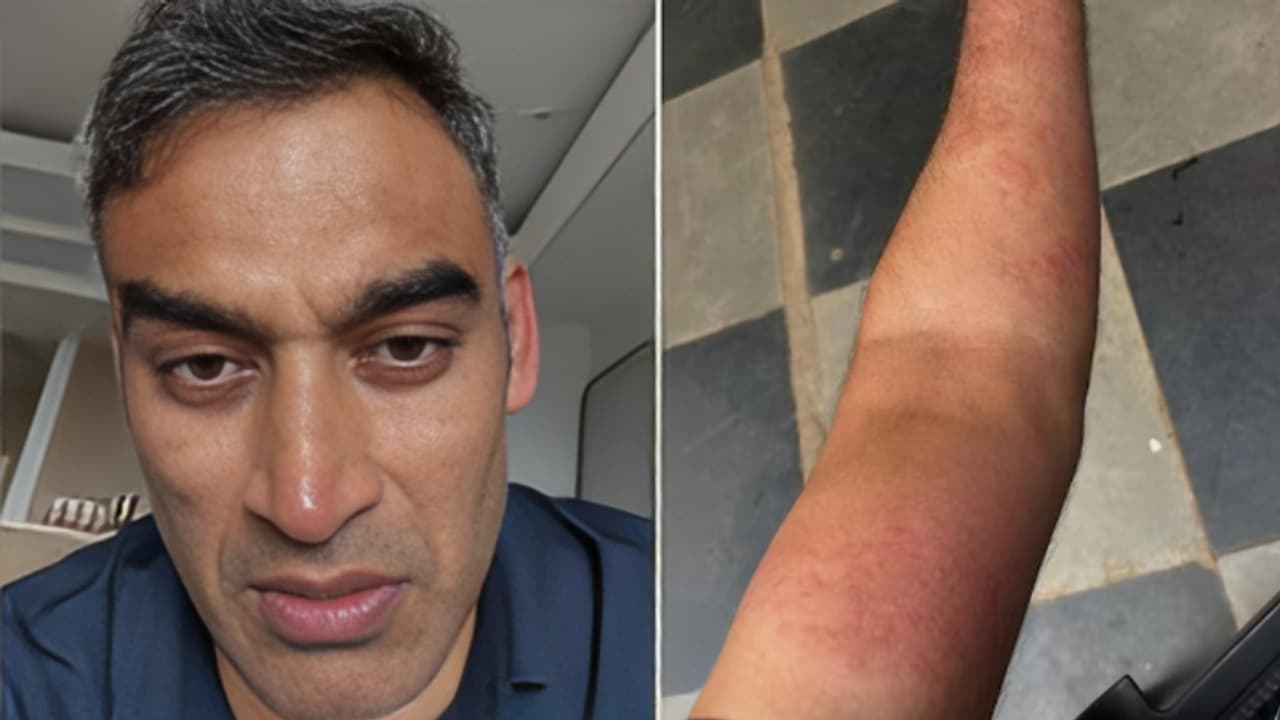
An Ironman 70.3 Goa 2026 participant was hospitalised after multiple jellyfish stings during the swimming leg left him in severe pain. His account has raised questions about medical preparedness and athlete safety
Satyam Shanker Sahai, an entrepreneur from Lucknow and founder of The Finish Strong Project, has shared a harrowing account of being stung repeatedly by jellyfish during the swimming leg of Ironman 70.3 Goa 2026.
In a Facebook post titled ‘The Jellyfish Chronicles’, Sahai described how what was meant to be a competitive race quickly became a medical emergency. He also posted photographs showing the swelling and painful marks left by the stings on his arms and legs.
Sahai had travelled to Goa for his second race of the year as he gradually moved towards coaching. Several athletes he supported were also participating, and he had entered the event hoping to qualify despite receiving advice against racing.
The swim began amid confusion, with several participants reportedly in the wrong lanes. Around 700 metres into the course, Sahai experienced his first jellyfish sting, affecting his nose, face and neck. Despite the pain, he continued swimming.
The situation worsened around the 1,200-metre mark when a larger jellyfish wrapped itself around his left arm.
“Intense pain through my whole body, palpitations. I stopped at the safety boat, they pulled it off. I finished the swim one-handed,” he recalled.
Athlete Raises Concerns Over Medical Response After Stings
Reaching the shore did not bring immediate relief. Sahai said volunteers accidentally splashed vinegar into his eyes, while his face, neck and eyes had swollen considerably. He also experienced paralysis in his left arm.
At the medical tent, he encountered several other athletes suffering from jellyfish stings. According to his account, all 12 beds were occupied, while two participants were struggling to breathe.
Sahai alleged that medical personnel did not check his blood pressure or follow an anaphylaxis protocol despite his symptoms. After spending approximately 30 minutes at the tent, with his palpitations worsening, he was taken to a hospital by Surabhi.
Doctors found that his arm was covered in hives and his blood pressure was significantly elevated. He received intravenous corticosteroids and antihistamines before being kept under observation for several hours.
The pain continued throughout the night, and he was told that recovery could take around two weeks.
Sahai emphasised that jellyfish stings should not automatically be dismissed as minor injuries. He called for better emergency preparedness at sporting events, including blood pressure monitoring, access to adrenaline and antihistamines, and faster transfers to hospitals when necessary.
Athlete Calls for Better Safety Measures at Open-Water Events
Reflecting on the incident, Sahai urged race organisers to take greater responsibility for athlete safety, particularly during open-water swimming events where jellyfish encounters can pose serious risks.
He also shared that he was exploring preventive measures such as Safe Sea lotion, wetsuits and stinger suits. However, he stressed that individual precautions should complement, rather than replace, proper safety planning by organisers.
Despite the frightening experience, Sahai found some comfort in the performances of the athletes he had travelled to support. All of them reportedly avoided jellyfish stings and completed their races successfully.
“I came for them and I’m proud,” he wrote, promising to share more about their achievements.
Sahai ended his account with a touch of humour, noting that he had completed 18 Ironman events around the world without being stung by a jellyfish before this race in India.
“Now I have that badge too,” he wrote.
His post received messages of support from people who praised him for highlighting the risks of jellyfish stings and the importance of emergency preparedness. Others discussed precautions for open-water swimmers and ways organisers could reduce the likelihood of similar incidents.