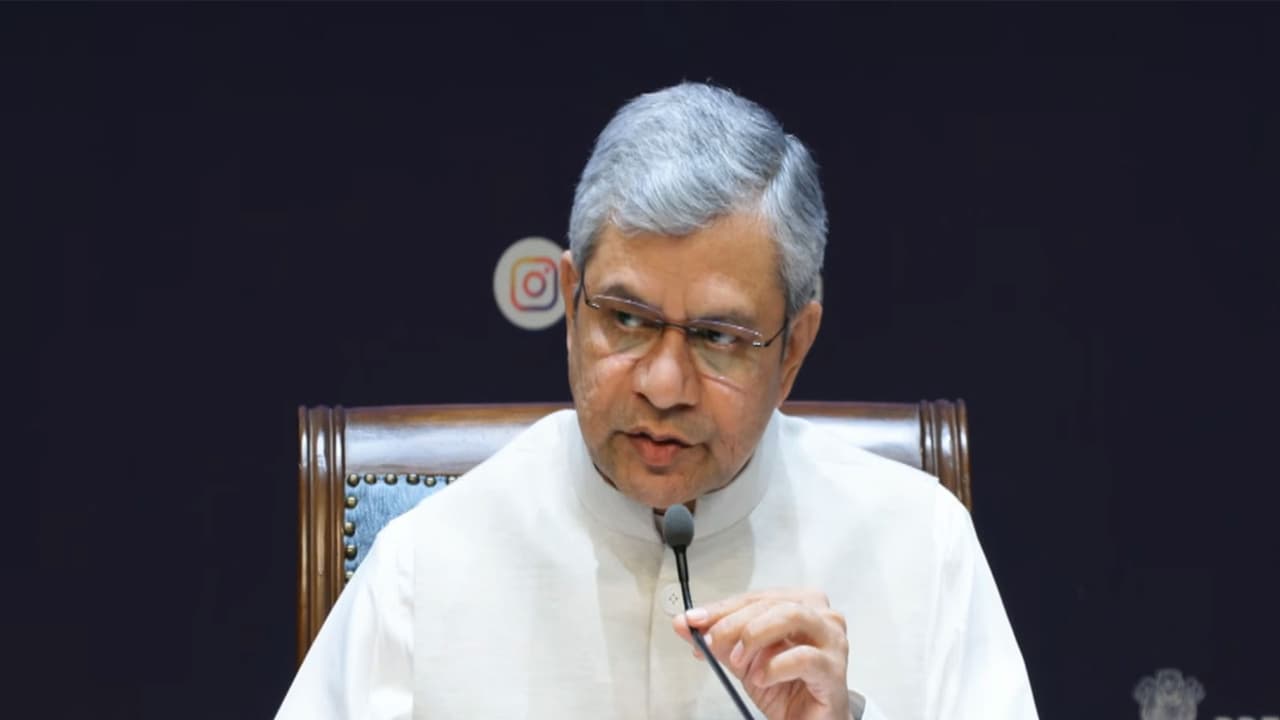
The Union Cabinet approved a 92 GWh energy storage scheme, critical mineral processing initiatives, and a Rs 4,371 crore national statistical system revamp to enhance infrastructure, manufacturing, and data administration across the country.
Union Cabinet Approves Major Energy Storage and Infrastructure Schemes
New Delhi [India], November 4 (ANI): The Union Cabinet approved a 92 gigawatt-hour (GWh) grid-scale energy storage scheme alongside initiatives for critical minerals processing and an overhaul of the national statistical system. According to details shared during a Cabinet briefing by Union Minister Ashwini Vaishnaw, the energy storage framework targets grid-level deployment across states, dividing capacity between established mechanisms and newer technical solutions to support renewable power integration.
Energy Storage Framework Details
Speaking at the briefing, Union Minister Ashwini Vaishnaw said, “92 gigawatt hours energy storage scheme has been approved today. This is going to be a grid scale energy storage scheme. At the grid level, this energy storage scheme will be there.” “In 92 GWh, 30 GWh will be battery storage scheme and 60 GWh will be pump storage,” Vaishnaw stated. He noted that the pump storage component uses solar power to pump water to higher altitudes, releasing it downwards to generate power via kinetic energy. “Another 2 GWh will be for emerging technologies,” he added.
Explaining the infrastructure implications, the Minister pointed out that storage enables higher utilization of transmission lines that otherwise stay idle during non-generating hours. “Due to storage, our existing transmission capacity, we can increase it multiple times,” Vaishnaw said. “For example, if you create a 10 megawatt (MW) evacuation capacity for a solar power plant, its 10 megawatt will never be fully utilized. Because solar energy will not come at night.” He added, “So that’s why energy, the amount of investment we have to make in transmission capacity, that investment is more if there is no storage. If you have storage, then you can utilize the full 10 megawatt capacity along with the renewable energy generation.” Vaishnaw observed that non-fossil fuels account for close to 52 percent of national power generation, attributing the progress to clean energy commitments.
Industrial Raw Materials and Data Administration
Critical Minerals Processing
Turning to industrial raw materials, the Cabinet cleared an intervention to process 24 defined critical minerals, covering both mined inputs and recycled materials to prepare feedstock for manufacturing sectors including semiconductors, batteries, electronics, defense equipment, and heavy machinery. “In this, a major decision was taken for the processing of critical minerals. A scheme has been approved in the cabinet today,” Vaishnaw noted. “The focus will be that whatever raw material, whether it comes after mining or after recycling, that raw material, that raw critical mineral should be brought in a condition that is ready for proper manufacturing.”
Statistical System Revamp
Addressing data administration, the Cabinet sanctioned a Rs 4,371 crore scheme to restructure the statistical system, targeting improved survey methods, validation processes, university certification courses, and reduced collection bias. “A new scheme of Rs. 4,371 crore has been approved by the Prime Minister, which will basically revamp the entire statistical system of a country,” Vaishnaw said, citing priorities around ground truthing, collection frequency, and periodical assessments. (ANI)
(Except for the headline, this story has not been edited by Asianetnews Editorial staff and is published from a syndicated feed.)