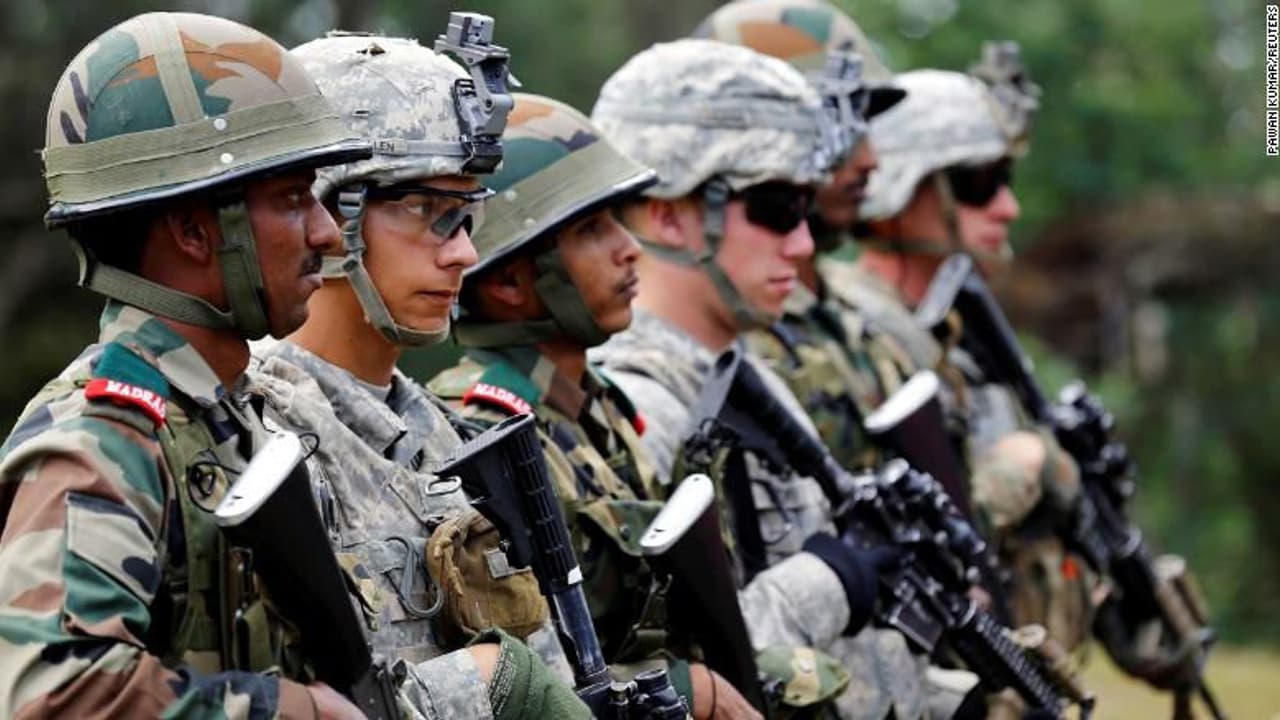
India and US will conduct 22nd edition of Exercise Yudh Abhyas in September 2026, with around 350 troops from each side training in Uttarakhand’s Auli and Rajasthan’s Mahajan firing range. The exercise will feature Apache attack helicopters and focus on high-altitude warfare, live-fire drills, air-ground coordination and combined-arms operations.
New Delhi: India and the United States will conduct the 22nd edition of their annual joint army exercise, Yudh Abhyas, in the first week of September, deploying roughly 350 soldiers each across two geographically contrasting locations: the high-altitude snowfields of Auli in Uttarakhand and the arid expanse of the Mahajan field firing range in Rajasthan.
Why Auli?
The choice of Auli carries strategic weight. Situated at an altitude of roughly 2,500 metres and approximately 95 km from the Line of Actual Control (LAC) with China, the exercise site at Auli offers realistic training ground for high-altitude operations of the kind that have become central to India’s military thinking since the prolonged stand-off in eastern Ladakh that began in 2020.
The three-week exercise will, for the first time in this series, incorporate AH-64 Apache attack helicopters and long-range vectored assets, giving both armies the opportunity to practise combined-arms operations, precision engagement and simulated close-air support across terrain that shifts from thin-air mountain ridges to open desert.
The Apache’s inclusion signals a deliberate effort to refine air-ground integration, target acquisition and dynamic manoeuvres under varied geographic and climatic conditions.
Training at Auli will test high-altitude logistics, acclimatization protocols and infantry manoeuvres where reduced oxygen and harsh weather impose a physical ceiling on operations.
Drills at Rajasthan’s Mahajan
At Mahajan, the focus will shift to live-fire drills, mechanized manoeuvres and integrated artillery-aircraft coordination.
The previous edition, held in Alaska in September 2025, placed both armies in sub-arctic conditions.
Launched in 2004 as a modest bilateral initiative, Yudh Abhyas has grown into one of the largest recurring land-forces engagements between the two countries.
Over two decades, its scope has widened from counterinsurgency and counterterrorism drills to high-altitude warfare and humanitarian assistance and disaster relief operations, evolving in step with India’s expanding defence relationship with Washington and with the changing security calculus in the Indo-Pacific.
Yudh Abhyas is one of a battery of bilateral and multilateral exercises in which India and the US participate together. These include the naval exercise Malabar, which also involves Japan and occasionally Australia, and the air force exercise Cope India, as well as the broader Quad military engagements.