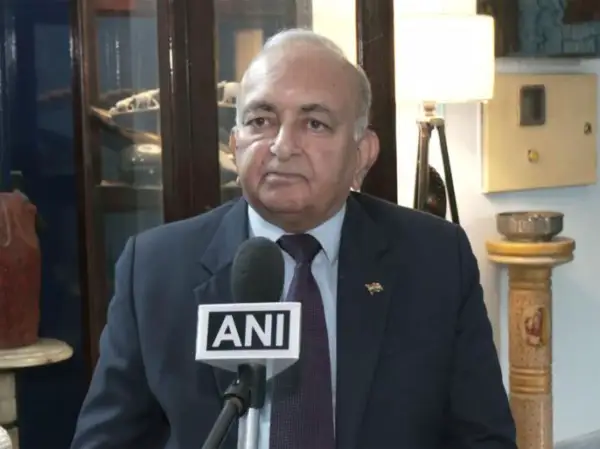
Former diplomat Mahesh Sachdev stated that the relationship between India and Israel will maintain its stability, regardless of who forms Israel’s next coalition government.
He emphasized that any new administration in Jerusalem would prioritize strong government-to-government continuity with New Delhi, highlighting the enduring strategic cooperation between the two nations.
Sachdev noted that India and Israel share robust government-to-government and people-to-people ties that have flourished for decades under various leaders. He underscored that any incoming Israeli Prime Minister would dedicate special attention to relations with India, especially given Israel’s critical need for reliable international partners amidst increasing global scrutiny over its military campaigns in Gaza, Lebanon, and the wider West Asia region. These conflicts have led to diplomatic strain, making New Delhi’s partnership even more crucial.
Despite differences on the broader Middle East peace framework, Sachdev pointed out that both nations prioritize pragmatic bilateral engagement. India’s well-known stance on a two-state solution contrasts with Israel’s, yet their focus remains on direct, bilateral cooperation. He also highlighted the complex political landscape in Israel, where a multi-party system often leads to coalition gridlock, as seen in the recent inconclusive elections following the October 7 Hamas attack.
Sachdev further observed the significant emergence of Arab-Israeli parties as a political force, representing 21% of Israel’s population. Their growing influence means they can no longer be overlooked in government formation. He also noted a shift towards a more right-wing electorate among younger voters, which could complicate future compromise solutions for regional conflicts. The diplomat concluded that the ongoing military operations have yet to yield a decisive victory, imposing significant economic and social costs, and that the elections reflected widespread public concern over security failures and war fatigue.