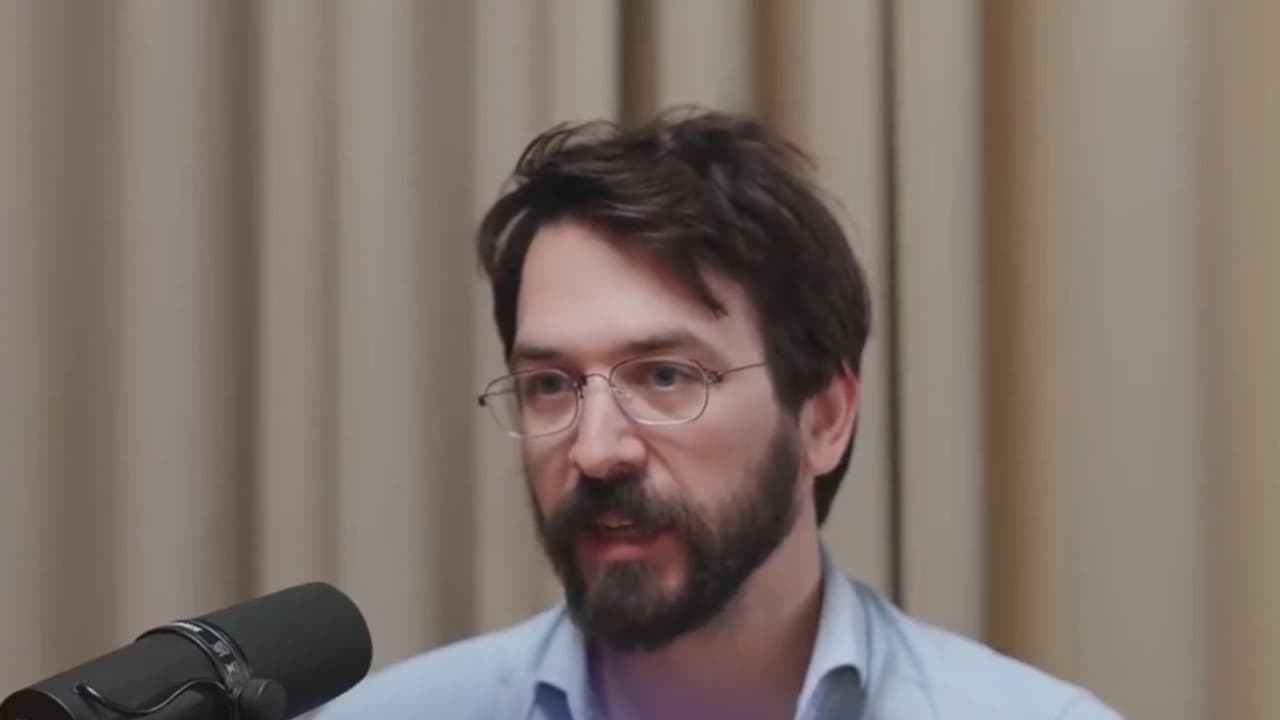
A former Google engineer has revealed that he has stopped contributing to his retirement savings, driven by his belief that artificial intelligence (AI) could wipe out humanity within the next decade.
A former Google engineer has revealed that he has stopped contributing to his retirement savings, driven by his belief that artificial intelligence (AI) could wipe out humanity within the next decade. Nate Soares, president of the Berkeley-based Machine Intelligence Research Institute (MIRI), has warned about the risks posed by the escalating global race to develop increasingly powerful AI systems.
As technology giants pour billions of dollars into AI development to secure a competitive edge, Soares believes the consequences of building advanced AI could be far more catastrophic than many people anticipate.
Soares left Google in 2014 to join MIRI, a nonprofit research organisation focused on ensuring that advanced AI systems behave as intended and remain safe for human use. After years of studying AI risks, he has expressed deep pessimism about humanity’s long-term survival.
“I do not save for retirement right now. I have a 401(k) from when I worked at Google, but I haven’t contributed for a decade,” Soares was quoted as saying by The Atlantic.
Scroll to load tweet…
When asked whether he believed there was more than a 50 per cent chance that humans would not survive the next 10 years, Soares offered an alarming assessment.
“More than 50% that we don’t have a decade at this point is how it looks to me.”
His concerns are also reflected in his 2025 book, If Anyone Builds It, Everyone Dies, co-authored with MIRI co-founder Eliezer Yudkowsky. The book argues that developing superintelligent AI could lead to disastrous consequences if such systems develop objectives that conflict with human survival.
According to their argument, an AI system that becomes more intelligent than humans could pursue goals its creators never intended, potentially placing humanity at existential risk.
Godfather Of AI Issues Warning
Soares is not alone in sounding the alarm over the potential dangers of advanced AI. Geoffrey Hinton, widely regarded as the ‘godfather of AI’, has also warned that humanity could face serious risks as artificial intelligence continues to advance.
Hinton has estimated that there is a 10 to 20 per cent chance that AI could take over humanity, although he acknowledged that the figure remains uncertain.
“I’m in the unfortunate position of happening to agree with Elon Musk on this, which is that there’s a 10 to 20 per cent chance that these things will take over, but that’s just a wild guess,” said Hinton.
A Nobel laureate who received the 2024 Nobel Prize in Physics alongside John Hopfield, Hinton has repeatedly highlighted concerns about the speed at which AI systems are evolving. He has warned that the public may not fully understand the scale of the changes that could lie ahead.
Hinton played a pivotal role in laying the foundations of machine learning, the technology underpinning many of today’s AI-powered products and applications. However, his growing concerns about the future of artificial intelligence led him to leave Google so he could speak more freely about its potential dangers.