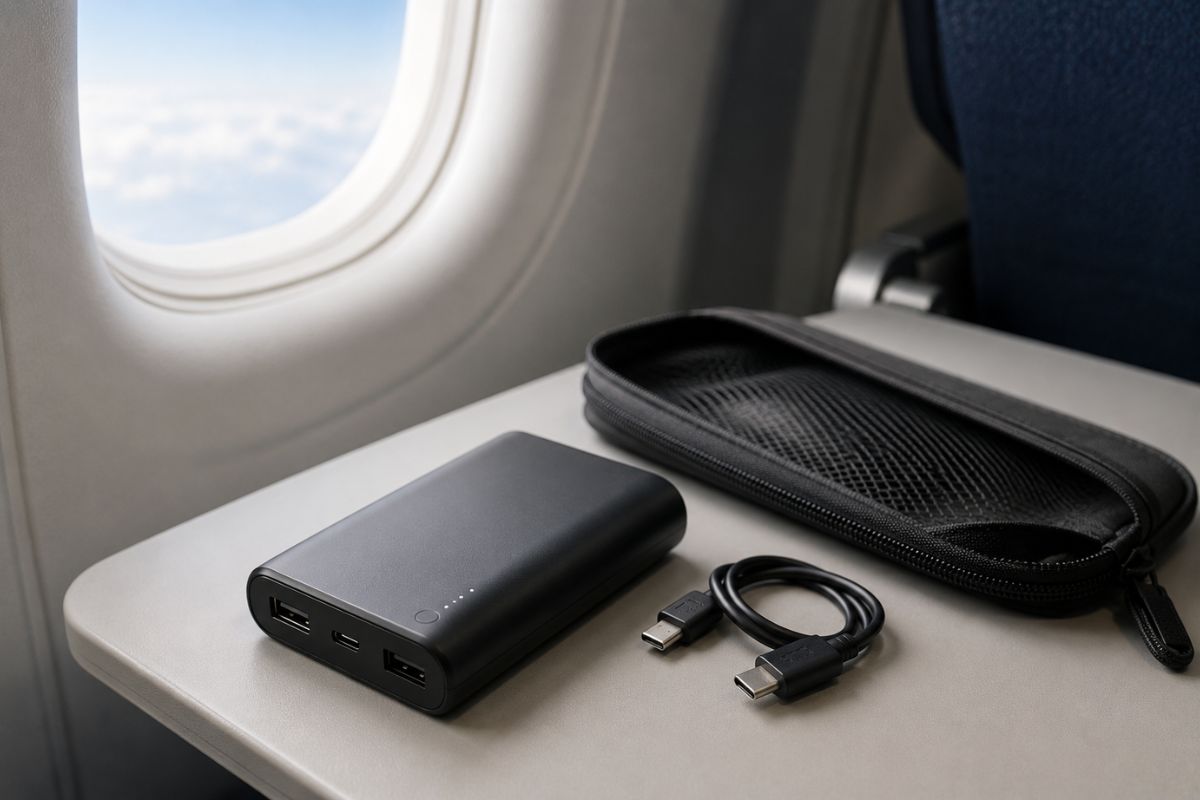
Flying to Thailand with multiple power banks? Double-check your cabin bag before heading to the airport.
Thailand has introduced stricter rules on carrying power banks on flights after a series of onboard battery fire incidents. The new regulations apply to all passengers flying within or from Thailand and could affect many Indian travellers carrying high-capacity charging devices.
Thailand’s New Power Bank Rules Explained
Under the updated rules, the Civil Aviation Authority of Thailand (CAAT) now requires passengers to carry power banks in hand luggage and prohibits them from placing the devices in checked baggage.
Passengers can carry power banks up to 100Wh (roughly 20,000mAh) without airline approval. Devices rated between 101Wh and 160Wh require advance permission from the airline.
Any power bank without a clearly marked capacity rating will be refused.
New Limits on Lithium Batteries
Thailand has also capped the number of lithium batteries passengers can carry. Key rules include:
- A maximum of two lithium batteries per passenger
- Power banks must remain easily accessible during the flight
- Devices cannot be stored in overhead bins
- Use of power banks during flights is prohibited
- Charging phones, tablets, or other gadgets with a power bank onboard is not allowed
Passengers should keep power banks in protective pouches or original packaging to prevent short circuits and avoid contact with metal objects.
Why Authorities Are Concerned
According to CAAT, lithium batteries can overheat, emit smoke, or catch fire if damaged or improperly handled. Thailand introduced the updated rules to reduce onboard fire risks and bring its aviation regulations in line with safety standards followed by airlines worldwide.
For travellers, the message is simple: keep your power bank in your cabin bag, know its capacity, and avoid using it once you’re in the air.
Thailand Has Been Tightening Cabin Baggage Rules
In addition to the new power bank restrictions, Thailand has also tightened several aviation safety regulations in recent years. Last year, authorities also updated hand luggage screening requirements, increasing checks on Liquids, Gels, and Aerosols (LGAs) carried through airport security.
Items covered under these rules include:
- Beverages, soups, sauces, and other liquid food items
- Toiletries and cosmetics such as toothpaste, lotions, perfumes, and creams
- Aerosol products, including sprays, foams, and pressurised containers
- Semi-solid items such as mascara, lip balm, gels, and similar personal care products
Other Airlines Have Already Tightened Power Bank Rules
Thailand’s latest restrictions are part of a broader trend across the aviation industry. Following several onboard battery overheating incidents, many airlines have introduced stricter rules on carrying and using power banks during flights.
Airlines with similar power bank restrictions include:
- Singapore Airlines – Prohibits charging devices with power banks during flights.
- Scoot – Bans both the use and charging of power banks onboard.
- Thai Airways – Requires power banks to be carried in cabin baggage and restricts onboard use.
- AirAsia – Limits where power banks can be stored and discourages in-flight charging.
- EVA Air – Prohibits the use of power banks during flights.
- China Airlines – Does not allow passengers to use power banks onboard.
- Starlux Airlines – Restricts the in-flight use of portable chargers.
- Korean Air – Requires power banks to remain with passengers and not in overhead bins.
- Asiana Airlines – Imposes stricter cabin storage requirements for lithium batteries.
What This Means for Indian Travellers
Thailand remains one of the most popular international destinations for Indian tourists, with direct flights from Delhi, Mumbai, Bengaluru, Chennai, Kolkata, Hyderabad, Ahmedabad, and Kochi.
Most international travellers routinely carry multiple power banks for long-haul journeys, remote work, photography equipment, and extended sightseeing days. Those habits may now need to be adjusted, especially for passengers carrying larger devices.
This is part of a wider shift across Asia, where airlines and regulators are taking a tougher stance on lithium batteries after a growing number of cabin safety incidents linked to overheating power banks.
Travelobiz Take
We think these rules are practical rather than restrictive. If you’re flying to Thailand, carrying a properly labelled power bank and following cabin rules should keep your journey hassle-free.
Follow and connect with us on Facebook, Twitter, LinkedIn, Instagram and Google News for the latest travel news and updates!