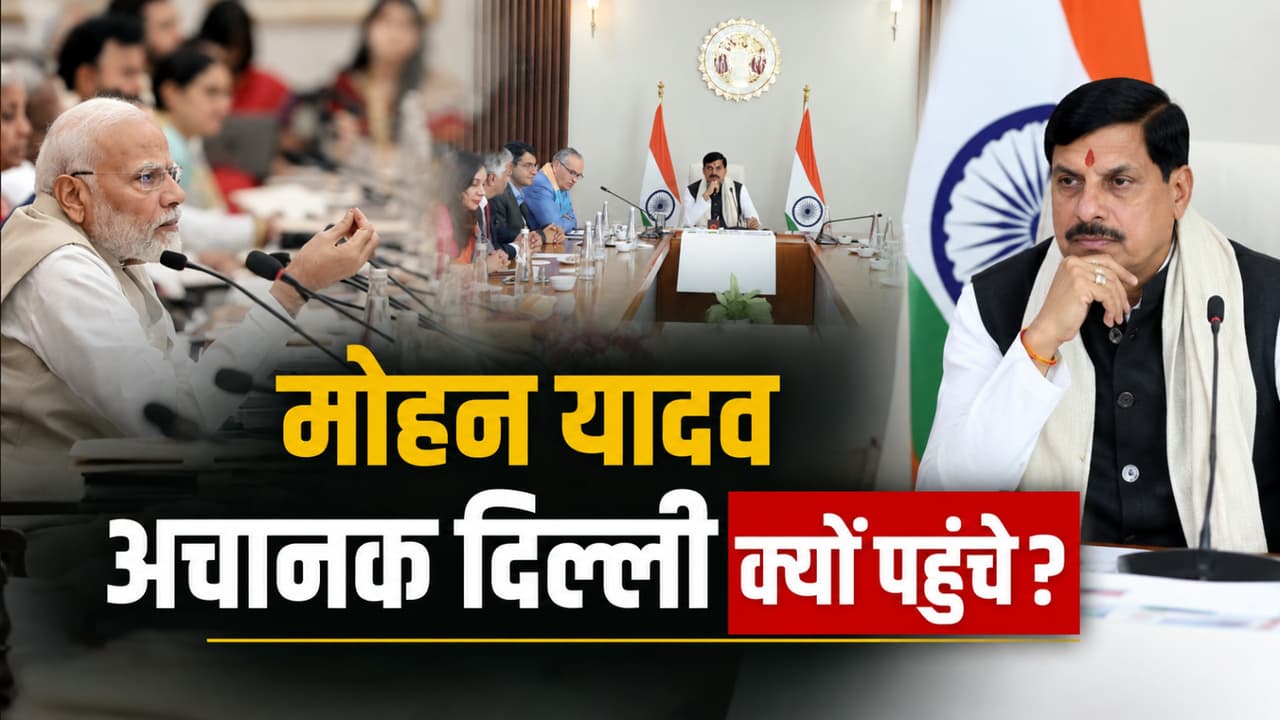
The central government is gearing up for a major brainstorming session on its ‘Viksit Bharat 2047’ goal. Prime Ministetest r Narendra Modi will chair the 11th NITI Aayog Governing Council meeting in New Delhi on June 11. Chief Ministers from all states, including MP’s Mohan Yadav, will attend to discuss the roadmap for a developed India.
The central government is once again preparing for a high-level brainstorming session to achieve its goal of making India a developed nation by 2047. Prime Minister Narendra Modi will chair the 11th Governing Council meeting of NITI Aayog in New Delhi on June 11. This is a very important meeting, and representatives from all states and union territories will be a part of it. Madhya Pradesh Chief Minister Dr. Mohan Yadav has already reached New Delhi on Tuesday to attend.
This meeting is happening at a crucial time, as both the Centre and state governments are creating strategies to turn the ‘Viksit Bharat 2047’ vision into a reality. It is believed that there will be extensive discussions on topics like human resource development, employment, skills, and social equality.
‘Inclusive Human Development’ is the Main Theme
The theme for this year’s NITI Aayog Governing Council meeting is ‘Inclusive Human Development for a Viksit Bharat by 2047’. The main objective is to ensure that every section of society is included in the development process and that the benefits of the country’s progress reach the last person.
In the meeting, Chief Ministers and Lieutenant Governors of Union Territories will come together to discuss a model that can strengthen India’s human capital in the years to come.
Special Focus on These Four Key Areas
The meeting’s agenda includes four areas that are considered the foundation of a developed India:
- Basic Human Capital and Future-Ready Skills: The emphasis will be on providing the country’s youth with skills that match changing technology and global needs. New models for education and skill development are also likely to be discussed.
- Productive Employment, Entrepreneurship, and Decentralized Development: The council will consider measures to increase job opportunities, encourage local industries, and strengthen entrepreneurship. The focus will be especially on creating jobs for the youth and in rural areas.
- Health, Nutrition, and Well-being: States will share their experiences with better healthcare services, nutrition-related schemes, and the overall welfare of citizens. Discussions may also focus on increasing coordination between the Centre and states.
- Equality and Dignity for All: There will be deliberations on effective policies to bring the weaker and deprived sections of society into the mainstream of development. States’ suggestions on social justice and equal opportunities may also be presented at the meeting.
Brainstorming on Jobs and Entrepreneurship Too
According to sources, the meeting will also have a special discussion on promoting entrepreneurship across the country, making skill development programs for the youth more effective, and creating sustainable employment opportunities. Employment and human resource development are considered the most important pillars for achieving the ‘Viksit Bharat’ goal.
Who Will Be Attending the Meeting?
The NITI Aayog Governing Council meeting is considered one of the country’s largest platforms for cooperative federalism. It will be attended by the Chief Ministers of all states, Lieutenant Governors and Administrators of Union Territories, Union Ministers, and the Vice-Chairman, members, and CEO of NITI Aayog.
Giving New Momentum to the Viksit Bharat 2047 Vision
Better coordination between the Centre and states is seen as essential to achieve the ‘Viksit Bharat 2047’ target set by Prime Minister Narendra Modi. In this context, this NITI Aayog meeting is not just an administrative event but could prove to be a crucial platform for deciding the country’s future development strategy. test 123
All eyes are now on the June 11 meeting, where an attempt will be made to determine the country’s future direction on issues like human development, employment, health, and social equality.