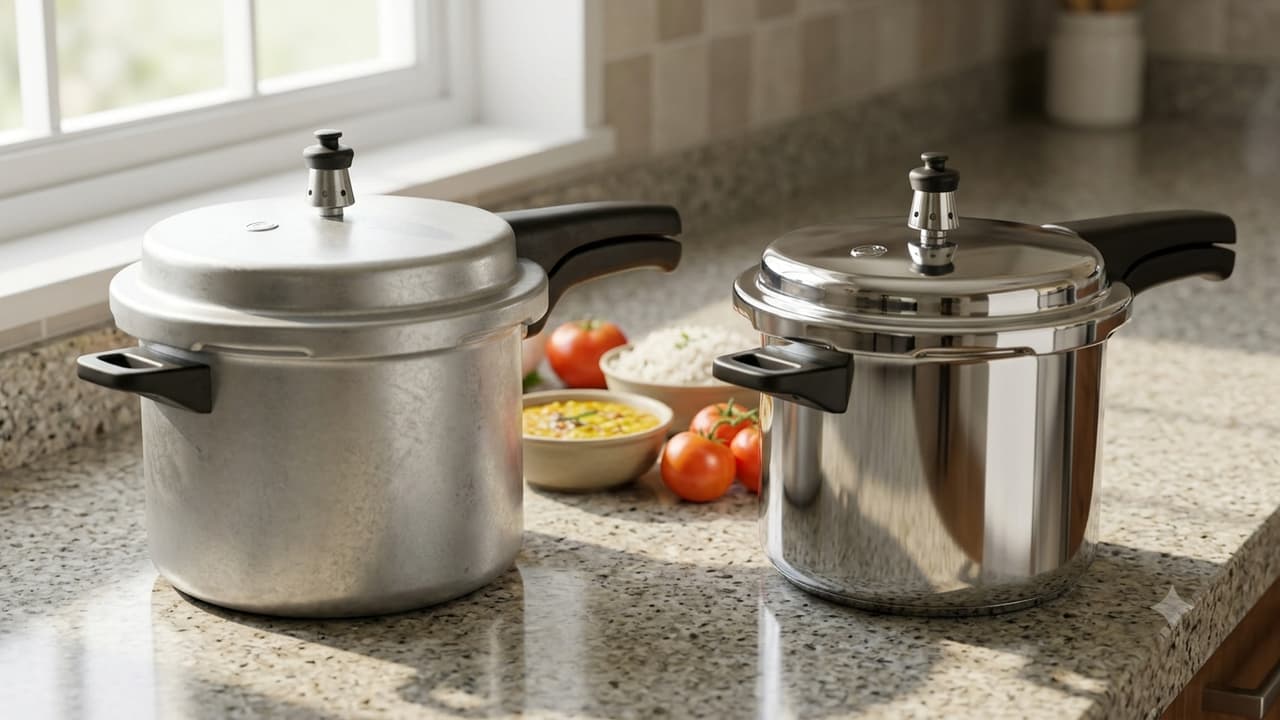
Stainless steel pressure cookers are generally more resistant to corrosion, dents and everyday wear. With proper care, they can remain useful for many years, making them a practical long-term investment.
Aluminium cookers are lighter but can dent more easily. Over time, the surface may become discoloured or develop pits, particularly when exposed to unsuitable cleaning methods or certain foods.
Hard-anodised aluminium cookers have a treated surface designed to improve hardness and resistance to reactions. However, users should follow the manufacturer’s care instructions and discontinue use if the cooking surface becomes significantly damaged.
Regardless of the material, a cooker should be replaced or professionally assessed if its body becomes distorted, its lid no longer fits correctly or its safety components stop functioning properly.
Cooking Performance
Aluminium is an excellent conductor of heat. It heats up quickly and transfers heat efficiently, making aluminium pressure cookers useful for routine cooking.
Stainless steel conducts heat less efficiently than aluminium. However, many stainless steel cookers feature a layered or encapsulated base that incorporates aluminium to improve heat distribution.
These designs can help reduce uneven heating while retaining the durability of stainless steel. The actual cooking performance depends on the cooker’s construction, base thickness, heat source and how it is used.
Therefore, it is worth checking the base design rather than assuming that every stainless steel cooker heats slowly or that every aluminium model performs identically.