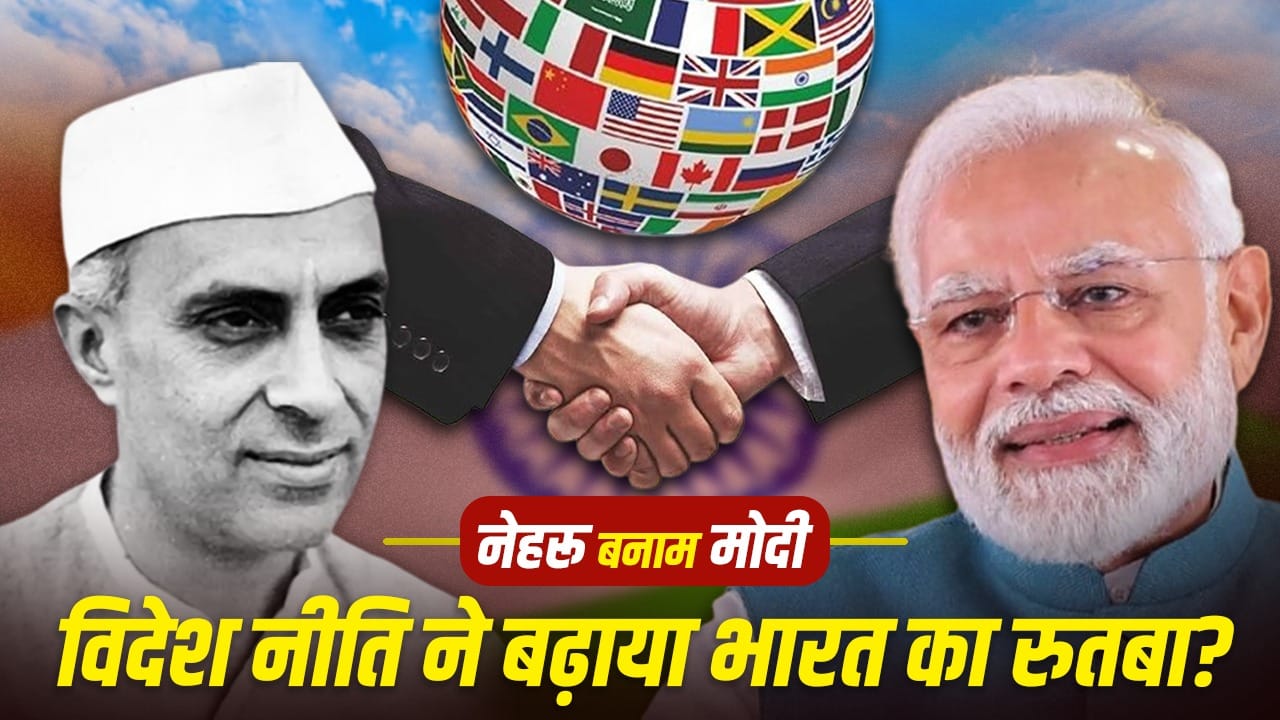
Jawaharlal Nehru and PM Modi era
The story of India’s foreign policy is long. This is only as PM Pandit Nehru and current Prime Minister Narendra Modi There is no comparison. This is a story of two different periods. There was a time when India had just become independent. In the second phase, India is trying to become a big power in the world. During Nehru’s time, India’s identity was that of a new democracy. During the time of Modi, India’s identity is that of a self-confident power. At that time the world looked at India with hope. Now the world looks at India with need.
We all know that PM Modi is breaking the record of the country’s first PM Pandit Nehru on this 10th June. In such a situation, the matter of foreign policy is also important. How was India then in the eyes of the world and how is it now? How did foreign policy make Shining India a reality?
India in the eyes of the world after 1947
At the time of independence, India was a country with a weak economy. The country was injured by partition. Poverty was very high. Industries were limited. The army and administration had to be revamped. Still, India had a great strength. That strength was faith in democracy. India did not choose the path of military rule. India chose the path of elections, parliament and constitution. Many countries of the world found this experiment impossible. The reason was clear. India was poor. India was very diverse. The languages were different. Religions were different. The regions were different, but India surprised the world by practicing democracy. This became India’s first major global identity.
Nehru’s foreign policy means India with moral voice
Jawaharlal Nehru adopted independent thinking in foreign policy. He did not make India a part of any group. At that time the world was divided between America and the Soviet Union. This is called the period of cold war. Nehru promoted non-alignment policy. This meant that India would speak for itself. India will not become a lackey of any superpower. Bandung conference was held in the year 1955. New countries of Asia and Africa raised their voice. The Non-Aligned Movement started in 1961. India was among the major countries in this. This policy gave India a different identity. India was poor but its voice was heard. India was creating its identity not with weapons but with ideas.
What was the image of India during the Nehru era?
During Nehru’s time, India was considered an anti-colonial country. India was seen standing with the freedom movements of Africa and Asia. India opposed racism and imperialism. India talked about peace in the United Nations. India also played a role in peacekeeping operations. India’s image became that of a responsible and idealistic country. The world considered India a poor country, but also respected India. Because India had chosen democracy, peace and independent policy.
What were the limitations of Nehru policy?
Nehru’s foreign policy had high ideals, but not every ideal was successful on the ground. Questions were raised on India’s understanding of China. Panchsheel agreement was signed in 1954. The slogan was given, Hindi-Chini Bhai-Bhai, but in 1962 there was a war with China. India got a big shock. This made the world feel that India is morally strong. But the military is weak in preparation. This was a big lesson of the Nehru era. Ideals alone are not enough. National security is equally important.
India in the eyes of the world after 2014
After 2014, the style of India’s foreign policy changed. The language became more simple. Leadership became more visible. India started expressing its needs openly. Modi government emphasized on India First. This meant that India’s interest would come first in every relationship. India will also maintain friendship with America. Will also maintain relations with Russia. Will also partner with Gulf countries. It will also increase connectivity with Europe, Japan, Australia and Africa. This is today called multi-alignment. That means India is not locked in one camp. India has relations with many powers, but takes decisions in its own interest.
India on forums in Modi’s foreign policy
India’s global visibility increased during the Modi era. The Prime Minister’s foreign tours were in the news. Overseas Indian programs were held on a large scale. India’s image was not limited to government meetings only. It reached from common people to diplomats. The Indian community played a big role in America, Australia, Britain and Gulf countries. There are more than three crore people of Indian origin in the world. This is India’s biggest soft power. Indian yoga, food, cinema, technology and culture also strengthened the image of India. From 2015, International Yoga Day started being celebrated on 21st June. This is considered a major success of India’s cultural diplomacy.
G-20 and India’s new status
India presides over the G-20 in the year 2023. This was a big opportunity for India. Big economies of the world came to India. Delhi manifesto was agreed upon. It was not easy. Because there were differences between the countries on the Russia-Ukraine war. India played an important role in making the African Union a permanent member of the G-20. This strengthened the image of India. India raised the problems of many developing countries on many forums. Talked about food security. Talked about energy security. Talked about debt crisis. Talked about climate justice. This was a new form of Nehru’s old moral voice. The difference was that now India also had a big market.
Economy gave strength to foreign policy
Foreign policy alone cannot shine. There needs to be economic strength behind it. In the year 2022, India will overtake Britain and become the fifth largest economy in the world. Indian market became very important for the world. Mobile, digital payments, startups and manufacturing changed the image of India. India became the world’s largest digital market. Many countries started showing interest in India’s digital public infrastructure model. UPI, Aadhaar and digital services made India like a technological laboratory. Now India does not seem to be the only country that takes help. India also appears to be a country that provides solutions.
Vaccine, disaster and trust
India launched Vaccine Maitri campaign during the Covid period. India sent vaccines to many countries. This strengthened India’s image as a pharma power. India was earlier called the Pharmacy of the World. This became more clear after Covid. India also launched operations to evacuate its citizens during the crisis. Operation Ganga went on in Ukraine crisis. Operation Kaveri went on in Sudan crisis. Operation Rahat continues in Yemen. These campaigns gave the message. India does not leave its citizens alone in trouble.
New style in security and strategy
The security policy appeared more clear during the Modi era. Steps like surgical strike and Balakot air strike gave the message that India can respond. India increased its role in the Indo-Pacific region. India joined America, Japan and Australia in Quad. Increased attention to maritime security. India’s role in the Indian Ocean strengthened. India maintained a balanced stance in the Russia-Ukraine war. India bought oil from Russia. Also maintain relations with America and Europe. This is an example of strategic autonomy.
Relations with Gulf countries strengthened
India’s relations with Gulf countries became very strong during the Modi era. Trade and energy relations increased with countries like UAE, Saudi Arabia and Qatar. Millions of Indians work in Gulf countries. They send large amounts of money to India. India-Middle East-Europe Economic Corridor announced in the year 2023. This is a big plan to connect India with West Asia and Europe. It was also considered an alternative to China’s Belt and Road Model.
Did Shining India come true?
Shining India should not be just a slogan. This should be visible on the ground. Today India seems to be shining in many fields. The economy is big. The digital system is strong. Space achievements have increased. There is confidence in foreign policy. The world listens to India seriously, but challenges still remain. Border tension continues with China. Anti-India sentiments are visible from time to time in neighboring countries. There is a need to increase exports. More work is needed on employment and skills. Poverty and inequality have not completely ended, but have definitely increased. Therefore Shining India is not an accomplished destination. This is an ongoing journey.
In this way it can be said that Nehru gave moral identity to India. He told that India is a country with free thinking. He made India an anti-colonial voice. Modi gave strategic identity to India. He connected India to the big market, digital power and global platforms. He made foreign policy more active and visible. Then India wanted respect. Now India wants influence. At that time India was making its place. Now India is demanding a bigger role in the global system.
Read this also- Nehru vs Modi on Kashmir, hit many targets with one stone, 70 years old promise fulfilled, end of conspiracies of PAK-separatists