Sri Lanka has invited Indian investors and business leaders to the ‘Sri Lanka Export 2027’ expo in Colombo. High Commissioner Mahishini Colonne called for modernising the economic partnership and highlighted tourism, energy, and digital services.
Sri Lanka Export 2027 Invitation
Sri Lanka, on Monday, invited Indian buyers, investors and business leaders to participate in Sri Lanka Export 2027, scheduled to be held in Colombo from January 14 to 17, 2027, with the country’s High Commissioner Mahishini Colonne saying the event would provide an opportunity to explore business partnerships, identify suppliers and attract investment.
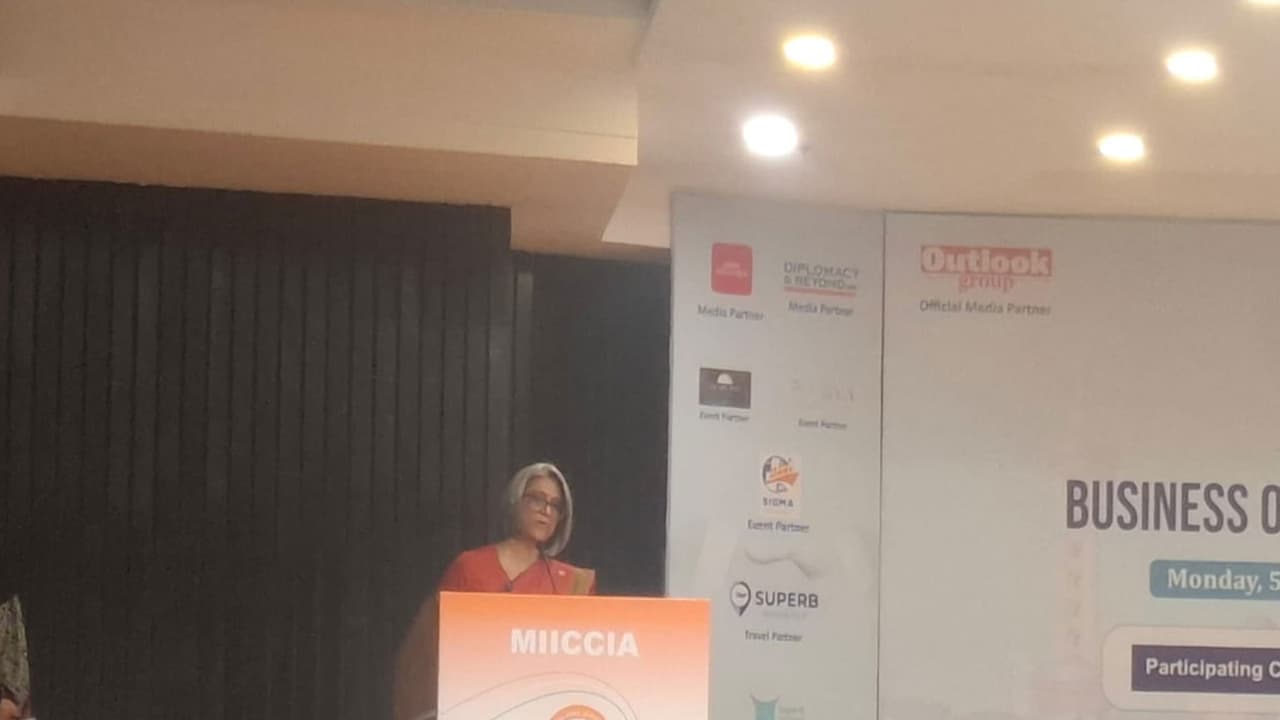
Speaking at the MIICCIA Conference in the national capital on Business Opportunities in BIMSTEC Countries, Colonne said the expo, organised by Sri Lanka’s Export Development Board, would bring together several Sri Lankan exporters with international buyers and investors. “I would like to invite the business communities of all our BIMSTEC member states—Bangladesh, Bhutan, India, Myanmar, Nepal and Thailand—to join us,” Colonne said, adding that she would particularly welcome Indian buyers, investors and business leaders.
Strengthening Economic Partnership
Colonne said India and Sri Lanka have substantial economic and people-to-people links, but there was “untapped potential” that could be realised through stronger business partnerships. “Sri Lanka is India’s closest maritime neighbour, separated by just about 34 kilometres of sea,” she said, adding that India is Sri Lanka’s largest trading partner and second-largest export market.
Sri Lankan exports to India exceeded USD 1 billion last year, recording an increase of around 17 per cent, she said.
India is also Sri Lanka’s largest source of tourist arrivals, with more than half a million Indians visiting Sri Lanka last year, said the High Commissioner of Sri Lanka.
Modernising the Free Trade Agreement
Colonne said the India-Sri Lanka Free Trade Agreement, which entered into force in 2000, had created opportunities for businesses in both countries, but argued that the economic partnership now needs to reflect changes in the way businesses operate. “The agreement is now more than a quarter of a century old,” she said, adding that businesses today operate through regional value chains, digital platforms, services and increasingly complex production networks. “We need to modernise our economic partnership to reflect these realities, making it easier for businesses to trade, source inputs, and build production networks across our two countries,” she said.
Investment and Connectivity
Highlighting investment links, Colonne said Indian investment in Sri Lanka was significant, but investment also flows in the other direction. She cited Sri Lankan company Brandix, which has established an apparel manufacturing city in Visakhapatnam, Andhra Pradesh, providing employment to more than 20,000 Indians, the majority of them women. “This is much more than a Sri Lankan investment in India. It is an example of how capital, expertise, and enterprise can create jobs and opportunity in both countries,” she said.
Colombo as a Transhipment Hub
On connectivity, Colonne said the Port of Colombo was one of the region’s major transhipment hubs and Indian cargo accounted for a substantial share of its business. She said the Colombo West International Terminal, developed through a partnership involving Indian and Sri Lankan interests, began operations last year and its second phase was inaugurated by Sri Lanka’s Prime Minister last week. “Our ambition now must be to extend beyond the port itself,” she said, pitching for a wider ecosystem of warehousing, distribution, logistics technology, shipping services and value-added activities for Indian companies.
New Avenues for Cooperation
Colonne also identified tourism, energy and digital services as areas with significant potential for greater India-Sri Lanka cooperation. On energy, she said Sri Lanka needs investment to realise its renewable energy potential, particularly in solar and wind power, while its educated workforce and growing information technology and business services sector could complement India’s capital, technology and scale.
A Natural Partnership Built on Trust
Referring to India’s assistance to Sri Lanka, Colonne said India was the first country to respond with vital support when Sri Lanka faced an economic crisis in 2022. She also said India was the first to arrive with assistance when Cyclone Ditwa struck in November last year and continues to support recovery and reconstruction. “For us, India is not simply our largest neighbour; it is our most natural economic partner,” she said.
Managing Economic Asymmetry
At the same time, Colonne acknowledged the “enormous asymmetry” between the two economies, saying India has the scale of a major global economy while Sri Lanka is a much smaller market emerging from a serious economic crisis. “This asymmetry need not make the smaller partner vulnerable. Properly managed, it can create opportunities for both,” she said. She said Sri Lanka wants its goods and services to have a clearer and easier path into the Indian market, alongside greater investment, stronger business links and more integrated value chains.
Future Goals and Regional Integration
Colonne also called for improvements in transport and logistics links, customs procedures, digital trade and compatibility standards, saying regional cooperation should ultimately be judged by what it enables businesses to do. She further said that Sri Lanka would seek to turn connectivity into investment and investment into greater economic capability and sustained growth. (ANI)
(Except for the headline, this story has not been edited by Asianetnews Editorial staff and is published from a syndicated feed.)