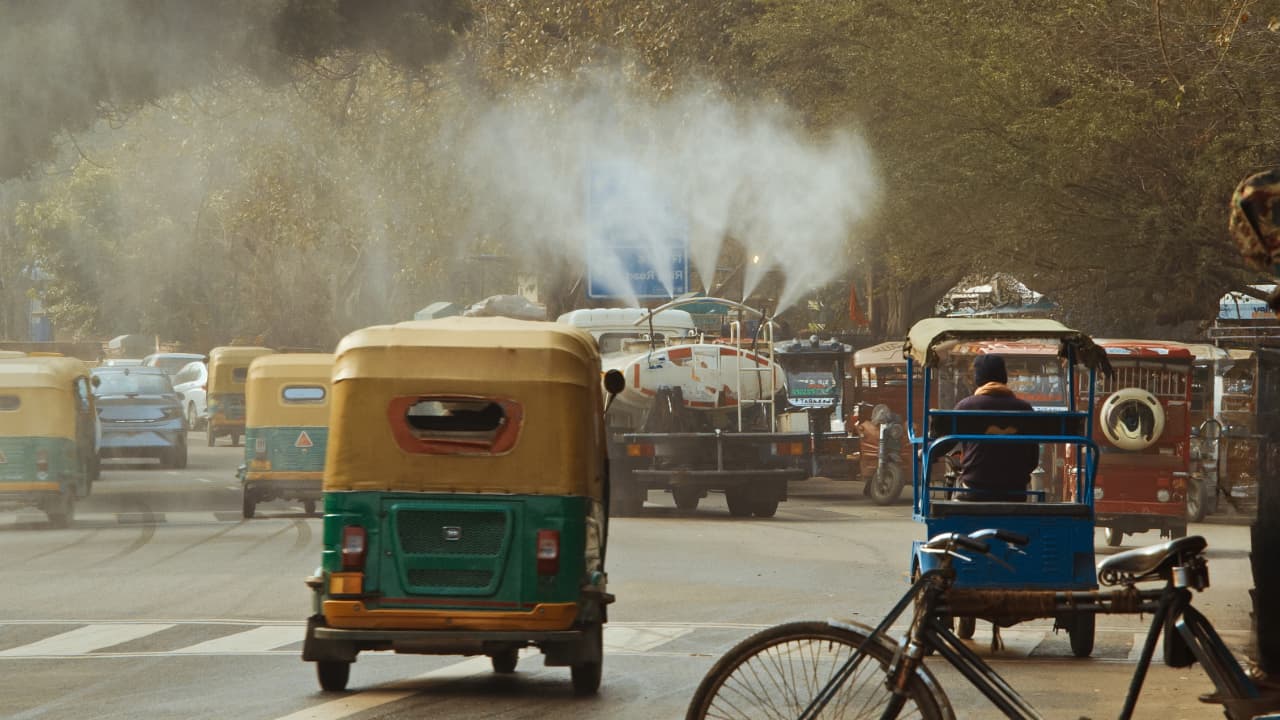
India’s monsoon season ended with uneven rainfall patterns across the country, leaving several regions struggling with deficits while a handful of states recorded above-normal precipitation, raising concerns beyond agriculture.
India has concluded the 2026 southwest monsoon season with below-normal rainfall, as the influence of El Niño continued to disrupt weather patterns across large parts of the country.
Data released by the India Meteorological Department (IMD) shows that between June 1 and September 29, India received 758.5 mm of rainfall against a long-period average of 865 mm. This left the country with an overall rainfall deficit of 12 per cent for the season.
While the national figure reflects a broad shortfall, the monsoon’s performance varied sharply from one region to another. Some states received significantly more rain than usual, while others recorded major deficits that affected soil moisture and agricultural conditions.
The most severe rainfall shortages were observed in parts of Northeast and South India, where several states ended the season well below normal levels.
Meteorologists have linked much of the uneven rainfall distribution to the continuing El Niño event in the Pacific Ocean, which has influenced atmospheric circulation and monsoon behavior throughout the season.
According to the regional breakdown, East and Northeast India recorded one of the poorest performances, receiving 1,016.3 mm of rain compared to the normal 1,361.2 mm. This amounted to a deficit of 25 per cent across the region.
Among all states, Meghalaya experienced the sharpest decline. The state received 1,075.9 mm of rainfall against a normal level of 2,681.6 mm, leaving it nearly 60 per cent below average.
Arunachal Pradesh, Manipur, Assam and Bihar also registered substantial rainfall shortages during the season.
Regional Differences Define The 2026 Monsoon
Northwest India performed comparatively better, recording a regional deficit of six per cent.
Uttar Pradesh, Uttarakhand and Delhi finished the season above normal rainfall levels, while Haryana, Punjab and Rajasthan reported notable deficits. Punjab emerged as one of the most rainfall-deficient states in the region with a shortfall of 41 per cent.
Central India was closest to normal.
The region received 952.3 mm of rainfall against a seasonal average of 974.7 mm, reflecting only a marginal deficit. However, the overall figure concealed significant disparities between states.
Odisha recorded 30 per cent more rainfall than normal, while Dadra and Nagar Haveli and Daman and Diu registered substantial surpluses. Goa and Maharashtra, meanwhile, remained considerably below normal levels.
The weakest monsoon conditions were observed across southern peninsular India.
The region received 539 mm of rainfall compared to a normal value of 710 mm, resulting in a seasonal deficit of 24 per cent.
Kerala, Karnataka, Andhra Pradesh, Telangana, Tamil Nadu and Puducherry all ended the monsoon below their normal rainfall totals. Karnataka and Puducherry were among the most affected states in the region.
By September 29, rainfall activity had weakened further. The country recorded only 1.5 mm of rainfall for the day compared to the norm of 3.7 mm, representing a deficit of about 60 per cent.
Agriculture And Groundwater Face Growing Pressure
The uneven monsoon has created challenges extending beyond rainfall statistics.
Agriculture has already felt the impact of delayed and insufficient precipitation in several regions. Reduced rainfall affected sowing patterns and increased stress on rain-fed farming systems, particularly for pulses and coarse cereals.
The pressure is especially significant because between 55 and 60 per cent of India’s net sown area depends largely on rainfall rather than irrigation.
Groundwater resources have also come under additional strain.
As rainfall deficits persisted in several states, farmers increasingly relied on groundwater for irrigation, adding pressure to reserves that were already under stress in many areas.
According to the IMD’s classification, 53 per cent of India’s geographical area fell within the normal rainfall category during the season. However, 39 per cent of the country experienced deficient rainfall, while only a small portion recorded above-normal precipitation.
The data highlights how the 2026 monsoon was shaped less by a uniform national deficit and more by stark regional contrasts.
States such as Odisha and parts of western India received ample rainfall, while large sections of the Northeast and South struggled with significant deficits. These variations show the growing influence of climate-linked weather disruptions and the challenges they pose for agriculture, water management and regional planning across the country.