Union Minister Ashwini Vaishnaw refutes ‘screwdriver technology’ claims, highlighting India’s precision in manufacturing. He states India now makes components, has created 25 lakh jobs in electronics, and is the world’s 2nd largest mobile maker.
‘Not Screwdriver Technology’: Vaishnaw on India’s Manufacturing Precision
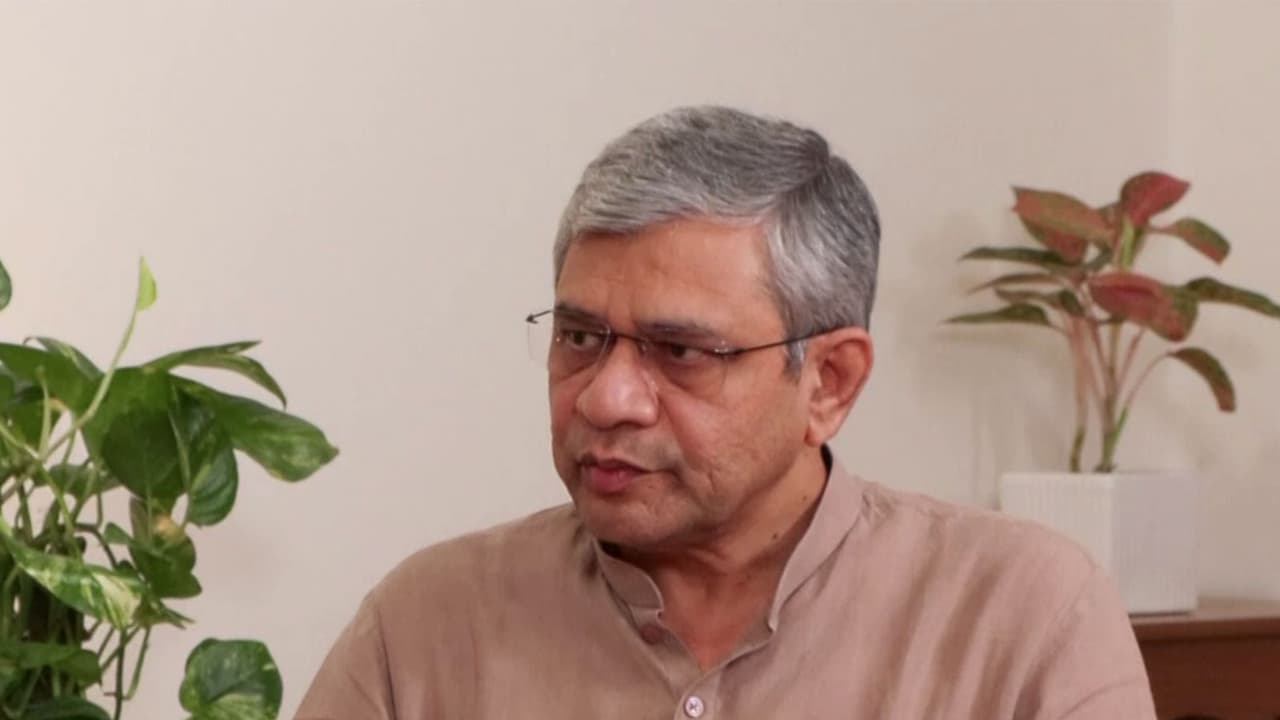
Union Minister Ashwini Vaishnaw on Monday dismissed criticism describing Indian manufacturing as “screwdriver technology,” asserting that the precision achieved in the sector demonstrates the country’s growing position in the global value chain. In an exclusive conversation with ANI, the Union Minister said India has achieved high levels of precision in mobile manufacturing, enabling the country to move beyond assembly and into component production.
Demonstrating the level of precision in manufacturing, the Minister showcased a steel block made of multiple hidden pieces, explaining how advanced engineering allows complex components to appear as a single unit. “I will show you what kind of precision our people are achieving in mobile manufacturing, which is where people some of the big names say that it is a screwdriver technology. The precision is absolutely amazing, and without getting that precision. When you look at this, it looks like a good, solid block. Is there a cut you can see? Can you see a cut? You cannot see a cut, right? And this is like so many different pieces. This is what you saw as one solid block. This kind of precision, if you achieve it, then only you are allowed onto the shop floor where mobile phones are manufactured. Now we are manufacturing components,” he said.
Growth in Component Manufacturing and Employment
He further reflected on India’s contribution to manufacturing components and affirmed that India has made progress in the value chain. He added that the growth has opened floodgates of employment opportunities in electronic manufacturing. “Last year, we exported 35,000 crore rupees ‘ worth of components to China. Already, 75 factories for electronics components are under construction at this point in time, and about 250 component manufacturing factories will be set up in the coming 2 to 3 years. So we are going absolutely in the value chain, the way many other countries have progressed, and it takes that kind of effort to build the ecosystem and get those jobs. That’s why I say that 25 lakh jobs have been created in electronics manufacturing. These are good-quality jobs,” he stated.
India’s Electronics Sector Surge
Notably, electronics has emerged as India’s third-largest export category, with the sector generating 25 lakh jobs, increasing women’s participation and expanding opportunities for MSMEs and skilling of youth. India has recorded a six-fold increase in electronics production and an eight-fold rise in exports over the past 11 years. Electronics goods production rose from Rs 1.9 lakh crore in 2014-15 to Rs 11.3 lakh crore in 2024-25, while exports increased from Rs 0.38 lakh crore to Rs 3.3 lakh crore during the same period.
The Production Linked Incentive (PLI) Scheme for Large Scale Electronics Manufacturing (LSEM) has attracted investments worth over Rs 13,475 crore, with production reaching Rs 9.8 lakh crore, the Minister said earlier in the year
Mobile Manufacturing: A ‘Make in India’ Triumph
Additionally, India is the second-largest mobile manufacturing country in the world. Mobile manufacturing units in India have risen from 2 in 2014-15 to about 300 now. In fact, 99.2 per cent of mobile handsets sold in India are ‘Made in India’. Mobile phone production rose from Rs 0.18 lakh crore to Rs 5.5 lakh crore, while its exports rose from negligible Rs 0.01 lakh crore to Rs 2 lakh crore, reflecting the ‘Make in India’ initiative.
The government’s initial focus was on finished products. Now, the government is aiming to build capacity for modules, components, sub-modules, raw materials, and the machines that make them. The Electronics Component Manufacturing Scheme is supporting this shift. (ANI)
(Except for the headline, this story has not been edited by Asianet Newsable English staff and is published from a syndicated feed.)