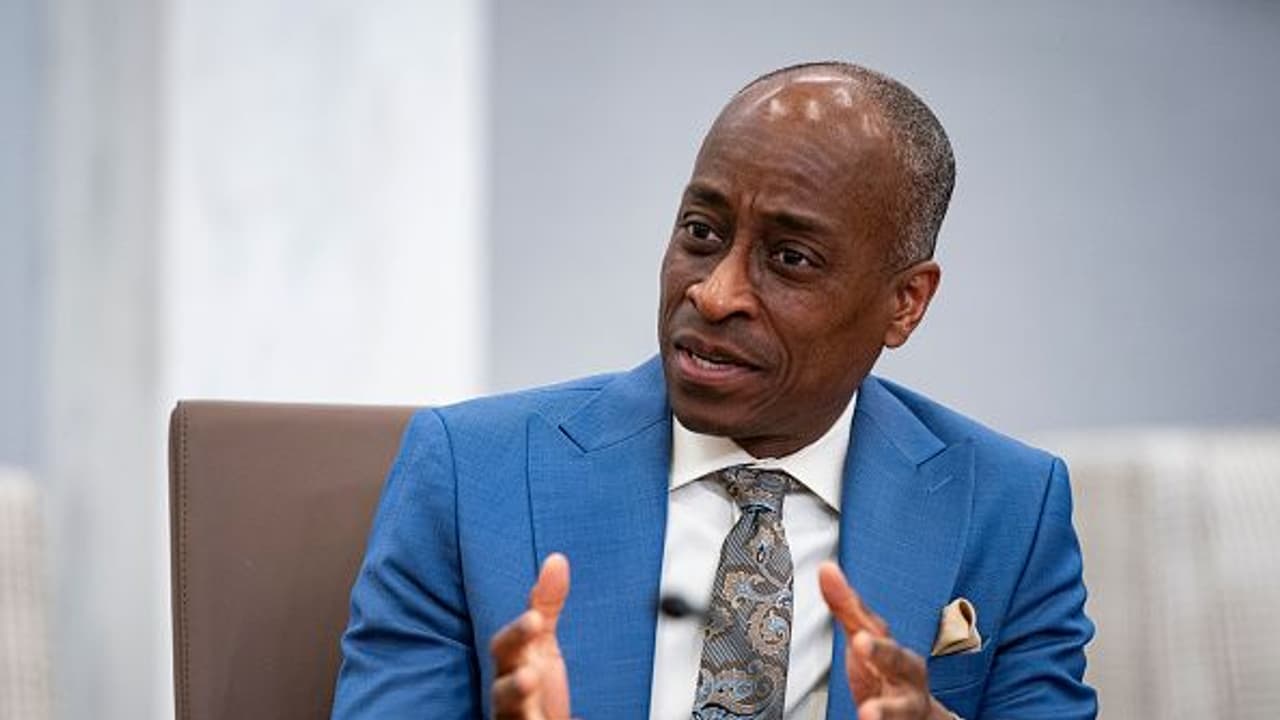
Prominent Federal Reserve officials emphasized a patient, data-driven approach this week, prompting financial markets to significantly scale back expectations for an October interest rate increase.
- Investor odds of a rate hike at the late-October meeting tumbled from 70% to around 25% after public remarks by Federal Reserve Vice Chair Philip Jefferson and New York Fed President John Williams.
- Fed leadership stressed the importance of evaluating incoming economic indicators rather than rushing into consecutive rate increases, even as overall inflation remains elevated.
- While Fed Chair Kevin Warsh has stepped back from traditional forward guidance, major market participants interpreted the separate speeches as an authoritative signal to recalibrate policy forecasts.
Top Federal Reserve officials signaled this week that the central bank is in no rush to lift borrowing costs at its upcoming policy meeting, prompting financial markets to abruptly dial back bets on another immediate interest rate hike.
Public addresses by Federal Reserve Vice Chair Philip Jefferson and New York Fed President John Williams conveyed a shared belief that policymakers have ample room to evaluate economic indicators before considering further policy tightening.
The remarks successfully reined in Wall Street’s expectations for a rate increase later this month, illustrating that market participants remain highly attentive to messaging from key central bank leaders.
Market Odds Shift Dramatically
Ahead of Williams’s remarks early in the week, federal funds futures pricing indicated a 70% probability of a rate increase at the central bank’s Oct. 27-28 meeting. By the time Jefferson concluded his address two days later—supported in part by cooler-than-anticipated inflation readings—those odds plummeted to roughly 25%.
According to the CME FedWatch tool, traders are factoring in a 22% probability, as of Oct. 3, of a Fed hike in October, down from 64% a week earlier.
Financial analysts viewed the speeches as a deliberate recalibration after traders drove up yields and aggressively priced in back-to-back policy tightening following the central bank’s Sept. 16 rate hike.
Economists at Goldman Sachs noted that the combined messaging effectively solidified the case against an October hike. Similarly, Krishna Guha, head of economics at Evercore ISI, described the joint impact of the speeches as authoritative, as per Bloomberg, while JPMorgan Chase & Co. Chief U.S. Economist Michael Feroli noted that officials were reinforcing the idea that rate hikes do not need to occur at every consecutive meeting.
A New Era For Guidance
The central bank’s recent policy actions mark a shift in how it communicates monetary policy. Last month, policymakers voted unanimously to raise benchmark interest rates by a quarter percentage point—marking the first increase since 2023—to combat persistent inflationary pressure and an accelerating economy. Projections issued alongside that decision indicated support for one additional rate move before year-end.
However, Fed Chair Kevin Warsh has deliberately moved away from providing explicit forward guidance regarding future rate decisions. Warsh abstains from quarterly rate projections and avoids signaling upcoming moves in public forums, instead directing investors’ focus strictly to incoming economic data.
Diverging Views Among Policymakers
The broader debate within the Federal Reserve reflects a complex economic backdrop, where consumer spending remains resilient, and overall growth appears robust despite recent cool-downs in employment and inflation metrics.
While several regional Fed presidents refrained from providing policy hints during a recent conference in Asheville, North Carolina, other key voices echoed a cautious stance. Fed Governor Michelle Bowman suggested there is little immediate urgency to adjust borrowing costs further.
Conversely, Dallas Fed President Lorie Logan said further rate increases may still be needed to bring inflation back to the 2% target, though she acknowledged that recent surges in longer-term bond yields could also help dampen economic activity.
At the time of writing, the SPDR S&P 500 ETF (SPY), which tracks the S&P 500 index, was up 0.8%; the Invesco QQQ Trust ETF (QQQ) jumped 1%; while the SPDR Dow Jones Industrial Average ETF Trust (DIA) gained 0.4%.
For updates and corrections, email newsroom[at]stocktwits[dot]com.<