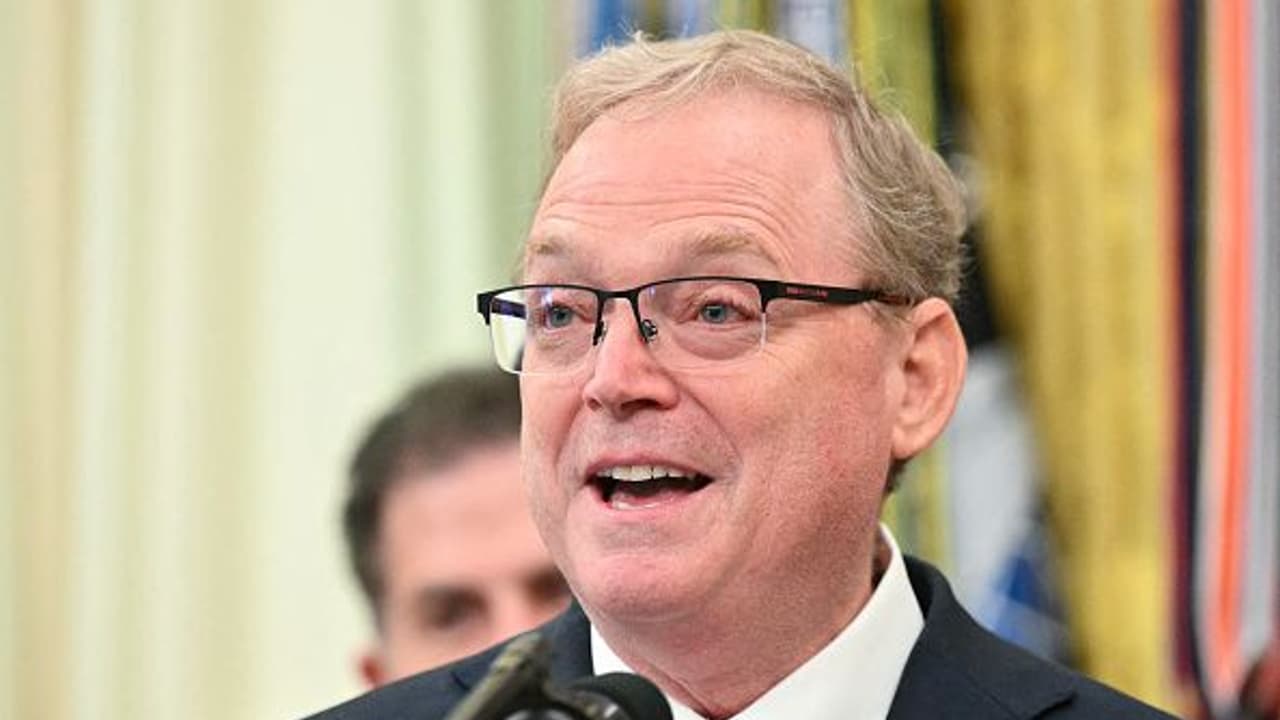
The National Economic Council director told Bloomberg that September’s jobs report was just about as expected, while arguing that strong economic growth raises real returns.
- September payrolls rose by 29,000, while unemployment increased to 4.2% and wage growth slowed.
- He called recent capital spending supply-side growth that is “disinflationary.”
- The 10-year Treasury yield fell to around 5.18% after the September Jobs report.
White House National Economic Council Director Kevin Hassett on Friday said longer-term rates may have some upside because real returns are so high, arguing that in the end, “that’s very, very good for the economy.”
Speaking to Bloomberg in an interview, Hassett pointed to a roughly 3% real yield on 30-year Treasury inflation-protected securities as evidence of elevated real returns and contrasted that with earlier periods when the bonds offered little return beyond inflation.
“The real return on capital goes up when the economy is booming,” he said.
Payrolls Rise 29K As Hassett Points To Federal Job Cuts
U.S. payrolls increased by 29,000 in September, while unemployment rose to 4.2% and average hourly earnings increased 0.1% from August, according to the Bureau of Labor Statistics.
The 10-year Treasury yield fell to around 5.18% after the report, having reached a 24-year high of 5.34% earlier in the week.
Hassett said the jobs report was “just about as expected.” He pointed to a reduction of more than 300,000 in federal government employment and said private-sector jobs were “up a lot.”
Capital Spending, Consumers Stay In Focus
Hassett characterized recent capital spending as supply-side growth that is “disinflationary.” He also cited a roughly 12,000 increase in factory construction employment in September and said the total had risen by about 112,000 since January 2025.
The consumer remains “very, very strong,” according to Hassett, who pointed to low defaults, credit conditions and job security as supporting spending.
Debt Costs Remain Elevated
Hassett acknowledged that interest payments represent what he called “a very unacceptably high share” of government spending. Reductions of more than 300,000 federal jobs would save roughly $500 billion over 10 years, he said.
He added that lower government spending and stronger revenues would help address the deficit, adding that improving the fiscal picture would be “very positive for inflation in the long run.”
At the time of this writing, the iShares 7-10 Year Treasury Bond ETF (IEF) and the iShares 20+ Year Treasury Bond ETF (TLT) were trading marginally in the red. On Stocktwits, the sentiment around both tickers remained in the ‘bullish’ territory.
Also Read: SpaceX, AI Weigh On Telecom Valuations, Scotiabank Says — Cuts Targets Across Major US Communication Names
For updates and corrections, email newsroom[at]stocktwits[dot]com.