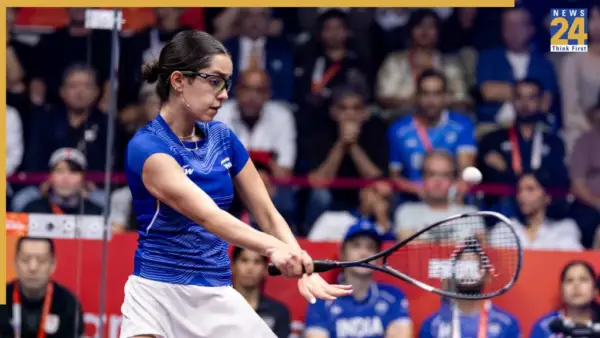
India’s search for an individual squash gold at the Asian Games continued on Sunday with rising stars Anahat Singh and Abhay Singh finishing with silver after losing in straight games to experienced Malaysian rivals.
How did the finals unfold for Abhay Singh and Anahat Singh?
On a gloomy rain-hit day for the Indian camp then world No. 24 Abhay Singh struggled to match defending champion Ng Eain Yow. The Malaysian controlled the contest from start to finish using sharp tactics to seal an 11-9, 11-5, 11-5 victory in 44 minutes.
What do these defeats mean for their LA 2028 Olympic qualification?
Eighteen years old Anahat Singh endured another tough outing, losing 4-11, 4-11, 7-11 to Malaysia’s world No. 5 and reigning champion Sivasangari Subramaniam in 27 minutes. The defeats also ended the duo’s hopes of earning qualification spots for the 2028 Los Angeles Olympics which will feature squash for the first time. Anahat and Abhay must now pursue alternative qualification pathways for the Games.
How has India performed historically in individual Asian Games squash?
India are still waiting for their first individual squash gold at the Asian Games. Saurav Ghosal came close on two occasions but ended up with silver medals at the 2014 Incheon and 2023 Hangzhou editions. Abhay Singh entered the title clash on the back of a convincing semifinal victory over Pakistan’s Nasir Iqbal but defending champion Eain Yow proved to be a much tougher opponent.
How did Eain Yow gain early control of the match?
The Malaysian who defeated Ghosal in the Hangzhou final three years ago dictated the pace and kept Abhay moving around the court with well-placed shots. The Indian stayed in contention during a closely fought opening game but was unable to turn his opportunities into an advantage.
Which tactical errors cost Abhay Singh in the first game?
Eain Yow consistently pushed Abhay towards the back-left corner making it difficult for the Indian to return shots effectively. Abhay’s mistakes along with obstruction decisions and a few poorly executed shots into the tin allowed the Malaysian to maintain his advantage.
How did Eain Yow secure the opening game victory?
With the score at 9-10, Eain Yow stepped up with a crucial rally, placing the ball into the tight left corner. Abhay struggled to make a strong return, allowing the Malaysian to close out the game after 21 minutes of intense action.
Why was Abhay Singh unable to turn the momentum around?
The match swung decisively in Eain Yow’s favour from that point. He kept his shots close to the walls restricted Abhay’s options and consistently found the right depth. Even when the Indian began to gain momentum, the Malaysian remained composed soaking up the pressure before disrupting the rhythm with well-executed drops and boasts.
What led to the series of errors in Abhay Singh’s game?
It followed a familiar pattern in squash with Abhay having to chase down more shots stretching further with each return before a series of mistakes crept into his game.
‘I’m disappointed with today, but respect to my opponent. He was better than me today and deserved the win. He played well in every aspect of the game. His experience came in handy. He’s played in an Asian Games final before, so I think that made a bit of a difference,’ Abhay said.
How did Sivasangari Subramaniam neutralize Anahat Singh’s game?
The 18 years old junior world champion currently ranked 17th globally has emerged as a prominent name among India’s rising squash stars. However the 27 years old Sivasangari proved too strong preventing Anahat from unleashing the aggressive play and relentless court coverage that have driven her progress.
How did Sivasangari Subramaniam take early control of the women’s final?
Sivasangari kept Anahat guessing with clever changes in tempo precise shots to the back of the court and constant variations in rallies. The Malaysian quickly built a 9-3 advantage in the first game while Anahat found herself repeatedly called for interference as she struggled to position herself effectively.
Why was Anahat Singh unable to mount an attack in the second game?
The next game unfolded in much the same way as Sivasangari established an early lead and left Anahat with little time to execute her shots. The Indian was unable to open up the court enough to bring her attacking game into play.
How did the final game between Anahat Singh and Sivasangari Subramaniam conclude?
The third game saw Anahat show greater fight as she matched Sivasangari for extended periods and appeared more settled on court. However the Malaysian raised her level at crucial moments maintained precise depth and closed the door on any potential comeback.
What does this silver medal signal for Anahat Singh’s future?
For Anahat the silver medal represents another notable milestone in a career that is developing at remarkable speed. Already inside the global top 20 she is steadily emerging as one of the leading figures of India’s new generation of women squash players following in the footsteps of established names like Dipika Pallikal and Joshna Chinappa.