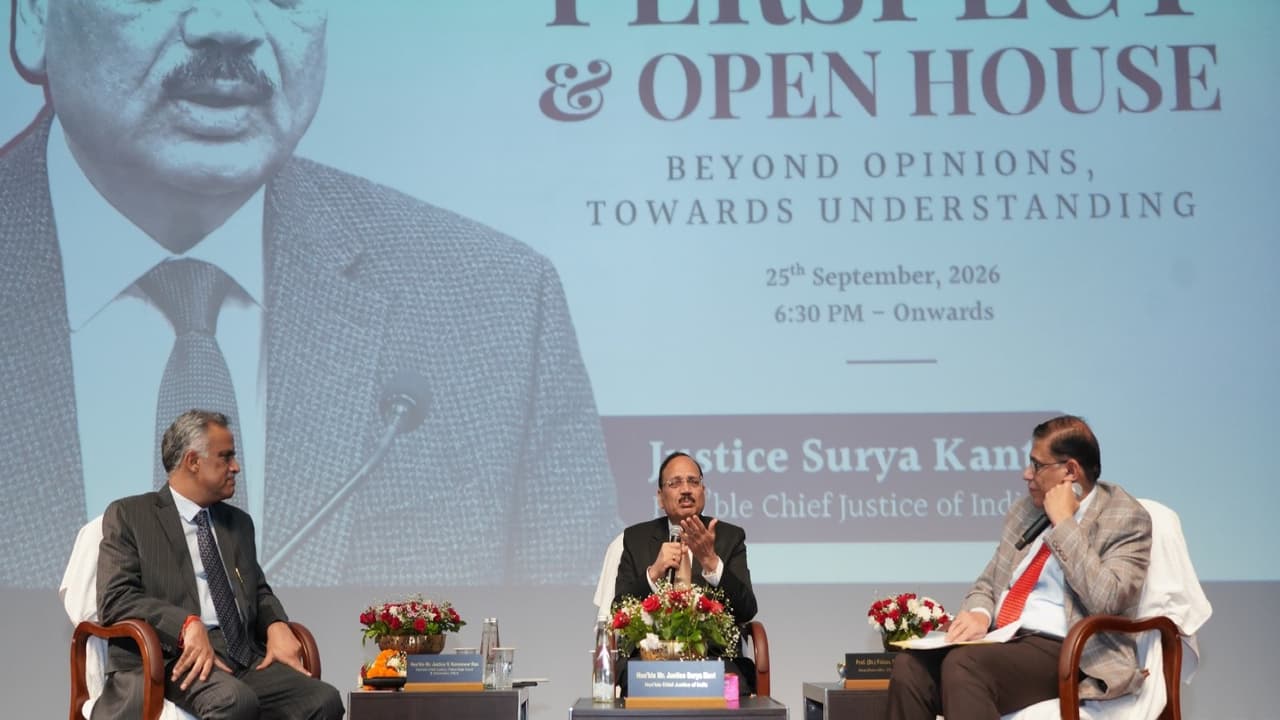
CJI Surya Kant held a first-of-its-kind interaction with law students at CNLU, Patna. He affirmed students’ right to protest, backed financial aid for new lawyers, and discussed reforms in legal education and judicial clerkships.
CJI Interacts with Law Students at CNLU
Chief Justice of India (CJI) Justice Surya Kant on Saturday held an open house interaction with law students at Chanakya National Law University (CNLU), Patna, marking the first such direct engagement by a sitting CJI with students of a law university, according to a press release issued by CNLU.
The event was held at CNLU’s Ashoka Auditorium and was attended by Patna High Court Chief Justice and CNLU Chancellor Justice V Kameswar Rao. The interaction was jointly organised by the students of the Academic and Debating Committee and the Legal Aid Cell.
Addresses Student Rights and Professional Challenges
During the session, Justice Surya Kant responded to questions from students on issues related to legal education, student rights, judicial reforms and challenges faced by young lawyers. Responding to a girl student’s question about the police’s response to peaceful student protests, the Chief Justice unequivocally reaffirmed the judiciary’s commitment to protecting students’ fundamental right to peaceful protest. The message was clear, courts will not look the other way.
The CJI also acknowledged the challenges faced by first-generation young lawyers at the Bar. Referring to the case of Sarika Tyagi, he called for a dedicated professional assistance corpus to provide financial support to young lawyers during their initial years of practice, describing it as a structural necessity for the future of the legal profession rather than charity.
Responding to concerns raised by students over rising tuition fees and inadequate scholarships, Justice Surya Kant assured that the issue would be addressed, the release stated.
Discusses Judicial and Educational Reforms
During the session, CNLU Vice-Chancellor Prof Faizan Mustafa proposed restructuring the five-year law degree by introducing four years of academic study followed by a mandatory final-year court apprenticeship. He clarified that the proposal was not aimed at reducing the duration of the course but at integrating practical litigation experience into legal education and eliminating the separate one-year practice requirement for judicial service examinations.
Responding to the suggestion, the CJI termed it a “new, welcome idea”, which could lead to further discussion on incorporating court experience into the legal curriculum.
When a student asked why dissenting opinions within the Collegium are recorded but not made public, Justice Surya Kant explained that disclosure could place the person under consideration in a difficult position. He said that while transparency is important, it must also take into account the dignity and reputation of individuals. The CJI questioned how a Chief Justice or judge could continue to function if adverse observations about them were made public through Collegium minutes.
Justice V Kameswar Rao also supported the need for reforms in judicial clerkships, stating that High Court clerkships should be made more competitive, financially attractive and rewarding to enable them to compete with corporate law opportunities and attract the best legal minds. (ANI)
(Except for the headline, this story has not been edited by Asianetnews Editorial staff and is published from a syndicated feed.)