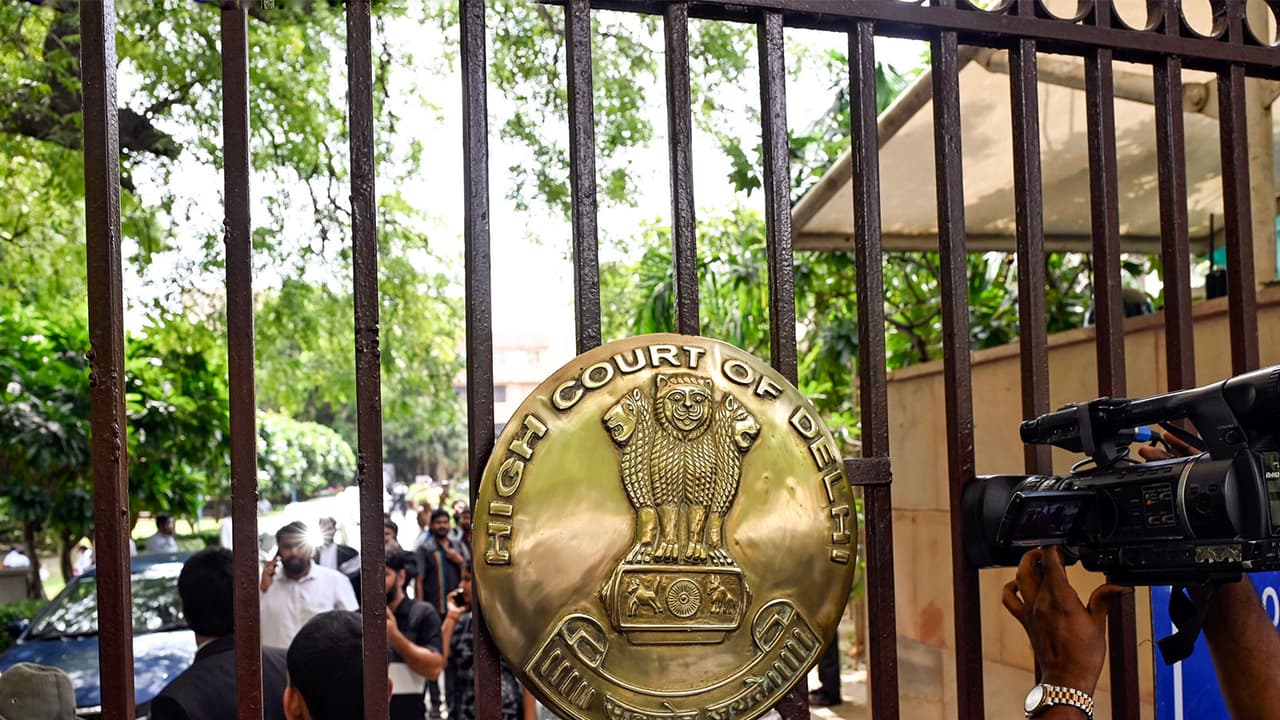
Delhi High Court rules that a valid UDID card is supreme for determining PwBD eligibility in NEET-UG admissions. Medical Boards cannot reduce the disability percentage on the card, which is the primary document for reservation benefits.
The Delhi High Court has held that a valid Unique Disability ID (UDID) card takes precedence in determining a candidate’s eligibility under the PwBD category in NEET-UG admissions for disability benefits.
The High Court ruled that Medical Assessment Boards cannot reduce or reassess the percentage of disability recorded in the card while assessing eligibility for an MBBS course.
Background of the Case
The ruling came in two petitions concerning candidates who appeared in the NEET-UG 2026 re-examination, conducted after the May 3 examination was hit by allegations of a paper leak. The CBI had registered a case into alleged irregularities and circulation of examination material before the May 3 test, following which NTA conducted a re-examination on June 21.
One of the petitions was filed by Shivam Kumar, represented by advocate Arpit Bhargava, along with advocates Sarthak Sharma, Hina Bhargava and Astha Sharma. Shivam Kumar, an 18-year-old candidate with permanent visual disability, possessed a government-issued Disability Certificate and UDID card recording 60 per cent permanent disability. His NEET-UG 2026 admit card recorded his disability as blindness and granted him compensatory time. He appeared in the examination on June 21 and secured 398 out of 720 marks, with a PwBD rank of 409. However, the Medical Assessment Board at Lady Hardinge Medical College assessed his disability at 30 per cent, while noting that his UDID card recorded 60 per cent. Despite the reduction, the Board found him capable of pursuing the MBBS course and stated that he would not pose a threat to patients. The appellate Medical PwBD Assessment Board subsequently concurred with the 30 per cent assessment. On the same day, his candidature was shifted from the PwBD category to the General category, resulting in his exclusion from the first round of counselling under the PwBD category.
The second petitioner, Aashiya, has a permanent locomotor disability recorded at 61 per cent in her Disability Certificate and UDID card. Her disability was subsequently re-quantified at 16 per cent by the Primary Disability Assessment Medical Board, and the appellate board confirmed the figure, rendering her ineligible for PwBD reservation.
Court’s Verdict and Rationale
The petitioners argued that the UDID card is the primary document regarding the existence, nature and extent of disability, and that the Medical Assessment Board’s role is limited to assessing their functional competency to pursue the MBBS course rather than re-quantifying their disability.
Justice Jasmeet Singh, after examining the 2026 Guidelines, held that while the Medical Assessment Board can independently assess a candidate’s functional competency, the guidelines do not empower it to revisit the percentage of disability recorded in a valid UDID card.
The court said eligibility for reservation under the PwBD category is determined by the benchmark disability prescribed under the Rights of Persons with Disabilities Act, 2016, and the UDID card issued under the statutory framework is the primary document for that purpose.
The High Court further held that if an authority is aggrieved by the disability percentage recorded in a UDID card, the remedy is to challenge the decision of the competent certifying authority through the statutory appellate mechanism. A Medical Assessment Board cannot simply reduce the recorded percentage at the stage of MBBS admission.
Referring to the Supreme Court’s judgment in Om Rathod v. Director General of Health Services, the High Court noted that disability assessment boards must focus on functional competence rather than merely quantifying disability.
The High Court accordingly set aside the medical assessments and eligibility certificates that had reduced the disability percentages of both petitioners and directed the authorities to permit them to participate in the third round of NEET-UG counselling and the mop-up round, if any, under the PwBD category, treating their disability in accordance with their respective UDID cards. (ANI)
(Except for the headline, this story has not been edited by Asianetnews Editorial staff and is published from a syndicated feed.)