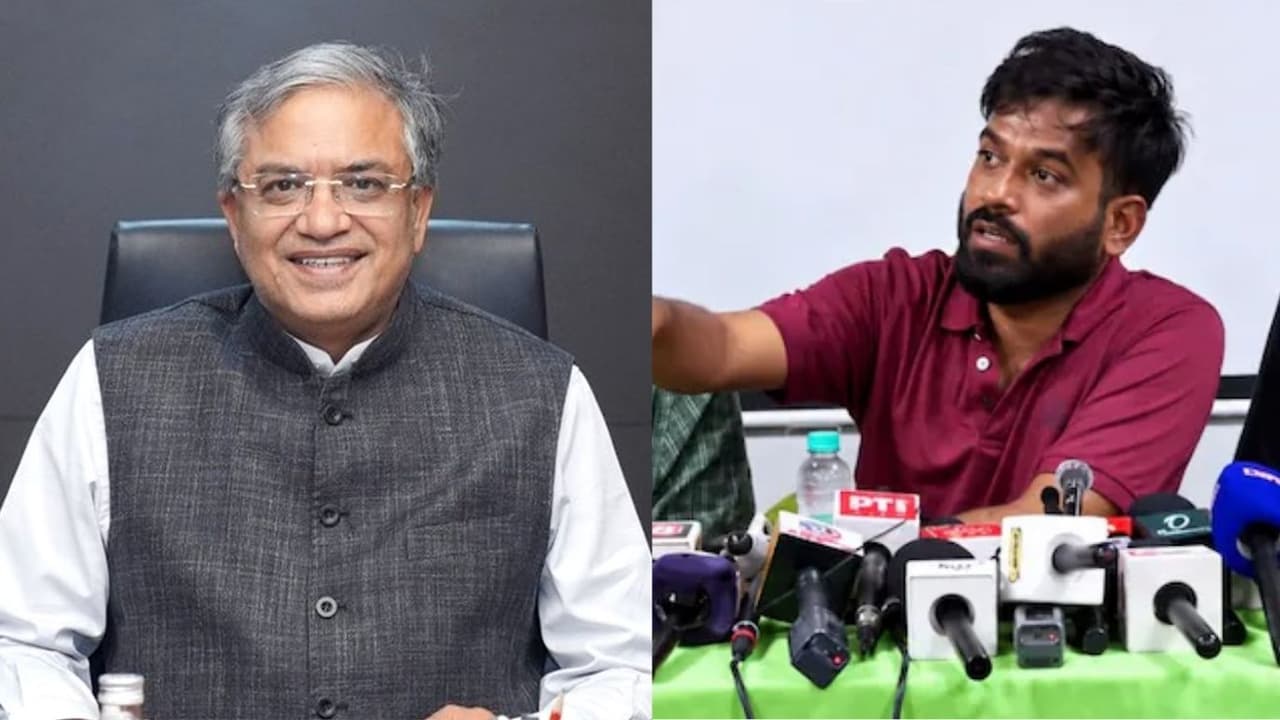
<p><strong>CEC Gyanesh Kumar is facing scrutiny after a report said Election Commissioners Sukhbir Singh Sandhu and Vivek Joshi had raised objections to several Election Commission decisions linked to electoral rolls and the Special Intensive Revision.</strong></p><img><p>Chief Election Commissioner Gyanesh Kumar is under scrutiny following a report about disagreements within the three-member Election Commission of India (ECI) over the handling of electoral rolls and the Special Intensive Revision (SIR).</p><p>The immediate trigger was an investigation by The Indian Express, which reported that Election Commissioners Sukhbir Singh Sandhu and Vivek Joshi had recorded objections at least 14 times over a 10-month period to decisions concerning the electoral process. The report said some of these decisions were taken without their knowledge.</p><p>The issue has since drawn demands for Kumar’s resignation from the Cockroach Janta Party (CJP), which has launched an ‘Election Commission Thik Karo’ campaign. CJP founder Abhijeet Dipke has now said the organisation will begin nationwide protests from Mumbai on October 2 if Kumar does not resign by Saturday, September 26.</p><p>If Gyanesh Kumar does not resign by tomorrow, CJP will begin its nationwide protest from Mumbai on 2 October, and take it to cities across India.This Gandhi Jayanti let’s pledge to save democracy.</p><p>— Abhijeet Dipke (@abhijeet_dipke) September 25, 2026</p><p>The Election Commission, however, has rejected the suggestion that the reported disagreements amount to evidence of wrongdoing. It has said differing views and internal observations are a normal part of institutional decision-making and maintained that its orders, electoral reforms and digital systems follow legal and security procedures.</p><h2><strong>Who is Gyanesh Kumar?</strong></h2><p>Gyanesh Kumar is the 26th Chief Election Commissioner of India. He took charge as CEC on February 19, 2025, after previously serving as an Election Commissioner from March 2024.</p><p>A 1988-batch Kerala cadre IAS officer, Kumar has held several senior positions in the Kerala and Union governments. His Union government roles included Secretary in the Ministry of Parliamentary Affairs and Secretary in the Ministry of Cooperation.</p><p>The current three-member Election Commission consists of Kumar as CEC and Election Commissioners Sukhbir Singh Sandhu and Vivek Joshi. Sandhu joined the Commission in March 2024, while Joshi joined in February 2025.</p><p>The latest controversy is therefore not about the appointment of Kumar itself, but about questions raised over the functioning of the poll panel, particularly decisions relating to voter registration, deletion and electoral-roll management.</p><img><p>The controversy gained momentum after The Indian Express reported that Sandhu and Joshi had objected on record at least 14 times in 10 months to decisions taken by the poll panel.</p><p>According to the report, the objections covered several areas, including the addition of new voters, deletion and restoration of names, appeals against decisions affecting electoral rolls, changes to Form 6 and the management of the Election Commission’s voter database.</p><p>The Election Commission of India is under fire like never before. The SIR has struck 13 crore names off draft rolls, putting the EC at the centre of intense public debate over its role in deciding who gets to vote — and who doesn’t.HOWEVER, what nobody knew: through that same… pic.twitter.com/CC1QIdqk1L</p><p>— Ritika Chopra (@RitikaChopra__) September 23, 2026</p><p>Massive internal crisis exploding inside India’s Election Commission.3 members. Only 1 voice matters.Election Commissioners Sukhbir Sandhu and Vivek Joshi formally objected 14 times in 10 months.Key voter-list decisions taken without asking them. Without even informing… pic.twitter.com/QbtyIknDDn</p><p>— Amar Singh Chouhan (@amar_4inc) September 23, 2026</p><p>The report also highlighted concerns over centralised systems used for electoral-roll management. In one instance cited by Indian Express, officials in Goa reportedly found eligible voters but faced difficulty recording their decisions because of the software system controlled from the ECI headquarters.</p><p>The significance of the report lies in the fact that the objections were reportedly made by two of the three members of the constitutional poll panel.</p><p>However, the reported objections do not by themselves establish that the Election Commission’s decisions were unlawful. The ECI has disputed the broader interpretation of the internal notes and said the final decisions taken by the full Commission over the past year were unanimous.</p><h2><strong>What is the Special Intensive Revision or SIR?</strong></h2><p>The Special Intensive Revision, commonly called SIR, is an exercise to revise electoral rolls.</p><p>The current nationwide exercise has become a major political and legal issue because of the large number of names removed from draft electoral rolls. According to The Indian Express report cited by CJP, more than 13 crore names had been struck off draft rolls across 30 states and Union Territories during the exercise.</p><p>The Election Commission’s stated purpose is to ensure that electoral rolls contain eligible voters and exclude ineligible or otherwise disqualified entries.</p><p>The controversy is centred on what happens to people whose names are missing from the draft rolls and how they can establish their eligibility and seek restoration.</p><p>CJP has argued that large-scale exclusions require greater transparency and an accessible review mechanism. It has demanded that the process be halted and that earlier electoral rolls and relevant SIR records be secured for independent examination.</p><p>The Election Commission, meanwhile, has said Electoral Registration Officers and District Election Officers exercise statutory powers for registration and deletion under the law. It has also said its digital platforms operate under security protocols designed to prevent unauthorised tampering or manipulation.</p><img><p>The reported objections have attracted attention because Sandhu and Joshi are not outside critics of the Election Commission. They are members of the Commission itself.</p><p>According to the Indian Express investigation, their objections related to decisions affecting core parts of electoral-roll management. It reported that there were at least 14 such instances over 10 months.</p><p>This has led critics to question how decisions are discussed and recorded within the three-member Commission.</p><p>The Election Commission has offered a different explanation. It said internal notes, questions, suggestions and differing views are a normal part of deliberation. According to its response, focusing on selected internal observations without considering the wider body of decisions and approvals gives only part of the picture.</p><p>The ECI also said that it had taken numerous decisions and introduced around 40 initiatives and electoral reforms during the past year, with these decisions being the outcome of unanimous decisions of the full Commission.</p><p>So, at the centre of the controversy is a disagreement over how the internal objections should be interpreted: critics see them as evidence of serious institutional concerns, while the ECI describes them as part of normal internal scrutiny before final decisions.</p><img><p>The Cockroach Janta Party has gone beyond asking for explanations from the Election Commission. It has demanded Kumar’s resignation.</p><p>On Thursday, CJP launched its ‘Election Commission Thik Karo’ campaign and gave Kumar 48 hours to step down. The organisation also threatened a nationwide agitation followed by an indefinite sit-in in Delhi, describing the proposed Delhi protest as ‘Jantar Mantar 2.0’.</p><p>On Friday, Dipke moved the deadline forward in practical terms, saying that if Kumar did not resign by Saturday (September 26), CJP would begin its nationwide protest in Mumbai on October 2, Gandhi Jayanti, before taking the campaign to other cities.</p><p>CJP has also demanded an independent investigation into decisions taken during the SIR exercise, including identifying officials who authorised disputed changes and directions.</p><p>It has called for the SIR exercise to be halted and for earlier voter rolls to be restored. It has also sought the transfer of relevant SIR records to the Supreme Court or an independently supervised judicial inquiry.</p><p>Another demand concerns the appointment system for Election Commissioners. CJP has called for changes to the framework governing the appointment of the CEC and other Election Commissioners.</p><p>CJP makes 3 demands-CEC’s resignationHold back further pollsRepeal 2023 law for appointment of Election Commissioners pic.twitter.com/2klA37fTzw</p><p>— News Arena India (@NewsArenaIndia) September 24, 2026</p><p>The organisation has additionally asked Sandhu and Joshi to publicly explain their recorded objections and urged the ECI to release the relevant notes and its responses.</p><h2><strong>What is CJP saying about Opposition parties?</strong></h2><p>Dipke has also targeted Opposition parties over their participation in elections.</p><p>He has argued that parties that believe elections are being ‘rigged’ should reconsider participating in them. According to his argument, continuing to contest such elections gives legitimacy to the electoral process and creates an impression that elections are free and fair.</p><p>CJP has linked its argument to the wider concerns it has raised over voter-roll exclusions and the reported internal objections within the Election Commission.</p><img><p>The Election Commission has defended its functioning. In its response to the Indian Express report, the ECI said differing views and observations were normal during institutional deliberations. It said the suggestions made by commissioners were intended to improve electoral processes.</p><p>The Commission also said that all its orders have legal sanction and that decisions, instructions and reforms taken by the full Commission during the past year were unanimous.</p><p>Official Press Note pic.twitter.com/xIQvXHqMSt</p><p>— Election Commission of India (@ECISVEEP) September 23, 2026</p><p>On the technology side, the ECI said platforms such as ECINet operate under strict data-security protocols to prevent unauthorised tampering and manipulation. It also said statutory officers such as Electoral Registration Officers and District Election Officers exercise their powers under the law.</p><p>The Commission’s response therefore rejects the suggestion that the existence of internal objections automatically means that the final decisions were unlawful or that the electoral system was compromised.</p><img><p>The dispute has emerged at a sensitive time because electoral-roll revision directly affects who is listed as an eligible voter.</p><p>The reported internal objections have raised questions about decision-making inside the ECI, while the scale of the SIR exercise has brought renewed attention to the procedures for adding, deleting and restoring names.</p><p>For CJP, the issue is primarily about ‘voter rights and institutional accountability’. The organisation says citizens whose names are excluded must have a transparent and meaningful way to challenge those decisions.</p><p>For the Election Commission, the SIR is part of its responsibility to maintain accurate electoral rolls, while internal disagreements are part of the process through which decisions are examined before being finalised.</p><p>The immediate political development is CJP’s October 2 protest threat. Whether Kumar resigns by September 26, and whether CJP proceeds with its planned nationwide agitation, will determine the next stage of the dispute.</p><p>That said, the controversy rests on three interconnected issues: reported internal objections within the Election Commission, the large-scale SIR revision of electoral rolls and demands for greater transparency and accountability in decisions affecting voter registration and deletion.</p><p><strong>(With inputs from agencies)</strong></p>