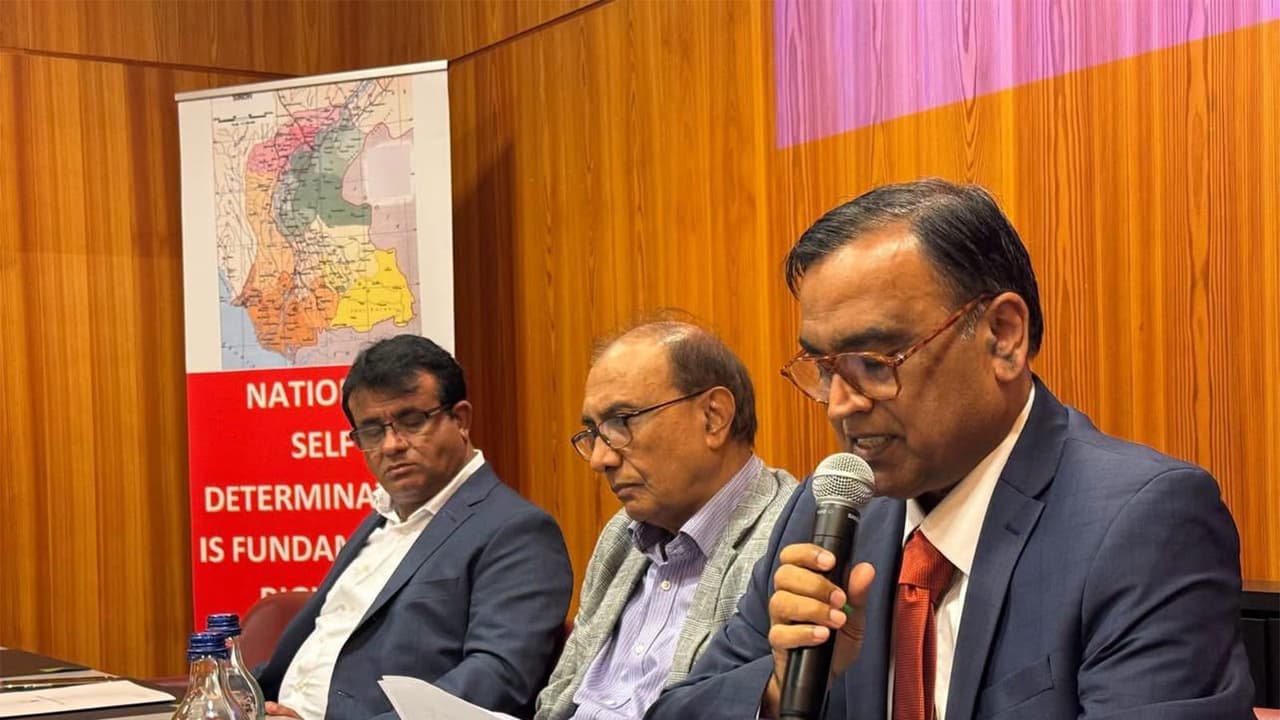
The World Sindhi Congress (WSC) organised the Sindh Conference 2026 in Geneva, focusing on human rights, environmental justice, and self-determination for Sindh. Activists discussed enforced disappearances, water insecurity, and resource distribution.
The World Sindhi Congress (WSC) organised the Sindh Conference 2026 in Geneva, bringing together scholars, researchers, human-rights activists and civil-society representatives to discuss political, social, economic, environmental and human-rights concerns concerning Sindh.
Held under the theme “Sindh at Crossroads: Defending Its Territorial Integrity, Human Rights, Environmental Justice and the Right to Self-Determination,” the conference focused on civil and political rights, democratic participation, alleged enforced disappearances and extrajudicial killings, minority rights, water insecurity, environmental degradation, resource distribution, cultural identity and concerns over Sindh’s territorial integrity.
Expert Panels on Rights, Environment, and Autonomy
Human Rights Expert Dr Joseph Chongsi spoke about the principle of self-determination and its relevance for communities facing political marginalisation.
WSC representative Rauf Leghari discussed concerns over the distribution of Indus River waters and its reported impact on Sindh, including water shortages, seawater intrusion into farmland and the deterioration of the Indus Delta. He referred to claims that around 1.2 million acres of fertile land have been affected by seawater intrusion.
Human-rights activist Arif Aaajkia opposed proposals for the division of Sindh and raised concerns over the distribution of National Finance Commission resources, calling for greater consideration of provincial resource generation alongside population-based criteria.
Other speakers also highlighted human-rights and social concerns. Khalilur Rehman expressed solidarity with the people of Sindh, while Sarang Sindhi of Voice of Missing Persons Sindh raised allegations relating to enforced disappearances, missing persons and alleged extrajudicial killings. WSC Executive Committee member Hafeezan Wadhio stressed the importance of Sindh’s territorial and cultural integrity, while Dr Hidayat Bhutto addressed concerns involving religious minorities, fundamental rights and the rule of law. Dr Naseem Baloch highlighted historical and cultural links between Sindh and Balochistan, while researcher Dr Shagufta Gul discussed issues affecting women and children, including gender-based violence and child abuse.
WSC Chairperson’s Keynote and Conference Conclusion
In his keynote address, WSC Chairperson Dr Lakhu Luhana presented the organisation’s historical perspective on Pakistan’s creation and its reported consequences for Sindh’s culture, language, identity and territorial integrity. He also alleged exploitation of Sindh’s natural resources and called for their protection.
The conference concluded with a call for greater international attention from UN mechanisms, human-rights organisations, policymakers, researchers and civil society. WSC urged scrutiny of alleged rights violations, stronger protection of democratic and minority rights, transparent resource governance, and urgent action on water and environmental concerns. The organisers reaffirmed their commitment to pursuing these issues through peaceful, democratic and international human-rights mechanisms, with emphasis on justice, accountability, environmental protection, democracy and self-determination.
(Except for the headline, this story has not been edited by Asianetnews Editorial staff and is published from a syndicated feed.)