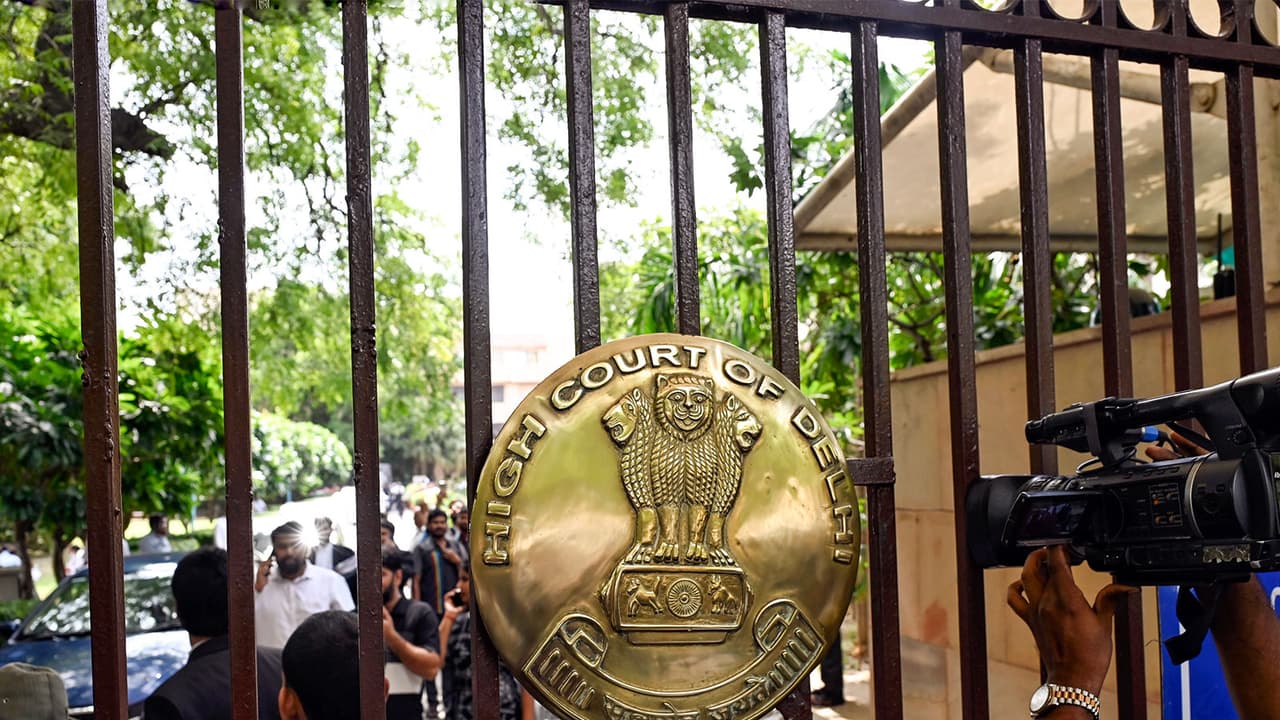
The Delhi HC asked the Delhi Govt and DTC to ensure the entire bus fleet provides services to commuters. It disposed of a PIL on the bus strike after being told 96% of buses were running but allowed the petitioner to return if things don’t improve.
The Delhi High Court on Wednesday asked the Delhi Government and the Delhi Transport Corporation (DTC) to take all necessary measures to ensure that the entire DTC bus fleet is on the roads and continues to provide services to commuters, even as the court noted that the situation had improved amid the ongoing strike by bus drivers and other personnel.
A division bench comprising Chief Justice Devendra Kumar Upadhyaya and Justice Tejas Karia disposed of a Public Interest Litigation filed by advocate and regular DTC commuter Ami Sisodia, seeking restoration and continuity of public bus services in the national capital.
During the hearing, DTC’s counsel informed the bench that the situation had improved and 96 per cent of DTC buses were currently plying on the roads. Taking note of the improvement, the bench said it did not intend to pass any specific direction at this stage. However, it made it clear that the authorities must take steps to ensure that the entire fleet is operational.
“Since the situation is improving, we do not intend to pass any direction. However, we expect all the authorities (Delhi government and DTC) to take all measures to ensure that the entire fleet of DTC buses in Delhi is on the roads providing services to the commuters,” the bench said.
Court on Invoking ESMA
The court also took note of the issue concerning invocation of the Essential Services Maintenance Act (ESMA). DTC’s counsel informed the bench that a proposal had been sent to the Delhi Government on September 16-17 for invoking the relevant provisions of the law in view of the disruption caused by the strike.
On this aspect, the bench said it expected the state government to review the situation and take appropriate steps to ensure that DTC buses continued to ply on the roads.
The bench further clarified that if the situation did not improve within a week, the petitioner would be at liberty to approach the High Court again.
PIL Highlights Commuters’ Hardships
The PIL was filed after DTC drivers, conductors and other personnel associated with bus operations went on strike, leading to disruption of public bus services across Delhi. The plea sought urgent intervention for restoration and reasonable continuity of DTC and other public bus services.
The petitioner, a practising advocate and regular DTC commuter, had submitted that the disruption was particularly affecting women passengers who depend on the free bus travel facility provided by the Delhi government. According to the plea, women commuters were being forced to use substantially more expensive alternative modes of transportation.
The petition also highlighted the impact on students, daily-wage workers, salaried employees, senior citizens, persons with disabilities, patients and economically weaker commuters who depend on affordable public transport. It further stated that the disruption had resulted in additional passenger pressure on the Delhi Metro.
Scope of the Petition
The petitioner had clarified that the PIL did not seek adjudication of the wages, service conditions or other industrial grievances of the protesting employees. It also did not seek coercive action against individual drivers or conductors. Instead, the plea sought intervention from the government and statutory authorities to ensure adequate public transportation, including a reasonable minimum level of bus services, until the disruption was completely resolved.
The petition was filed under Article 226 of the Constitution and was represented by advocate Vikrant Dabas.
The High Court’s observations came against the backdrop of the Delhi government’s earlier recognition of DTC and Cluster Bus services as an essential transport service of critical importance. (ANI)
(Except for the headline, this story has not been edited by Asianet Newsable English staff and is published from a syndicated feed.)