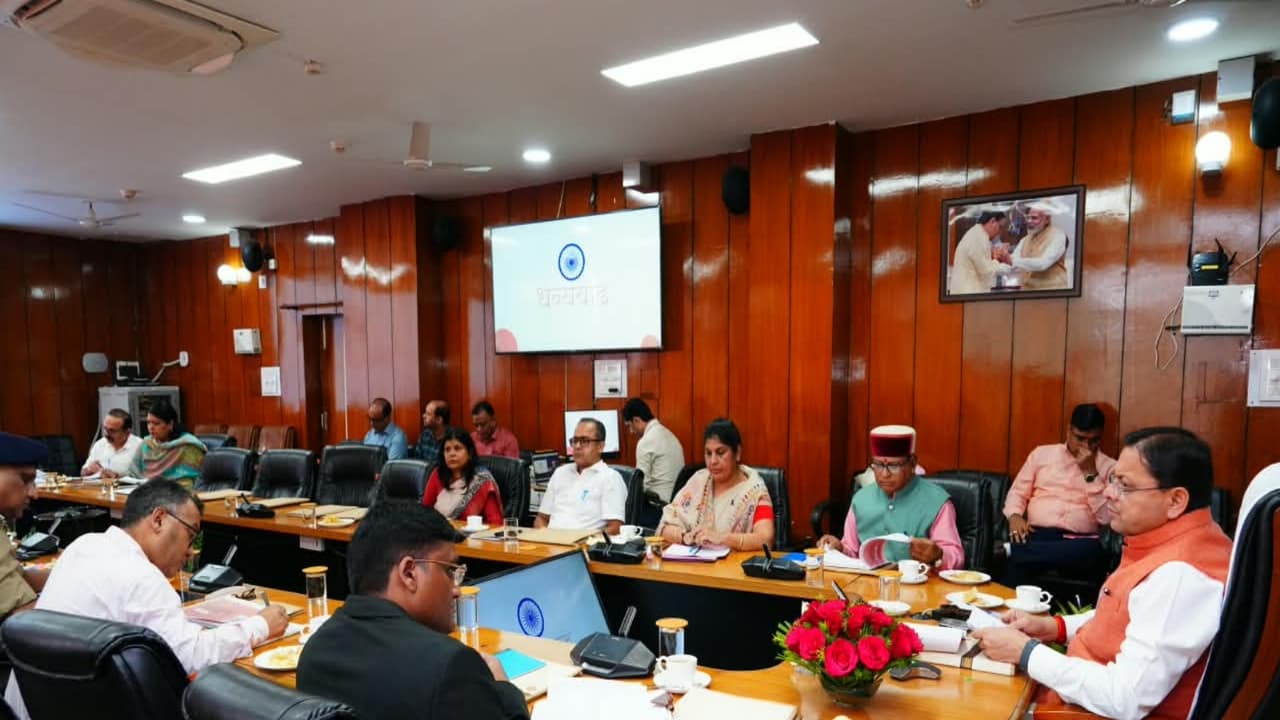
Uttarakhand CM Pushkar Singh Dhami reviewed the SC/ST Act implementation, directing officials for time-bound disposal of pending cases, priority action on delays, timely relief for victims, and better inter-departmental coordination for justice.
Uttarakhand Chief Minister Pushkar Singh Dhami on Tuesday chaired a meeting of the State-Level Vigilance and Monitoring Committee constituted for the effective implementation of the Scheduled Castes and Scheduled Tribes (Prevention of Atrocities) Act, 1989, and directed officials to ensure time-bound disposal of pending cases.
Reviewing cases registered under the Act since 2024 where investigations are still pending, Dhami directed officials to examine the reasons for delays and take action on priority. He also called for close coordination among the police, administration and prosecution departments in long-pending and serious cases.
The Chief Minister directed regular review of cases pending before special courts and asked officials to ensure the availability of special public prosecutors wherever required for effective prosecution.
Focus on Victim Relief and Safety
Dhami stressed that there should be no delay in disbursing prescribed relief to victims. He directed officials to separately review cases where relief payments have been delayed and said assistance to affected families should also extend, wherever required, to healthcare, education, security, rehabilitation and other eligible government schemes.
The Chief Minister also directed officials to accord the highest priority to the safety of victims and their families in serious and sensitive cases. He said the education of children from affected families should not be disrupted and that eligible children should be linked with scholarships and other educational assistance schemes.
According to the Social Welfare Department, the state has provisions for financial assistance to victims of atrocities under the SC/ST (Prevention of Atrocities) Act, with assistance provided at different stages depending on the nature of the offence.
Directives for Systemic Improvement and Accountability
Dhami further directed senior-level accountability in every district for monitoring cases under the Act and called for regular training of police personnel on its provisions, investigation of sensitive cases and appropriate conduct towards victims.
He also instructed the Social Welfare, Police and Prosecution departments to jointly organise refresher training programmes and directed officials to work towards developing a digital monitoring system to track investigations, court proceedings, relief payments and other assistance.
Districts where progress in investigation, disposal of cases or distribution of relief is unsatisfactory should be reviewed separately, Dhami said, adding that effective practices followed by better-performing districts should be shared with others.
The Chief Minister also called for extensive awareness campaigns in rural and remote areas about the provisions of the Act, legal rights and assistance available to victims. He stressed that decisions taken during the meeting should not remain confined to official records and that responsibility and timelines should be fixed for every decision.
Case and Aid Statistics
The meeting was informed that 189 cases were registered under the Act in 2024 and 157 in 2025. In 2026, 116 cases had been registered up to September 15, of which 25 were under investigation.
It was further informed that during 2024-25, financial assistance of Rs 228.71 lakh was provided to 205 victims; during 2025-26, Rs 143.16 lakh was provided to 127 victims; and during 2026-27, Rs 99.528 lakh had been provided to 104 victims as of September 18. Regular meetings have also been held at the state level under the chairmanship of the Chief Secretary and at the district level under the chairmanship of District Magistrates. (ANI)
(Except for the headline, this story has not been edited by Asianetnews Editorial staff and is published from a syndicated feed.)