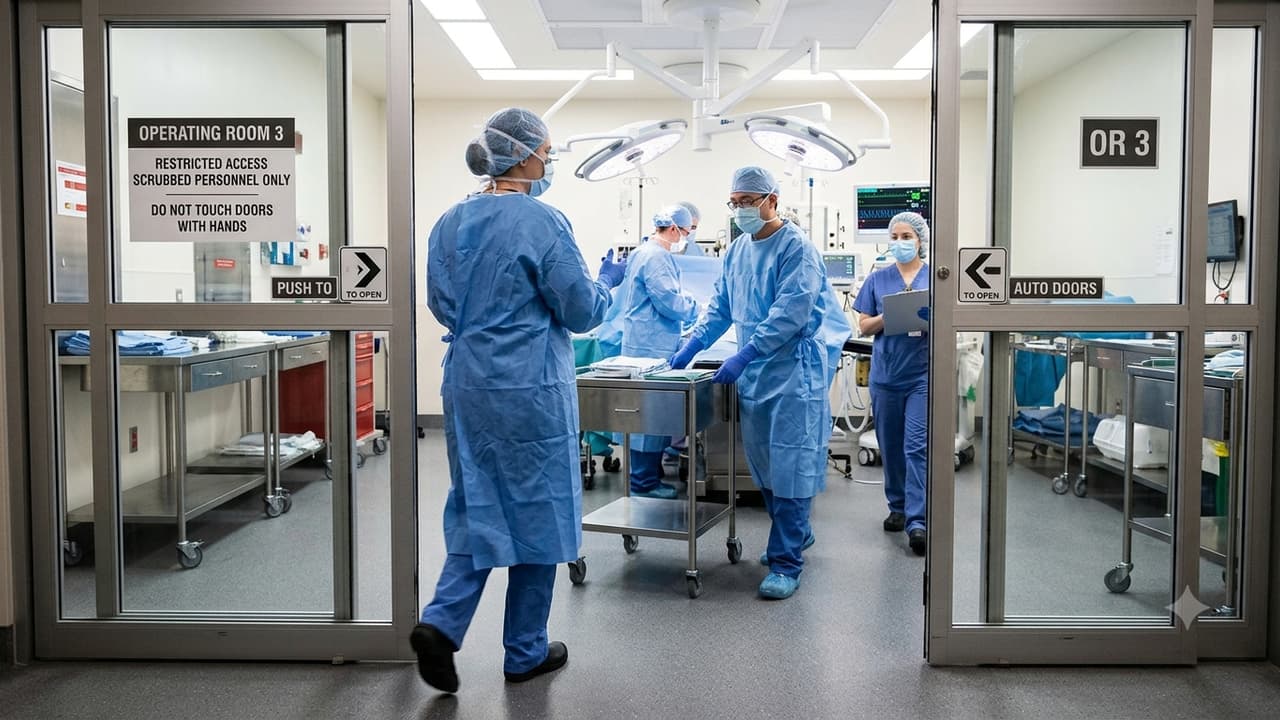
Surgeons often walk backward into operating rooms after scrubbing up to protect the sterile environment. By using their non-sterile backs to push open doors, they prevent their sanitized hands and the clean front of their gowns from touching contaminated surfaces.
In medical dramas and real-life surgical bays, doctors often perform a curious ritual: backing into the operating room after scrubbing up. Far from being an eccentric habit, walking into the OR in reverse is a critical technique used to prevent hospital-acquired infections and protect the sterile environment.
It might look strange for a surgeon to step backward into an operating room, but the move is necessary for safety reasons. It has something to do with keeping things clean and germ-free during surgery. According to an Instagram video posted by David Abbasi, an MD from Florida, the front of a surgeon’s gown, along with the arms and hands, are clean after being scrubbed in. During the process, the back of the gown is not treated as clean, though.
When going into the operating room, walking backward can help keep the clean front of the gown from touching doors, walls, door frames, or other non-sterile surfaces by accident. The action can also let nurses help from behind with putting on gowns and gloves. As they finish getting ready for surgery, this keeps them from touching the surgeon’s clean areas.
Sterile hands should not touch ordinary door handles or other contaminated surfaces. Depending on the setup, staff may use their back, hip or shoulder to push open swinging doors. Operating rooms follow strict infection-control practices. From gowning and gloving to movement around sterile areas, these routines are designed to minimise contamination and reduce the risk of surgical-site infections.
Surgical protocols mandate that after a thorough scrub-down, only the front area from the chest to the waist and the arms remain strictly sterile. The back of the gown is treated as non-sterile. Entering backward allows surgeons to push open doors using their non-sterile backs, keeping their sanitized hands elevated and protecting the front of their body from touching contaminated surfaces.